


NAAC AQAR Report: Understanding the Process and Importance


The National Assessment and Accreditation Council (NAAC) is an autonomous body established by the University Grants Commission (UGC) in India to assess and accredit higher education institutions. NAAC’s primary objective is to promote quality assurance in higher education and facilitate the process of institutional improvement. As part of its evaluation process, NAAC requires institutions to submit an Annual Quality Assurance Report (AQAR). In this blog post, we will explore the process and importance of the NAAC AQAR report.
The NAAC AQAR report serves as a comprehensive document that reflects an institution’s performance in various aspects of quality assurance. It covers areas such as curriculum development, teaching-learning processes, infrastructure, student support services, research activities, and governance. The report provides a detailed analysis of the institution’s strengths, weaknesses, opportunities, and challenges, which helps in identifying areas that need improvement as part of an effective NAAC AQAR process.
Imagine you are the principal of re[uted School, a well-known institution committed to providing the best educational experience to your students. You believe in continuously improving the quality of education and maintaining high standards of teaching and learning. In pursuit of this goal, you decide to undergo the NAAC accreditation process.
As part of the process, you are required to submit the Annual Quality Assurance Report (AQAR) to NAAC. This report is a comprehensive document that reflects your school’s performance in various aspects of quality assurance. It covers areas such as curriculum development, teaching-learning processes, infrastructure, student support services, research activities, and governance.
How to Prepare AQAR Report
To prepare the AQAR report, our team at LearnQoch works closely with your school’s internal quality assurance cell (IQAC). We collaborate with the IQAC to collect and analyze data from various departments and stakeholders within your institution. This data includes details about infrastructure, faculty qualifications, student enrollment, examination results, research publications, collaborations, and more.
Once we have gathered all the necessary information, our team conducts a thorough evaluation. We assess your school’s performance against the criteria outlined by NAAC, focusing on aspects such as curriculum design, teaching-learning methods, research output, infrastructure facilities, student support systems, and institutional governance. The evaluation process involves analyzing quantitative data, conducting surveys, and seeking feedback from stakeholders, including faculty, students, alumni, and parents.
Based on the evaluation, we identify the strengths, weaknesses, opportunities, and challenges specific to your school. We document these findings in the AQAR report, providing a detailed analysis of your school’s performance. The report also includes an action plan that outlines strategies and initiatives for further improvement. This action plan serves as a roadmap, guiding your school’s efforts towards enhancing the quality of education and overall institutional development.
Now, let’s explore the importance of the NAAC AQAR report for your school.
- The report allows you to gain valuable insights into your school’s performance. By objectively evaluating your strengths and weaknesses, you can identify areas that need improvement and take the necessary measures to enhance your quality standards. The AQAR report acts as a catalyst for continuous improvement and accountability within your institution, further highlighting the AI report importance in enabling data-driven insights and informed decision-making.
- The NAAC AQAR report serves as a credible and transparent mechanism for stakeholders, including students, parents, and employers, to assess the quality of your school. It provides them with valuable information about your infrastructure, teaching-learning practices, research output, and overall performance. Stakeholders can refer to the AQAR report to make informed decisions about admissions, placements, and collaborations with your institution.
- The AQAR report is crucial for the accreditation process. NAAC evaluates your school based on the AQAR report to determine its accreditation status. Accreditation enhances your school’s reputation and credibility, signifying that you meet the set standards of quality assurance and have robust systems in place for academic and administrative processes.
- The NAAC AQAR report contributes to the national-level assessment of higher education institutions. The data collected from AQAR reports helps NAAC monitor the overall quality of education in the country, identify trends, and formulate policies for improvement. It also facilitates benchmarking and sharing of best practices among institutions, leading to the overall development of the education sector.
LearnQoch – ERP and LMS Software
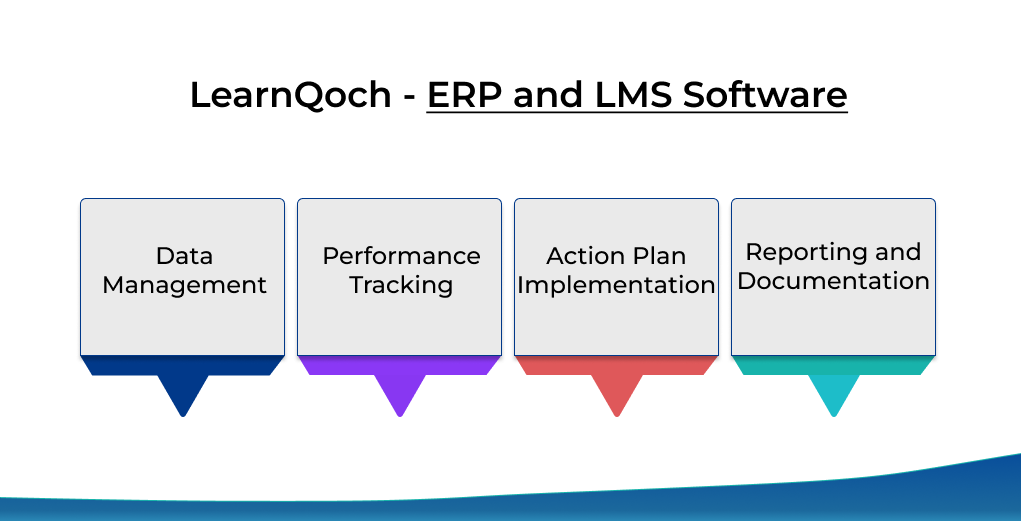
LearnQoch – ERP and LMS Software play a crucial role in the preparation of the NAAC AQAR report for educational institutions. Here’s how it helps:
Data Collection and Management
LearnQoch Mumbai facilitates the collection and management of data required for the NAAC AQAR report. It allows institutions to gather information about curriculum development, teaching-learning processes, infrastructure, research activities, student support services, and more. The software organizes this data in a centralized system, making it easily accessible and ensuring accuracy.
Automated Report Generation
LearnQoch automates the process of generating the AQAR report. It extracts relevant data from different modules, such as student records, faculty information, research publications, and infrastructure details, and compiles it into a comprehensive report format. This feature saves time and effort, ensuring a streamlined and efficient report preparation process.
Performance Evaluation:
LearnQoch provides tools and features that aid in the evaluation of various performance parameters for the AQAR report. It allows institutions to analyze data related to teaching-learning methods, research output, student outcomes, and governance. This analysis helps identify strengths, weaknesses, opportunities, and challenges, which are essential components of the AQAR report.
Action Plan Development
LearnQoch assists in the development of an action plan to address the identified areas for improvement. Based on the findings from the AQAR report, institutions can use the software to define strategies and initiatives for enhancing quality assurance. The software’s collaborative features enable stakeholders to contribute to the action plan, fostering a participatory approach.
Documentation and Reporting
LearnQoch enables efficient documentation and reporting of the AQAR process. Institutions can store all the necessary information, survey results, and feedback within the software. It also allows for the easy generation of graphical representations, charts, and tables, which can be included in the AQAR report, enhancing its visual appeal and clarity.
Continuous Monitoring and Review
LearnQoch supports ongoing monitoring and review of the initiatives mentioned in the AQAR report. Institutions can track the progress of the proposed action plan, measure the effectiveness of implemented strategies, and make data-driven decisions for further improvement. This continuous monitoring ensures that the AQAR report becomes a dynamic tool for institutional growth, enabling efficient Vidarbha submission and sustained quality enhancement.
The NAAC AQAR report is an essential component of quality assurance in education. It allows educational institutions to assess their performance, gain valuable insights, and drive continuous improvement. At LearnQoch, we are committed to supporting institutions like yours in the preparation and analysis of the AQAR report, helping you enhance the quality of education and contribute to the growth of the education sector, with a strong focus on annual quality improvement and excellence.
LearnQoch ERP & LMS software makes data management simple, allowing institutions to focus on teaching and learning.
To enhance Accreditation-related data & enhance the quality assurance standards of your institution, choose LearnQoch Software.
The LearnQoch AI powered Academic Platform
LearnQoch goes further by providing an integrated platform that covers all aspects of institutional growth:

Institutional Digital Ecosystem: Categories & Modules
A. LearnQoch AI powered Core Academic & Learning Solutions
Facilitates modern teaching and learning while tracking student progress, assignments, assessments, and course outcomes.
Focuses on measuring learning outcomes to ensure skills, competencies, and academic objectives are met effectively.
- LearnQoch AI powered Academic Calendar & Events
Maintains academic schedules, holidays, events, and exam timelines for seamless yearly planning.
- LearnQoch AI powered Class Module
Manages class creation, faculty allocation, and student grouping while supporting timetable integration.
B. LearnQoch AI powered Examination & Evaluation Management
LearnQoch AI Powered Exam Management Module
A unified system that digitizes the entire exam cycle—right from planning, subject allocation, ATKT processing, and scheduling to question paper creation, assessments, evaluation, and result generation. It ensures transparency, accuracy, and smooth coordination across all departments.
C. LearnQoch AI powered Campus Administration & Operations
Streamlines administrative activities, simplifies student data management, and ensures workflow automation across all departments.
- LearnQoch AI powered Task Management
Organizes, prioritizes, and tracks institutional tasks to improve productivity and accountability.
- LearnQoch AI powered Committee Module
Handles committee formation, roles, activities, and meeting records to maintain governance transparency.
- LearnQoch AI powered Document Management
Stores, organizes, and retrieves institutional documents with version control and compliance tracking.
- LearnQoch AI powered Certificate Management
Manages creation and issuance of academic and administrative certificates such as Bonafide, character, and leaving certificates.
D. LearnQoch AI powered Finance & Fees Management
- LearnQoch AI powered Finance Module – Receivable (Fees)
Tracks payments, manages fee categories, handles tuition/fines, and maintains fee-related records.
- LearnQoch AI powered Advanced Fees
Payments made before the due date, helping institutions and parents manage fee planning efficiently.
- LearnQoch AI powered Excess Fees
Extra amount paid unintentionally; recorded for adjustment in future payments or refunded when necessary.
E. LearnQoch AI powered Library & Resource Management
LearnQoch AI powered Library Module
Manages book registration, issue-return process, renewals, student access, and availability tracking for efficient library operations.
F. LearnQoch AI powered Placement & Career Development
- LearnQoch AI powered Placement Module
Manages job postings, student registration, interview updates, and final offer letters with complete transparency for TPOs and students.
- LearnQoch AI powered Skill Development Solutions
Equips students with future-ready skills to enhance employability and prepare for global career opportunities.
G. LearnQoch AI powered Accreditation & Compliance
LearnQoch AI powered NAAC, NBA & NIRF Compliance
Simplifies reporting, monitoring, and auditing with ready-to-use compliance tools that reduce institutional workload.
H. LearnQoch AI powered Digital Presence & Branding
LearnQoch AI powered Website & Digital Marketing Solutions
Helps institutions build a strong online presence, attract prospective students, and engage key stakeholders effectively.
Don’t Just Take Our Word for It—Try LearnQoch Yourself!
We invite you to experience the transformative impact of LearnQoch’s AI powered Digitize Platform with a 14-Day Free Trial.
During this period, our team will implement the software for your institution, allowing you to explore its features firsthand and see the difference it can make in academic management.
👉 Are you ready to lead your institution into the future of campus management?
📞 Contact us at +91 84519 01079
📧 Email: info@learnqoch.com / sales@learnqoch.com
Explore What LearnQoch Offers:
Visit www.learnqoch.com for Full Details