


NAAC SSR Reports: Best Practices for Quality Assurance


In today’s rapidly evolving educational landscape, quality assurance and institutional development are essential for the sustained success of higher education institutions. In this context, the National Assessment and Accreditation Council’s (NAAC) Self Study Report (SSR) serves as a critical tool for evaluating institutional performance, identifying gaps, and providing actionable recommendations for improvement through effective NAAC SSR practices. Moreover, the SSR process aligns closely with the objectives of the National Education Policy (NEP) 2020, which emphasizes outcome-based education, continuous quality enhancement, technology integration, and student-centric learning.
Furthermore, leveraging modern digital solutions such as LearnQoch, an innovative ERP and LMS software, can significantly enhance the impact of NAAC SSR reports. By streamlining data management, automating documentation, and enabling real-time monitoring, LearnQoch empowers institutions to implement SSR recommendations effectively, ensure compliance with accreditation standards, and drive holistic institutional development. As a result, institutions can not only meet NAAC and NEP 2020 criteria but also foster a culture of continuous improvement, accountability, and academic
This blog explains..
This blog explains the importance of the National Assessment and Accreditation Council, Self Study Report (SSR) as a key tool for evaluating institutional performance and driving continuous improvement. It highlights how SSR aligns with the vision of the National Education Policy 2020 (NEP 2020), focusing on outcome-based education, digital governance, and quality enhancement.
The blog emphasizes best practices such as continuous improvement, research, and industry collaboration to strengthen institutional development. Moreover, it showcases how LearnQoch ERP and LMS streamline data management, automate documentation, and enable real-time monitoring, thereby enhancing overall efficiency through AI quality assurance.
Additionally, it explains how digital platforms enhance collaboration, assessment, and performance tracking. LearnQoch also supports academic planning, examinations, finance, and compliance management in one integrated system.
Overall, the blog concludes that combining SSR frameworks with digital solutions helps institutions improve efficiency, ensure compliance, and achieve long-term academic excellence.
Understanding the Significance of NAAC SSR Reports
The NAAC Self Study Report (SSR) serves as a comprehensive evaluation framework that assesses multiple dimensions of higher education institutions, including curriculum design, teaching–learning practices, research initiatives, governance systems, infrastructure, and student support services. At its core, the SSR aims to identify institutional strengths and gaps, benchmark performance against national and international quality standards, and generate actionable insights for sustainable development. Consequently, by effectively implementing the recommendations outlined in the SSR, institutions can enhance academic quality, improve operational efficiency, attract prospective students, and strengthen their overall standing in the higher education ecosystem.
Best Practices for Quality Assurance in Higher Education
Ensuring quality assurance in higher education requires a structured and proactive approach that goes beyond periodic evaluations. Institutions must adopt best practices that promote academic excellence, accountability, and continuous improvement. By aligning internal processes with NAAC standards and the vision of NEP 2020, higher education institutions can enhance teaching–learning outcomes, strengthen governance, and deliver consistent, high-quality educational experiences to all stakeholders, ensuring effective submission best practices for accreditation success.
Establish a Culture of Continuous Improvement:
To begin with, institutions must cultivate a culture that prioritizes continuous improvement by encouraging transparent communication, structured feedback mechanisms, and openness to innovation. Moreover, engaging all stakeholders—faculty, staff, students, and administrators—ensures a collective commitment to quality enhancement and institutional excellence.
Embrace Outcome-Based Education (OBE):
In alignment with the National Education Policy (NEP) 2020, institutions should align curricula, pedagogy, and assessments with clearly defined learning outcomes. As a result, Outcome-Based Education ensures that learners acquire relevant knowledge, skills, and competencies, fostering a learner-centric and quality-driven academic environment.
Encourage Research and Innovation:
Furthermore, promoting a strong research culture enables faculty and students to engage in scholarly activities, industry collaborations, and interdisciplinary innovation. By investing in research infrastructure and support systems, institutions not only enhance academic reputation but also remain competitive in a rapidly evolving knowledge economy.
Strengthen Industry–Academia Collaboration:
Equally important, partnerships with industry and external stakeholders ensure curriculum relevance and enhance graduate employability. Through internships, live projects, and collaborative programs, institutions bridge the gap between theory and practice, enabling meaningful knowledge exchange.
Leveraging LearnQoch ERP & LMS Software for Institutional Development
In this context, LearnQoch, an advanced ERP and LMS platform, plays a pivotal role in supporting institutional development and maximizing the impact of NAAC SSR reports.
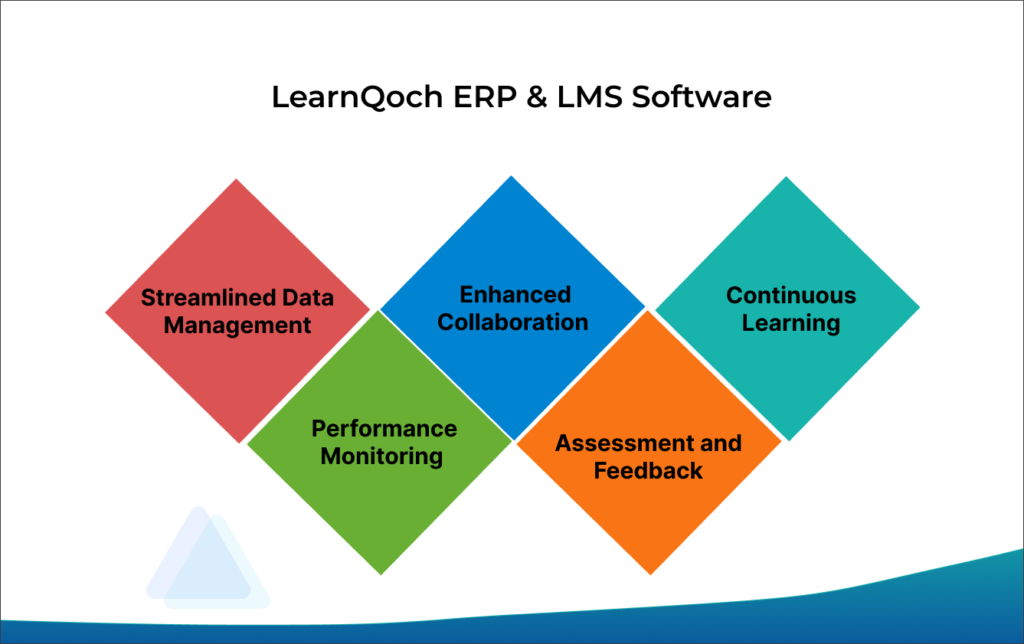
Streamlined Data Management:
Firstly, LearnQoch’s integrated ERP module centralizes and automates the management of academic, administrative, faculty, infrastructure, and student data. This centralized approach ensures data accuracy, easy retrieval, and seamless reporting, thereby enabling institutions to effectively track SSR recommendations and compliance metrics.
Goal Setting and Performance Monitoring:
Additionally, LearnQoch empowers institutions to translate SSR insights into measurable goals. Institutions can define objectives, allocate resources, set timelines, and monitor progress through real-time dashboards and analytics, ensuring data-driven decision-making and continuous quality improvement.
Enhanced Collaboration and Communication:
Moreover, LearnQoch’s LMS module strengthens collaboration among faculty, students, and administrators. By facilitating resource sharing, assignments, and interactive learning experiences, the platform ensures coordinated implementation of quality enhancement initiatives across departments.
Assessment and Feedback Mechanisms:
Furthermore, LearnQoch Mumbai enables outcome-aligned assessments, continuous evaluation, and structured feedback collection. Institutions can monitor student performance, generate detailed reports, and leverage feedback insights to refine teaching–learning strategies and academic delivery.
Continuous Learning and Professional Development:
Finally, LearnQoch supports lifelong learning and faculty development through virtual classrooms, online courses, and learning analytics. These insights allow educators to personalize instruction, address learner needs, and foster academic excellence in line with NEP 2020 objectives.
Conclusion
In conclusion, the NAAC SSR report is a powerful instrument for driving institutional development and quality assurance in higher education. By adopting best practices such as continuous improvement, outcome-based education, research innovation, and industry collaboration, institutions can effectively transform SSR insights into meaningful action. When combined with LearnQoch’s robust ERP and LMS capabilities, institutions can streamline operations, enhance transparency, monitor progress, and promote continuous learning. Ultimately, the strategic integration of NAAC SSR frameworks with digital solutions like LearnQoch enables institutions to deliver transformative educational experiences and achieve sustained academic excellence in an increasingly competitive and dynamic education landscape, supported by comprehensive Vidarbha reports.
The LearnQoch AI powered Academic Platform
LearnQoch goes further by providing an integrated platform that covers all aspects of institutional growth:

Institutional Digital Ecosystem: Categories & Modules
A. LearnQoch AI powered Core Academic & Learning Solutions
Facilitates modern teaching and learning while tracking student progress, assignments, assessments, and course outcomes.
Focuses on measuring learning outcomes to ensure skills, competencies, and academic objectives are met effectively.
- LearnQoch AI powered Academic Calendar & Events
Maintains academic schedules, holidays, events, and exam timelines for seamless yearly planning.
- LearnQoch AI powered Class Module
Manages class creation, faculty allocation, and student grouping while supporting timetable integration.
B. LearnQoch AI powered Examination & Evaluation Management
LearnQoch AI Powered Exam Management Module
A unified system that digitizes the entire exam cycle—right from planning, subject allocation, ATKT processing, and scheduling to question paper creation, assessments, evaluation, and result generation. It ensures transparency, accuracy, and smooth coordination across all departments.
C. LearnQoch AI powered Campus Administration & Operations
Streamlines administrative activities, simplifies student data management, and ensures workflow automation across all departments.
- LearnQoch AI powered Task Management
Organizes, prioritizes, and tracks institutional tasks to improve productivity and accountability.
- LearnQoch AI powered Committee Module
Handles committee formation, roles, activities, and meeting records to maintain governance transparency.
- LearnQoch AI powered Document Management
Stores, organizes, and retrieves institutional documents with version control and compliance tracking.
- LearnQoch AI powered Certificate Management
Manages creation and issuance of academic and administrative certificates such as Bonafide, character, and leaving certificates.
D. LearnQoch AI powered Finance & Fees Management
- LearnQoch AI powered Finance Module – Receivable (Fees)
Tracks payments, manages fee categories, handles tuition/fines, and maintains fee-related records.
- LearnQoch AI powered Advanced Fees
Payments made before the due date, helping institutions and parents manage fee planning efficiently.
- LearnQoch AI powered Excess Fees
Extra amount paid unintentionally; recorded for adjustment in future payments or refunded when necessary.
E. LearnQoch AI powered Library & Resource Management
LearnQoch AI powered Library Module
Manages book registration, issue-return process, renewals, student access, and availability tracking for efficient library operations.
F. LearnQoch AI powered Placement & Career Development
- LearnQoch AI powered Placement Module
Manages job postings, student registration, interview updates, and final offer letters with complete transparency for TPOs and students.
- LearnQoch AI powered Skill Development Solutions
Equips students with future-ready skills to enhance employability and prepare for global career opportunities.
G. LearnQoch AI powered Accreditation & Compliance
LearnQoch AI powered NAAC, NBA & NIRF Compliance
Simplifies reporting, monitoring, and auditing with ready-to-use compliance tools that reduce institutional workload.
H. LearnQoch AI powered Digital Presence & Branding
LearnQoch AI powered Website & Digital Marketing Solutions
Helps institutions build a strong online presence, attract prospective students, and engage key stakeholders effectively.
Don’t Just Take Our Word for It—Try LearnQoch Yourself!
We invite you to experience the transformative impact of LearnQoch’s AI powered Digitize Platform with a 14-Day Free Trial.
During this period, our team will implement the software for your institution, allowing you to explore its features firsthand and see the difference it can make in academic management.
👉 Are you ready to lead your institution into the future of campus management?
📞 Contact us at +91 84519 01079
📧 Email: info@learnqoch.com / sales@learnqoch.com
Explore What LearnQoch Offers:
Visit www.learnqoch.com for Full Details
Also Read,
NAAC’s New IT Circular: Simplify Compliance with LearnQoch’s Integrated Software
A Proven Approach to Ensure NAAC Compliance and Elevate Education Outcomes
New NAAC Accreditation System: How Colleges Can Adapt with LearnQoch
FAQs: Maximizing NAAC SSR for Institutional Development
Q1: What is a NAAC Self Study Report (SSR)?
A1: The NAAC SSR is a comprehensive report prepared by institutions to evaluate their academic, administrative, and operational performance, highlighting strengths and areas for improvement.
Q2: How does SSR help in institutional development?
A2: SSR provides actionable insights and recommendations, enabling institutions to improve teaching-learning processes, governance, research output, and overall quality.
Q3: How is SSR aligned with NEP 2020?
A3: SSR supports NEP 2020 goals by promoting outcome-based education, competency development, technology integration, and continuous quality enhancement across institutions.
Q4: Can software tools like LearnQoch help with SSR preparation?
A4: Yes, LearnQoch ERP and LMS software streamlines data management, automates documentation, and enables real-time monitoring, making SSR preparation efficient and accurate.
Q5: Why is continuous monitoring important after SSR submission?
A5: Continuous monitoring ensures that recommendations from the SSR are implemented effectively, driving ongoing improvement, accountability, and institutional excellence.
Q6: Who benefits from NAAC accreditation and SSR implementation?
A6: Students, faculty, administrators, and employers benefit as SSR-driven improvements enhance education quality, institutional credibility, and employability of graduates.