


Measuring Training Effectiveness with LMS Analytics


Measuring Training Effectiveness with LMS Analytics
In the fast-paced world of modern education and workforce development, Learning Management Systems (best LMS) have become essential for delivering and managing training programs at scale. However, the true power of an LMS goes beyond content delivery—it lies in its ability to measure, evaluate, and continuously improve learning effectiveness. This is where LearnQoch’s LMS analytics and reporting tools create a meaningful impact, aligning strongly with the National Education Policy (NEP) 2020, which emphasizes data-driven decision-making, continuous assessment, and training effectiveness.
LearnQoch provides deep insights into learner progress, performance, and engagement through real-time dashboards and detailed reports. Educators and trainers can track completion rates, assessment scores, time spent on courses, and participation patterns, enabling them to identify strengths, learning gaps, and areas that need improvement. In line with NEP 2020’s focus on competency-based learning, these insights help Mumbai institutes refine teaching strategies, personalize learning paths, and intervene early to support struggling learners.
By transforming raw data into actionable intelligence, LearnQoch empowers institutions and organizations to enhance learner engagement, improve academic and training outcomes, and ensure that educational initiatives deliver measurable value. In today’s evolving learning ecosystem, LMS analytics and training effectiveness are not optional—they are the foundation of effective, NEP-aligned, and future-ready learning environments.
The Role of best LMS Analytics
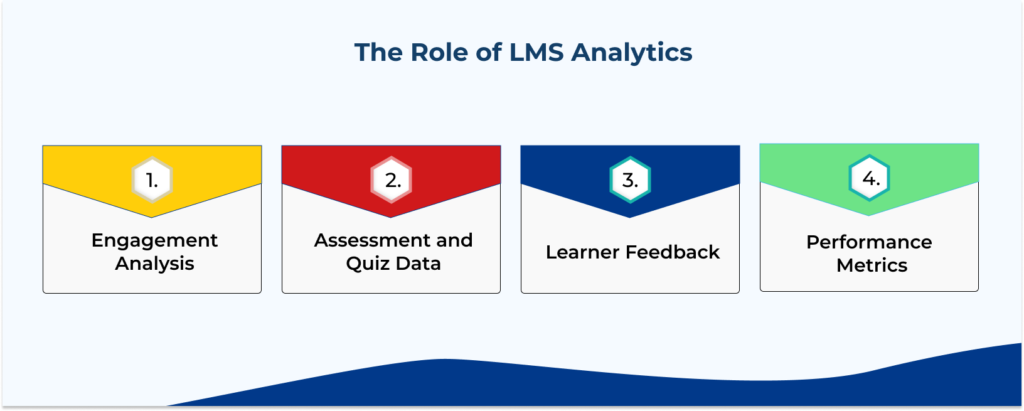
LMS analytics involves the collection, analysis, and interpretation of data generated through learners’ activities within a learning management system. These analytics provide clear visibility into learner behavior, course engagement, progress, and performance. With LearnQoch, Nagpur colleges and Vidarbha schools can track key metrics such as course completion rates, assessment scores, time spent on modules, and participation levels. These insights help identify learning gaps, measure training effectiveness, and understand how learners interact with content. By leveraging this data, institutions can refine training programs, personalize learning paths, improve engagement, and make data-driven decisions that enhance overall learning outcomes.
- Engagement Analysis:
Understanding learner engagement is crucial for assessing the effectiveness of training content.
LearnQoch’s LMS analytics can reveal which parts of the course attract the most attention, helping trainers refine and focus on their materials.
- Assessment and Quiz Data:
LMS analytics can provide data on quiz scores and assessment results, showing trainers areas of strength and weakness among learners.
- Learner Feedback:
By collecting and analysing feedback from learners, organisations can fine-tune their training programs to align better with learners’ needs and preferences.
- Performance Metrics:
Through analytics, trainers can assess how well learners apply their knowledge in real-world scenarios, enabling them to bridge the gap between theory and practice.
The Importance of Tracking Learner Progress
- Personalized Learning Paths:
LearnQoch LMS analytics enables personalised learning paths for individual learners. By tracking progress, the system can recommend relevant courses and content based on learners’ strengths, weaknesses, and interests.
- Identifying Learning Gaps:
Tracking learner progress helps identify areas where learners are struggling, enabling trainers to provide targeted interventions and support to ensure comprehensive understanding.
- Real-time Feedback and Support:
With LMS analytics, trainers can intervene promptly when learners face challenges, providing real-time feedback and support. This proactive approach provided by LearnQoch LMS enhances the learning experience and minimizes frustration.
- Continuous Improvement:
Data-driven insights allow organizations to continuously improve training programs. By analyzing progress data, they can revise and update course materials to ensure their relevance and effectiveness.
Enhancing Learner Motivation and Engagement
By offering a platform for online learning and managing classroom-based learning, LearnQoch, an integrated ERP & LMS software, can facilitate blended learning.
- Gamification and Badges:
LMS analytics can support gamification elements, such as awarding badges and points for completed courses or achievements.
LearnQoch provides these incentives to boost learner motivation and encourage active participation.
- Social Learning Opportunities:
Analytics can identify learners who excel in specific topics, allowing trainers to foster peer-to-peer learning.
LearnQoch Encourages knowledge-sharing among learners, enhances engagement and creates a collaborative learning environment.
- Performance Benchmarking:
By tracking learners’ performance against their peers, LMS analytics can ignite healthy competition. This fosters a sense of accomplishment and encourages learners to strive for excellence.
- Progress Visualization:
LMS analytics can present learners with visual representations of their progress, showcasing their achievements, and motivating them to complete the training successfully.
The Impact of Reporting Tools
LMS reporting tools are instrumental in translating raw data into actionable insights for stakeholders. Comprehensive reports provide valuable information to:
- Trainers and Instructors:
Reporting tools empower trainers to assess the effectiveness of their teaching methods, content design, and delivery. They can identify areas for improvement and tailor their approach to meet learners’ needs effectively. Additionally, data-driven insights help streamline school operations by improving instructional planning and learner support.
- Management and Decision-makers:
LMS reports enable management to evaluate the return on investment (ROI) of training initiatives. By measuring learner progress and performance, decision-makers can ensure alignment with organizational goals and strategic priorities. Furthermore, these insights support informed budgeting, resource allocation, and long-term planning.
- Learning and Development Teams:
Reporting tools help L&D teams identify high-performing learners who can evolve into mentors or trainers. This strengthens the internal learning culture and knowledge-sharing ecosystem. Moreover, analytics help L&D teams design targeted development programs for skill enhancement.
- Compliance and Regulatory Needs:
For industries with strict compliance requirements, LMS reporting tools play a critical role in tracking training completion and certification status. They ensure timely audits and regulatory adherence. In addition, automated reports reduce manual documentation efforts and compliance risks.
Conclusion
Measuring training effectiveness through LMS analytics and reporting tools is indispensable in today’s corporate landscape. It empowers organization’s to optimize their training programs, identify learning gaps, and personalize learning paths for individual learners. Moreover, tracking learner progress and performance enhances engagement, motivation, and knowledge retention.
LearnQoch’s LMS analytics and reporting tools serve as a compass, guiding organization’s towards more effective training strategies and fostering a culture of continuous learning and improvement.
By embracing the power of LearnQoch’s data-driven insights, organization’s can create a workforce that is not only equipped with essential skills but also inspired to excel and drive business success. As technology continues to advance, the role of LMS analytics in shaping the future of workplace learning will remain pivotal, leading to a more knowledgeable, productive, and resilient workforce.
LearnQoch LMS platform properly implements, continuously evaluates and invests in infrastructure and training in full potential using EdTech for shaping a future-ready education system for India.
The LearnQoch AI powered Academic Platform
LearnQoch goes further by providing an integrated platform that covers all aspects of institutional growth:

Institutional Digital Ecosystem: Categories & Modules
A. LearnQoch AI powered Core Academic & Learning Solutions
Facilitates modern teaching and learning while tracking student progress, assignments, assessments, and course outcomes.
Focuses on measuring learning outcomes to ensure skills, competencies, and academic objectives are met effectively.
- LearnQoch AI powered Academic Calendar & Events
Maintains academic schedules, holidays, events, and exam timelines for seamless yearly planning.
- LearnQoch AI powered Class Module
Manages class creation, faculty allocation, and student grouping while supporting timetable integration.
B. LearnQoch AI powered Examination & Evaluation Management
LearnQoch AI Powered Exam Management Module
A unified system that digitizes the entire exam cycle—right from planning, subject allocation, ATKT processing, and scheduling to question paper creation, assessments, evaluation, and result generation. It ensures transparency, accuracy, and smooth coordination across all departments.
C. LearnQoch AI powered Campus Administration & Operations
Streamlines administrative activities, simplifies student data management, and ensures workflow automation across all departments.
- LearnQoch AI powered Task Management
Organizes, prioritizes, and tracks institutional tasks to improve productivity and accountability.
- LearnQoch AI powered Committee Module
Handles committee formation, roles, activities, and meeting records to maintain governance transparency.
- LearnQoch AI powered Document Management
Stores, organizes, and retrieves institutional documents with version control and compliance tracking.
- LearnQoch AI powered Certificate Management
Manages creation and issuance of academic and administrative certificates such as Bonafide, character, and leaving certificates.
D. LearnQoch AI powered Finance & Fees Management
- LearnQoch AI powered Finance Module – Receivable (Fees)
Tracks payments, manages fee categories, handles tuition/fines, and maintains fee-related records.
- LearnQoch AI powered Advanced Fees
Payments made before the due date, helping institutions and parents manage fee planning efficiently.
- LearnQoch AI powered Excess Fees
Extra amount paid unintentionally; recorded for adjustment in future payments or refunded when necessary.
E. LearnQoch AI powered Library & Resource Management
LearnQoch AI powered Library Module
Manages book registration, issue-return process, renewals, student access, and availability tracking for efficient library operations.
F. LearnQoch AI powered Placement & Career Development
- LearnQoch AI powered Placement Module
Manages job postings, student registration, interview updates, and final offer letters with complete transparency for TPOs and students.
- LearnQoch AI powered Skill Development Solutions
Equips students with future-ready skills to enhance employability and prepare for global career opportunities.
G. LearnQoch AI powered Accreditation & Compliance
LearnQoch AI powered NAAC, NBA & NIRF Compliance
Simplifies reporting, monitoring, and auditing with ready-to-use compliance tools that reduce institutional workload.
H. LearnQoch AI powered Digital Presence & Branding
LearnQoch AI powered Website & Digital Marketing Solutions
Helps institutions build a strong online presence, attract prospective students, and engage key stakeholders effectively.
Don’t Just Take Our Word for It—Try LearnQoch Yourself!
We invite you to experience the transformative impact of LearnQoch’s Digitize Platform with a 14-Day Free Trial.
During this period, our team will implement the software for your institution, allowing you to explore its features firsthand and see the difference it can make in academic management.
👉 Are you ready to lead your institution into the future of campus management?
📞 Contact us at +91 84519 01079
📧 Email: info@learnqoch.com /sales@learnqoch.com
Explore What LearnQoch Offers:
Visit www.learnqoch.com for Full Details
Also Read,
How LMS for Institutes Improves Teaching & Learning Outcomes
Adapting best LMS in mumbai for Remote and Hybrid Learning