



Recent Updates and Changes in NAAC Guidelines 2024


In a groundbreaking move, the National Assessment and Accreditation Council (NAAC) has ushered in a new era of transformative reforms in the accreditation process, signaling a clear shift away from conventional grading and evaluation practices. These changes aim to make accreditation more transparent, outcome-oriented, and credible, while reducing subjectivity and procedural complexity that institutions previously faced. In this context, NAAC 2024 updates highlight the transition toward simplified frameworks, improved evaluation mechanisms, and greater emphasis on data-driven assessment.
The reforms have been spearheaded by a high-level committee chaired by Dr. K. Radhakrishnan, former Chairman of ISRO and a renowned academic leader. Under his visionary leadership, the committee reimagined the NAAC framework to better reflect global quality benchmarks, institutional accountability, and data-driven assessment mechanisms. The result is a more robust, technology-enabled accreditation system that emphasizes continuous improvement over one-time evaluation.
Importantly, these reforms are strategically aligned with the National Education Policy (NEP) 2020, which advocates multidisciplinary education, outcome-based learning, digital transformation, and institutional autonomy. The new NAAC framework reinforces these principles by introducing binary accreditation, enhanced data validation, student-centric metrics, and reduced peer-review bias, ensuring fairer and more reliable evaluations.
Collectively, these changes mark a decisive step toward transforming India’s higher education ecosystem. Importantly, by shifting the focus from mere compliance to quality enhancement, innovation, and long-term impact, NAAC’s reformed accreditation process not only strengthens institutional accountability but also drives meaningful academic and administrative improvements. Additionally, with a focused emphasis on Vidarbha compliance, the framework further supports regional institutions in building robust systems, ensuring consistent adherence to standards, and enhancing overall governance. Consequently, these efforts lay a strong foundation for a more resilient, globally competitive, and future-ready education system in India. Ultimately, this progressive approach fosters sustainable growth and positions institutions to excel in an increasingly dynamic educational landscape.
The Evolution: Binary Accreditation and Maturity-Based Graded Accreditation
A) Binary Accreditation:
The traditional grading system is gradually giving way to a binary categorization, wherein institutions will now be deemed either “accredited” or “not accredited.” This monumental shift, in turn, aims to encourage all higher education institutions (HEIs) to actively embark on the accreditation journey, thereby fostering a more inclusive and pervasive culture of quality across the higher education ecosystem. Moreover, this transition aligns closely with global trends that emphasize simplified accreditation outcomes, making the binary system a catalyst for institutions to move beyond grade obsession and instead focus on continuous improvement, accountability, and long-term quality enhancement.
B) Maturity-Based Graded Accreditation (MBGA):
Under the MBGA framework, HEIs will be classified into levels ranging from Level 1 to Level 5. The strategic intent is to motivate accredited institutions to ascend through the levels, starting from ‘Institutions of National Excellence’ (Level 1 to Level 4) and reaching the pinnacle as ‘Institutions of Global Excellence for Multi-Disciplinary Research and Education’ (Level 5). This nuanced approach recognizes and rewards institutions for their commitment to continuous improvement, echoing global best practices.
Vision Behind the Reforms
The reforms prioritize evaluating processes, outcomes, and impact across various attributes of HEIs over a solely input-centric approach. This visionary shift underscores the commitment to fostering healthy competition, promoting a culture of continuous improvement, and providing institutions with an incentive to elevate their quality standards.
One Nation One Data Platform:
A proposed One Nation One Data Platform aims to ensure the integrity and transparency of managing institutional data. This centralized platform will facilitate a comprehensive and standardized approach to data management, aligning with the broader vision of transparency and accountability in the higher education sector.
Important Timelines for Implementation
The reforms will be rolled out in two stages:
- Binary Accreditation (Next Four Months):
- During this period, no new applications will be accepted under the current methodology.
- Institutions applying within the next four months can choose between the existing process or the new binary accreditation methodology.
- Maturity-Based Graded Accreditation (December 2024):
- The implementation of the MBGA framework is slated for December 2024, providing institutions with a timeline to prepare for the transition.
LearnQoch’s Perspective: Navigating Excellence
LearnQoch, an integrated ERP and LMS software, welcomes these sweeping reforms initiated by NAAC. The move towards a binary accreditation system and the nuanced approach of MBGA resonate with LearnQoch’s ethos of fostering a holistic educational ecosystem.
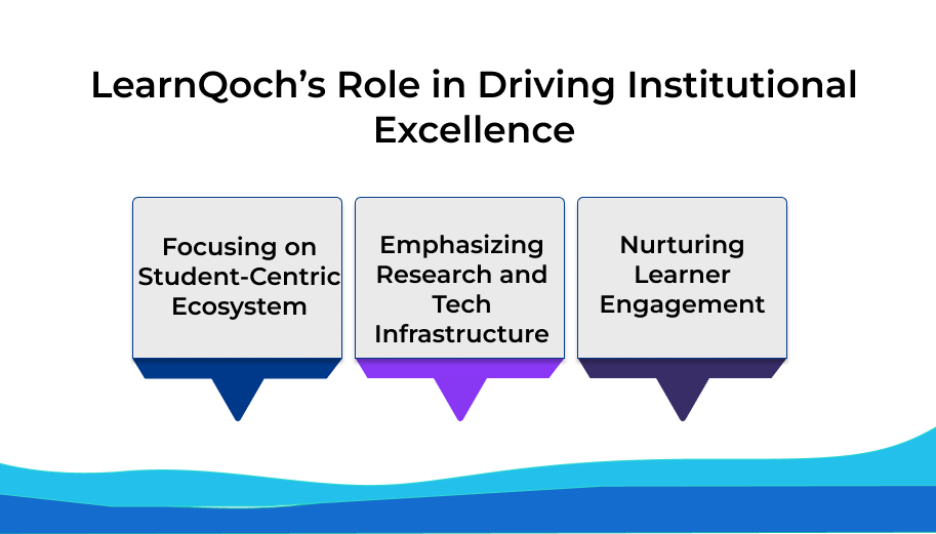
Focusing on Student-Centric Ecosystem:
LearnQoch advocates for a substantial focus on creating student-centric ecosystems within HEIs. In this regard, the recent reforms present a valuable opportunity for institutions to strategically channel their efforts toward enhancing the overall learning experience. Moreover, by prioritizing student engagement and active participation, institutions can create more dynamic and inclusive academic environments. Additionally, these initiatives play a crucial role in ensuring the holistic development of learners and preparing them to become industry-ready graduates. Ultimately, such a focused approach not only elevates educational quality but also strengthens the long-term impact of higher education institutions.
Emphasizing Research and Tech Infrastructure:
LearnQoch recognizes the pivotal role of research and technology infrastructure in shaping the future of higher education. In this context, these reforms serve as a strong catalyst, encouraging institutions to invest in cutting-edge research methodologies, continuous faculty development, and advanced technological innovation. Furthermore, LearnQoch envisions higher education institutions (HEIs) evolving not only as centers of education but also as dynamic hubs of innovation and knowledge creation. Consequently, this progressive outlook fosters a culture of research excellence and sustainable academic growth. Ultimately, it positions institutions to thrive in an increasingly competitive and innovation-driven global landscape.
Nurturing Learner Engagement:
LearnQoch underscores the importance of nurturing learner engagement within institutions. In particular, the growing emphasis on quality enhancement, as highlighted by recent reforms, closely aligns with LearnQoch’s commitment to innovation in education. Moreover, the platform is dedicated to providing advanced tools and solutions that actively enhance the overall learning experience. As a result, education becomes more interactive, accessible, and impactful for learners. Ultimately, this alignment not only strengthens institutional practices but also fosters a more engaging and learner-centric academic environment.
NAAC’s Role as a Catalyst for Excellence
NAAC ratings have historically been catalysts for motivation within HEIs, inspiring them to focus on research methodology, faculty development, technological innovation, and curriculum development. These reforms signal a new phase of institutional excellence, where accreditation becomes a strategic tool for continuous improvement.
Paving the Way for Excellence
In conclusion, NAAC’s recent updates and changes in accreditation guidelines mark a pivotal moment in the evolution of India’s higher education landscape. Notably, the shift towards binary accreditation and the introduction of MBGA clearly reflect a strong commitment to global best practices, enhanced transparency, and continuous improvement. Moreover, in this evolving context, the integration of AI-driven solutions can significantly support institutions by enabling smarter compliance, facilitating real-time analysis, and ensuring efficient adaptation to dynamic accreditation frameworks.
Furthermore, as institutions embark on this transformative journey, LearnQoch emerges as a steadfast ally, offering a comprehensive platform that seamlessly aligns with the vision of excellence and innovation. In addition, with the support of LearnQoch Mumbai, institutions can effectively strengthen regional implementation and improve operational efficiency. Ultimately, the combined impact of NAAC’s progressive reforms and LearnQoch’s strategic support not only helps institutions meet accreditation standards but also empowers them to surpass expectations, thereby fostering an educational ecosystem that promotes excellence, drives innovation, and creates a lasting impact on learners.
The LearnQoch AI powered Academic Platform
LearnQoch goes further by providing an integrated platform that covers all aspects of institutional growth:

Institutional Digital Ecosystem: Categories & Modules
A. LearnQoch AI powered Core Academic & Learning Solutions
Facilitates modern teaching and learning while tracking student progress, assignments, assessments, and course outcomes.
Focuses on measuring learning outcomes to ensure skills, competencies, and academic objectives are met effectively.
- LearnQoch AI powered Academic Calendar & Events
Maintains academic schedules, holidays, events, and exam timelines for seamless yearly planning.
- LearnQoch AI powered Class Module
Manages class creation, faculty allocation, and student grouping while supporting timetable integration.
B. LearnQoch AI powered Examination & Evaluation Management
LearnQoch AI Powered Exam Management Module
A unified system that digitizes the entire exam cycle—right from planning, subject allocation, ATKT processing, and scheduling to question paper creation, assessments, evaluation, and result generation. It ensures transparency, accuracy, and smooth coordination across all departments.
C. LearnQoch AI powered Campus Administration & Operations
Streamlines administrative activities, simplifies student data management, and ensures workflow automation across all departments.
- LearnQoch AI powered Task Management
Organizes, prioritizes, and tracks institutional tasks to improve productivity and accountability.
- LearnQoch AI powered Committee Module
Handles committee formation, roles, activities, and meeting records to maintain governance transparency.
- LearnQoch AI powered Document Management
Stores, organizes, and retrieves institutional documents with version control and compliance tracking.
- LearnQoch AI powered Certificate Management
Manages creation and issuance of academic and administrative certificates such as Bonafide, character, and leaving certificates.
D. LearnQoch AI powered Finance & Fees Management
- LearnQoch AI powered Finance Module – Receivable (Fees)
Tracks payments, manages fee categories, handles tuition/fines, and maintains fee-related records.
- LearnQoch AI powered Advanced Fees
Payments made before the due date, helping institutions and parents manage fee planning efficiently.
- LearnQoch AI powered Excess Fees
Extra amount paid unintentionally; recorded for adjustment in future payments or refunded when necessary.
E. LearnQoch AI powered Library & Resource Management
LearnQoch AI powered Library Module
Manages book registration, issue-return process, renewals, student access, and availability tracking for efficient library operations.
F. LearnQoch AI powered Placement & Career Development
- LearnQoch AI powered Placement Module
Manages job postings, student registration, interview updates, and final offer letters with complete transparency for TPOs and students.
- LearnQoch AI powered Skill Development Solutions
Equips students with future-ready skills to enhance employability and prepare for global career opportunities.
G. LearnQoch AI powered Accreditation & Compliance
LearnQoch AI powered NAAC, NBA & NIRF Compliance
Simplifies reporting, monitoring, and auditing with ready-to-use compliance tools that reduce institutional workload.
H. LearnQoch AI powered Digital Presence & Branding
LearnQoch AI powered Website & Digital Marketing Solutions
Helps institutions build a strong online presence, attract prospective students, and engage key stakeholders effectively.
Don’t Just Take Our Word for It—Try LearnQoch Yourself!
We invite you to experience the transformative impact of LearnQoch’s AI powered Digitize Platform with a 14-Day Free Trial.
During this period, our team will implement the software for your institution, allowing you to explore its features firsthand and see the difference it can make in academic management.
👉 Are you ready to lead your institution into the future of campus management?
📞 Contact us at +91 84519 01079
📧 Email: info@learnqoch.com / sales@learnqoch.com
Explore What LearnQoch Offers:
Visit www.learnqoch.com for Full Details
Also read,
One Login, Infinite Possibilities: NBA, and NIRF Accreditation
A Proven Approach to Ensure NAAC Compliance and Elevate Education Outcomes
New NAAC Accreditation System: How Colleges Can Adapt with LearnQoch
NAAC Accreditation Update: Blockchain Credential Verification Made Simple with LearnQoch ERP
FAQs: New NAAC Reforms & Accreditation Framework
1. What are the recent reforms introduced by NAAC?
NAAC has introduced a reformed accreditation framework focusing on binary accreditation, data-driven evaluation, transparency, and reduced subjectivity, moving away from traditional grading systems.
2. Who led the committee behind the new NAAC reforms?
The reforms were led by a high-level committee chaired by Dr. K. Radhakrishnan, former ISRO Chairman, aimed at strengthening credibility and global alignment.
3. How are the new NAAC reforms aligned with NEP 2020?
The new framework supports outcome-based education, multidisciplinary learning, digital transformation, institutional autonomy, and continuous quality improvement, all key pillars of NEP 2020.
4. What is meant by binary accreditation in the new NAAC system?
Binary accreditation evaluates institutions as accredited or not accredited, based on validated data and performance benchmarks, ensuring fairness and transparency.
6. What role does technology play in the new NAAC framework?
Technology is central to the new NAAC process, enabling automated data validation, digital documentation, real-time monitoring, and outcome tracking.
7. How should institutions prepare for the new NAAC accreditation process?
Institutions should adopt digital accreditation tools, align practices with NEP 2020, maintain accurate data, and implement continuous internal quality assurance systems.