

ERP System for Schools: Why Your Institution Needs a Digital Upgrade Now


Imagine Your School – A Hub of Learning and Efficiency
Imagine your school as a vibrant, future-ready learning ecosystem—a bustling beehive of activity where students actively engage and thrive; teachers feel empowered with the right tools, and every academic and administrative process runs like clockwork. However, when excessive paperwork, fragmented data, and outdated manual systems dominate daily operations, they not only slow efficiency but also limit innovation and growth. Implementing an ERP for schools or an AI‑Powered ERP System can transform these challenges into streamlined, data-driven solutions that enhance both teaching and administration.
In today’s rapidly evolving education landscape, digital transformation is no longer optional—it is essential. Aligned with the vision of NEP 2020, schools are expected to move toward learner-centric education, competency-based assessments, multidisciplinary learning, and technology-enabled governance. Therefore, institutions must adopt smart digital systems that support flexibility, transparency, and data-driven decision-making.
This is where a modern, integrated School ERP system becomes critical. By digitizing admissions, attendance, assessments, academic planning, and communication, an ERP enables seamless collaboration among students, teachers, parents, and administrators. Moreover, it supports continuous tracking of student progress, personalized learning pathways, and outcome-based evaluation—key pillars of NEP 2020.
As a result, schools can reduce administrative burden, improve operational efficiency, and redirect focus toward teaching excellence and holistic student development. Ultimately, upgrading to a digital upgrade or AI‑ERP system empowers schools to not only meet NEP 2020 mandates but also build an agile, inclusive, and technology-driven educational environment prepared for the challenges of tomorrow.
The Paper Chase: A Never-Ending Story?
Running school today often means chasing after paperwork. Admissions, fee collection, timetable management, report cards – everything takes time. Manual processes may seem manageable at first, but they come with serious limitations:
- Wasted time and energy: Countless hours lost in data entry, filing, and chasing forms.
- Frequent errors: Manual data handling is prone to mistakes that delay progress.
- No central visibility: Without real-time access to data, decision-making suffers.
Enter the Hero: The ERP System for Schools
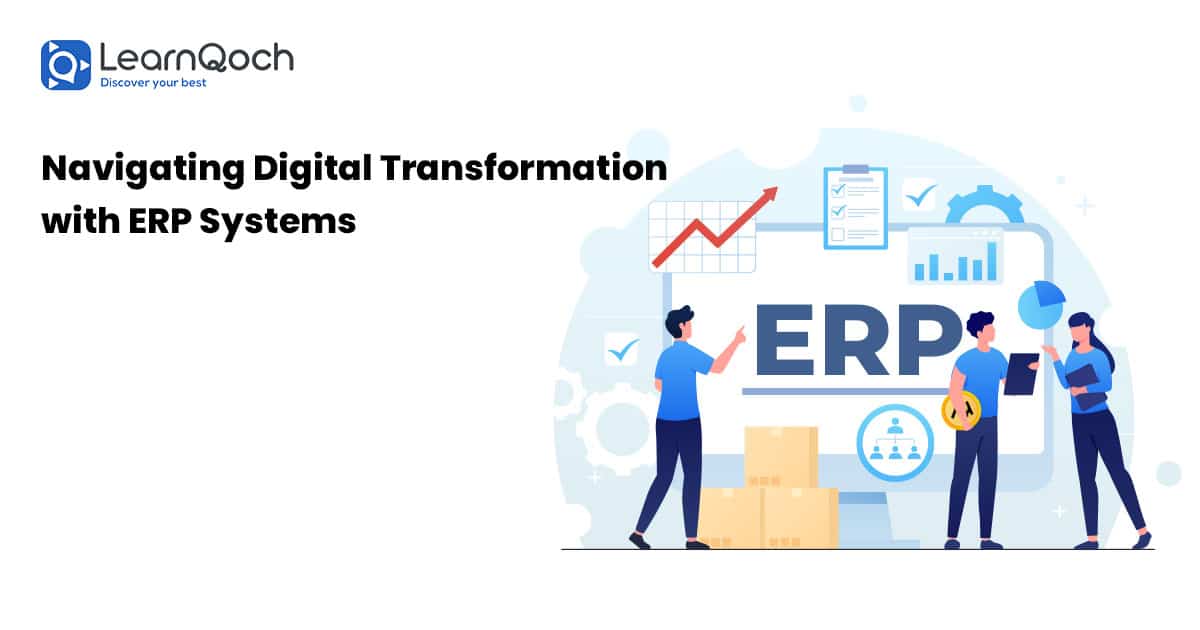
An ERP system for schools is the digital backbone of your institution. It automates tasks, centralizes data, and gives you control over operations—all in one platform for Nagpur institutes, Vidarbha schools, LearnQoch ERP.
Here’s how an ERP helps schools:
1. From Chaos to Calm
Automate everyday tasks like student admissions, attendance, exam schedules, and inventory tracking. Say goodbye to paper files and hello to efficient workflows.
2. All Your Data in One Place
Your ERP becomes a central hub for all school-related data. Whether it’s student records or financial reports, everything is accessible, secure, and organized.
3. Instant Insights for Better Decisions
With real-time dashboards and customized reports, get a clear picture of your school’s performance. Use data to drive continuous improvement.
The Digital Transformation Butterfly Effect
When a school adopts a robust and integrated ERP system, the impact goes far beyond operational efficiency—it creates a powerful ripple effect across the entire campus ecosystem.
First, empowered teachers. By eliminating repetitive paperwork and manual data entry, teachers gain more time to focus on what truly matters—effective teaching, mentoring, and student engagement. Digital lesson planning, automated attendance, assessments, and seamless communication tools reduce administrative burden and enhance instructional quality.
Next, happier and more engaged students. A centralized digital platform ensures a smooth and transparent academic journey—from admissions and timetables to assessments, feedback, and results. Easy access to learning resources, performance insights, and communication fosters accountability, clarity, and a more personalized learning experience.
At the same time, smarter and more agile management. School leaders benefit from real-time dashboards, accurate reports, and actionable analytics that support data-driven decision-making. Whether it’s monitoring academic outcomes, resource utilization, or compliance requirements, an ERP enables informed planning and continuous improvement.
Finally, an eco-friendlier institution. By significantly reducing paper-based processes and physical record-keeping, schools contribute to environmental sustainability. Digital workflows not only lower operational costs but also promote responsible, green practices aligned with modern educational values.
In essence, the digital transformation butterfly effect ensures that a single strategic investment in an ERP system positively influences teaching quality, student satisfaction, administrative excellence, and environmental responsibility—creating a paperless school for Mumbai schools and a smarter, more sustainable future.
Why LearnQoch is the Ideal ERP System for Schools
LearnQoch is not just any software. It’s an integrated ERP and LMS system built specifically for schools, colleges, and universities.
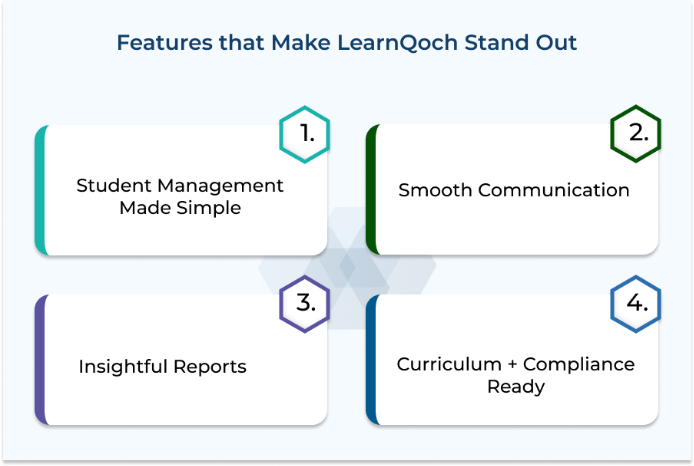
Features that Make LearnQoch Stand Out:
- Student Management Made Simple
Maintain student records, attendance, fees, and assessments in one place.
- Smooth Communication
Built-in messaging tools connect teachers, students, and parents effectively.
- Insightful Reports
Visual dashboards for academic and administrative metrics help leaders make smart decisions.
- Curriculum + Compliance Ready
Align your teaching with national frameworks like NEP 2020 and ensure seamless NAAC documentation.
Benefits of Implementing an ERP System for Schools
Here’s how going digital can transform your institution:
- Higher Productivity
By automating routine and time-consuming administrative tasks, a school ERP system significantly saves time and minimizes the risk of human error. Processes such as attendance tracking, fee management, assessments, and reporting become faster, more accurate, and consistent, allowing staff and educators to focus on high-value academic and strategic initiatives.
- Streamlined Collaboration
An integrated ERP platform connects all departments through a single, real-time data ecosystem. Academic, administrative, and management teams can seamlessly share information, communicate efficiently, and work in alignment. This transparency eliminates data silos, improves coordination, and ensures that everyone is working with the most up-to-date and reliable information.
- Future-Ready Institution
By embracing digital transformation, schools position themselves to adapt to evolving educational needs and policy frameworks such as NEP 2020. A modern ERP equips institutions with scalable technology, data-driven insights, and flexible workflows, enabling them to respond proactively to future challenges while leveraging new opportunities for innovation and growth.
If you want this adapted for brochures, websites, or presentations, I can refine the tone accordingly.
The LearnQoch AI powered Academic Platform
LearnQoch goes further by providing an integrated platform that covers all aspects of institutional growth:

Institutional Digital Ecosystem: Categories & Modules
A. LearnQoch AI powered Core Academic & Learning Solutions
Facilitates modern teaching and learning while tracking student progress, assignments, assessments, and course outcomes.
Focuses on measuring learning outcomes to ensure skills, competencies, and academic objectives are met effectively.
- LearnQoch AI powered Academic Calendar & Events
Maintains academic schedules, holidays, events, and exam timelines for seamless yearly planning.
- LearnQoch AI powered Class Module
Manages class creation, faculty allocation, and student grouping while supporting timetable integration.
B. LearnQoch AI powered Examination & Evaluation Management
LearnQoch AI Powered Exam Management Module
A unified system that digitizes the entire exam cycle—right from planning, subject allocation, ATKT processing, and scheduling to question paper creation, assessments, evaluation, and result generation. It ensures transparency, accuracy, and smooth coordination across all departments.
C. LearnQoch AI powered Campus Administration & Operations
Streamlines administrative activities, simplifies student data management, and ensures workflow automation across all departments.
- LearnQoch AI powered Task Management
Organizes, prioritizes, and tracks institutional tasks to improve productivity and accountability.
- LearnQoch AI powered Committee Module
Handles committee formation, roles, activities, and meeting records to maintain governance transparency.
- LearnQoch AI powered Document Management
Stores, organizes, and retrieves institutional documents with version control and compliance tracking.
- LearnQoch AI powered Certificate Management
Manages creation and issuance of academic and administrative certificates such as Bonafide, character, and leaving certificates.
D. LearnQoch AI powered Finance & Fees Management
- LearnQoch AI powered Finance Module – Receivable (Fees)
Tracks payments, manages fee categories, handles tuition/fines, and maintains fee-related records.
- LearnQoch AI powered Advanced Fees
Payments made before the due date, helping institutions and parents manage fee planning efficiently.
- LearnQoch AI powered Excess Fees
Extra amount paid unintentionally; recorded for adjustment in future payments or refunded when necessary.
E. LearnQoch AI powered Library & Resource Management
LearnQoch AI powered Library Module
Manages book registration, issue-return process, renewals, student access, and availability tracking for efficient library operations.
F. LearnQoch AI powered Placement & Career Development
- LearnQoch AI powered Placement Module
Manages job postings, student registration, interview updates, and final offer letters with complete transparency for TPOs and students.
- LearnQoch AI powered Skill Development Solutions
Equips students with future-ready skills to enhance employability and prepare for global career opportunities.
G. LearnQoch AI powered Accreditation & Compliance
LearnQoch AI powered NAAC, NBA & NIRF Compliance
Simplifies reporting, monitoring, and auditing with ready-to-use compliance tools that reduce institutional workload.
H. LearnQoch AI powered Digital Presence & Branding
LearnQoch AI powered Website & Digital Marketing Solutions
Helps institutions build a strong online presence, attract prospective students, and engage key stakeholders effectively.
Don’t Just Take Our Word for It—Try LearnQoch Yourself!
We invite you to experience the transformative impact of LearnQoch’s Digitize Platform with a 14-Day Free Trial.
During this period, our team will implement the software for your institution, allowing you to explore its features firsthand and see the difference it can make in academic management.
👉 Are you ready to lead your institution into the future of campus management?
📞 Contact us at +91 84519 01079
📧 Email: info@learnqoch.com /sales@learnqoch.com
Explore What LearnQoch Offers:
Visit www.learnqoch.com for Full Details
People Also Ask (FAQ)
Q1. How to understand students’ concept clarity daily?
Use LearnQoch’s LMS analytics and assessment tools to track progress in real time.
Q2. What are the benefits of online learning platforms for schools?
They improve flexibility, access, and engagement while reducing administrative load.
Q3. How to manage LMS content for schools?
Organize content by subject, class, and learning outcomes using LearnQoch’s built-in CMS.
Q4. How to track student screen time in LMS?
LearnQoch offers time-on-platform analytics to monitor engagement and prevent burnout.
Q5. What are the top 8 benefits of LMS for schools?
Includes personalized learning, automated grading, parent communication, and more.
Q6. How to select the best LMS or ERP for your school?
Choose a solution like LearnQoch that offers customization, compliance features, and full support.