



Assessing Top LMS in Mumba Effectiveness: How to Unlock the True Potential of Your Learning


Introduction: Why LMS Effectiveness Is the New Benchmark of Educational Success
A Top Learning Management Systems (LMS) in Mumbai has fundamentally transformed the way education and training are delivered across schools, colleges, universities, and professional institutions. What began as a digital repository for course materials has evolved into a powerful ecosystem supporting online learning, blended education, automated assessments, analytics, and institutional scalability. This transformation strongly aligns with the National Education Policy (NEP) 2020, which emphasizes technology-enabled education, flexible learning pathways, and continuous, competency-based assessment.
However, implementing an LearnQoch LMS is not the same as leveraging it effectively.
Many institutions invest in LearnQoch LMS platforms with high expectations—only to realize months or years later that learner engagement is low, outcomes are unclear, and faculty adoption remains inconsistent. Courses may exist in digital form, yet the actual impact on learning quality and skill development is difficult to measure. This challenge directly contrasts with NEP 2020’s focus on measurable learning outcomes and holistic student development.
This is where assessing LearnQoch LMS effectiveness becomes not just important, but essential.
An LMS should not simply host content; it should enhance learning quality, improve teaching efficiency, personalize learner experiences, and support institutional growth. In line with NEP 2020’s vision of data-driven governance and outcome-based education, systematic evaluation of LMS usage, engagement, and performance is critical. Without such evaluation, institutions risk digitizing traditional inefficiencies rather than building a truly transformative, future-ready learning ecosystem.
Why Assessing Best LMS in Mumbai Effectiveness Matters More Than Ever
From Digital Adoption to Digital Impact
In the early stages of digital education, success was defined by adoption:
- Is the LMS implemented?
- Are courses uploaded?
- Are users logging in?
Today, these questions are no longer enough.
Modern education demands impact, not just infrastructure.
Assessing Best LMS effectiveness shifts the focus from usage to outcomes:
- Are students learning better?
- Are teachers teaching more effectively?
- Is administration more efficient?
- Is the institution achieving its academic and strategic goals?
Strategic Importance for Educational Institutions
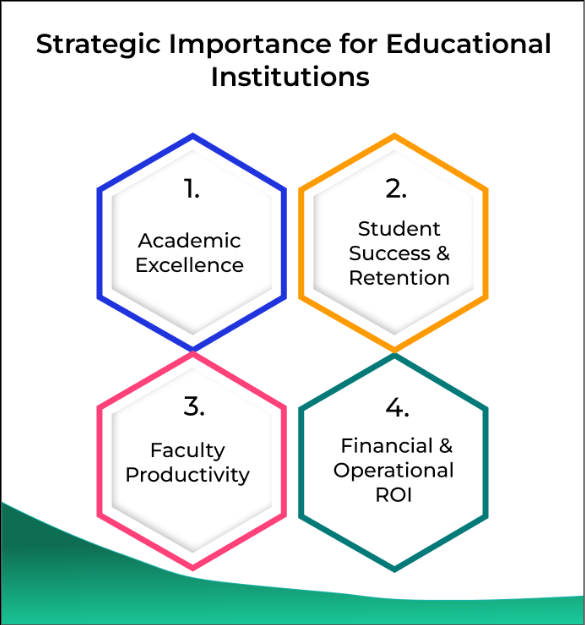
Assessing LMS effectiveness directly impacts:
Academic Excellence
Assessing LMS effectiveness helps institutions gain clear insights into learning gaps, concept mastery, student progression patterns, and curriculum effectiveness. This enables data-driven improvements in teaching strategies and course design, leading to stronger academic outcomes.
Student Success & Retention
By identifying disengaged or struggling learners early, institutions can provide timely interventions and personalized support. This proactive approach improves student engagement, enhances learning continuity, and significantly reduces dropout rates.
Faculty Productivity
Best LMS evaluation reveals how effectively the platform simplifies content delivery, reduces administrative workload, and supports innovative teaching methods. As a result, faculty can spend more time on instruction, mentoring, and academic innovation.
Financial & Operational ROI
Institutions can measure cost savings, time efficiency, and improved resource utilization through LMS analytics. This helps justify LMS investments and ensures that digital learning initiatives deliver measurable financial and operational value.
Understanding What to Measure in Best LMS Success
Assessing LMS effectiveness goes far beyond surface-level indicators like logins or course completion rates. While these metrics provide basic visibility, they rarely capture the quality of learning or the depth of engagement.
A meaningful evaluation framework focuses on four core dimensions:
Assessing the best LMS effectiveness goes beyond tracking logins or course completions. Here’s what truly matters:
1. Learner Engagement
Learner engagement is a key indicator of best LMS effectiveness. By tracking login frequency, time spent on learning modules, participation in discussions, and completion of activities, institutions can understand how actively learners interact with content. High engagement reflects strong motivation and relevant course design, while low engagement signals the need for content or delivery improvements.
2. Knowledge Retention
Knowledge of retention measures how well learners understand and remember concepts over time. Quizzes, assignments, and periodic assessments help evaluate learning progress and concept clarity. Analyzing performance trends allows educators to identify difficult topics early and revise instructional methods to improve comprehension and long-term retention.
3. Skill Development
Effective learning goes beyond theoretical understanding. Skill development is assessed through practical methods such as simulations, case studies, projects, and hands-on activities. These approaches evaluate a learner’s ability to apply concepts in real-world or industry-aligned scenarios, ensuring learning outcomes translate into practical competencies.
4. Transfer of Learning
Transfer of learning focuses on how successfully learners apply acquired knowledge and skills in real-life situations. This can be measured through feedback surveys, mentor observations, internships, or workplace evaluations. Strong transfer outcomes indicate that learning is meaningful, relevant, and aligned with real-world expectations.
Choosing the Right Metrics: Quality Over Quantity
Effective Best LMS evaluation focuses on meaningful metrics rather than large volumes of data. Institutions should avoid data overload and track indicators that directly reflect learning outcomes, engagement quality, and teaching effectiveness. Quantitative metrics alone are not enough—qualitative feedback from students and faculty adds valuable context. By prioritizing quality over quantity, institutions gain clearer insights and make more impactful improvements.
Using Best LMS Data Analytics to Drive Improvement
Modern LearnQoch LMS platforms provide powerful analytics that help institutions track learner performance, engagement trends, and progress over time. By extracting meaningful insights, institutions can identify strengths, gaps, and areas needing improvement. Benchmarking learner outcomes against institutional goals or industry standards further clarifies effectiveness. Custom reports by course, faculty, or student group to ensure data remains focused and actionable.
Going Beyond Data: The Full Learning Experience
True LMS effectiveness extends beyond numbers. Faculty feedback reveals how well the LMS supports teaching methods and content delivery, while learner satisfaction highlights usability and engagement quality. Evaluating ROI—through knowledge gains, time savings, performance improvements, and retention—ensures the LMS delivers real academic and operational value.
Transform Your LMS into a Learning Powerhouse
Assessing LearnQoch LMS effectiveness is no longer optional; rather, it is a strategic necessity for institutions committed to quality education across Mumbai schools, Nagpur colleges, and Vidarbha institutes. Moreover, true success lies not in having an LMS, but in how effectively it improves learning outcomes, supports educators, and drives institutional growth. Therefore, by focusing on learner engagement, skill development, and real-world application, institutions gain meaningful insights. Additionally, data-driven analytics combined with continuous feedback enable informed improvements. Consequently, an LMS evolves into a dynamic, learner-centric system. Ultimately, with LearnQoch, institutions can confidently transform their LMS into a powerful engine of academic excellence in Mumbai schools, Nagpur colleges, and Vidarbha institutes.
Ready to Get Started?
LearnQoch empowers colleges and universities to turn LMS data into learning excellence. With customizable tools, expert support, and real-time insights, LearnQoch helps you move from implementation to transformation.
Take the first step today. Contact LearnQoch and unlock the true potential of your LMS.
The LearnQoch AI powered Academic Platform
LearnQoch goes further by providing an integrated platform that covers all aspects of institutional growth:

Institutional Digital Ecosystem: Categories & Modules
A. LearnQoch AI powered Core Academic & Learning Solutions
Facilitates modern teaching and learning while tracking student progress, assignments, assessments, and course outcomes.
Focuses on measuring learning outcomes to ensure skills, competencies, and academic objectives are met effectively.
- LearnQoch AI powered Academic Calendar & Events
Maintains academic schedules, holidays, events, and exam timelines for seamless yearly planning.
- LearnQoch AI powered Class Module
Manages class creation, faculty allocation, and student grouping while supporting timetable integration.
B. LearnQoch AI powered Examination & Evaluation Management
LearnQoch AI Powered Exam Management Module
A unified system that digitizes the entire exam cycle—right from planning, subject allocation, ATKT processing, and scheduling to question paper creation, assessments, evaluation, and result generation. It ensures transparency, accuracy, and smooth coordination across all departments.
C. LearnQoch AI powered Campus Administration & Operations
Streamlines administrative activities, simplifies student data management, and ensures workflow automation across all departments.
- LearnQoch AI powered Task Management
Organizes, prioritizes, and tracks institutional tasks to improve productivity and accountability.
- LearnQoch AI powered Committee Module
Handles committee formation, roles, activities, and meeting records to maintain governance transparency.
- LearnQoch AI powered Document Management
Stores, organizes, and retrieves institutional documents with version control and compliance tracking.
- LearnQoch AI powered Certificate Management
Manages creation and issuance of academic and administrative certificates such as Bonafide, character, and leaving certificates.
D. LearnQoch AI powered Finance & Fees Management
- LearnQoch AI powered Finance Module – Receivable (Fees)
Tracks payments, manages fee categories, handles tuition/fines, and maintains fee-related records.
- LearnQoch AI powered Advanced Fees
Payments made before the due date, helping institutions and parents manage fee planning efficiently.
- LearnQoch AI powered Excess Fees
Extra amount paid unintentionally; recorded for adjustment in future payments or refunded when necessary.
E. LearnQoch AI powered Library & Resource Management
LearnQoch AI powered Library Module
Manages book registration, issue-return process, renewals, student access, and availability tracking for efficient library operations.
F. LearnQoch AI powered Placement & Career Development
- LearnQoch AI powered Placement Module
Manages job postings, student registration, interview updates, and final offer letters with complete transparency for TPOs and students.
- LearnQoch AI powered Skill Development Solutions
Equips students with future-ready skills to enhance employability and prepare for global career opportunities.
G. LearnQoch AI powered Accreditation & Compliance
LearnQoch AI powered NAAC, NBA & NIRF Compliance
Simplifies reporting, monitoring, and auditing with ready-to-use compliance tools that reduce institutional workload.
H. LearnQoch AI powered Digital Presence & Branding
LearnQoch AI powered Website & Digital Marketing Solutions
Helps institutions build a strong online presence, attract prospective students, and engage key stakeholders effectively.
Don’t Just Take Our Word for It—Try LearnQoch Yourself!
We invite you to experience the transformative impact of LearnQoch’s Digitize Platform with a 14-Day Free Trial.
During this period, our team will implement the software for your institution, allowing you to explore its features firsthand and see the difference it can make in academic management.
👉 Are you ready to lead your institution into the future of campus management?
📞 Contact us at +91 84519 01079
📧 Email: info@learnqoch.com /sales@learnqoch.com
Explore What LearnQoch Offers:
Visit www.learnqoch.com for Full Details