

NEP 2020 & Skill Development: Building 21st-Century Skills


The National Education Policy (NEP) 2020 is a revolutionary and progressive step in the education sector in India, aiming to equip students for the challenges of the 21st century. Instead of confining education to mere learning and examination-oriented results, NEP 2020 gives equal importance to overall development. It aims to develop critical thinking, creativity, problem-solving skills, digital literacy, and life skills that help students cope with the rapidly changing global environment.
The core of this educational policy is the learner-centric approach, which encourages flexibility, multidisciplinary education, competency-based evaluation, and continuous learning. Students are encouraged to discover their interests, learn at their own pace, and apply their knowledge in practical situations. Moreover, NEP 2020 also gives importance to the use of technology to enhance accessibility, equity, and quality in all levels of education.
In this backdrop, the role of ERP and LMS software such as LearnQoch is extremely important in converting the vision of the policy into reality. LearnQoch helps institutions provide blended and personalized learning experiences through digital classrooms, adaptive learning, and real-time assessments. Its comprehensive ERP system automates academic and administrative tasks, and the LMS system facilitates continuous evaluation, skill-based learning, and data-driven decision-making.
In addition, LearnQoch equips educators with analytical and training capabilities to improve teaching efficiency and track students’ progress actively. By utilizing these sophisticated digital tools, educational institutions can effectively implement the NEP 2020 changes and make their students ready to face challenges in the future with confidence.
The Vision of NEP 2020 for Skill Development
NEP 2020 envisions a holistic and multidisciplinary approach to education, fostering essential skills that students need in the modern world. Some of the key 21st-century skills highlighted in the policy include:
- Critical Thinking and Problem-Solving: Developing students to think critically, analyze information, and solve complex problems in real life with confidence, thus enhancing decision-making and independent thinking skills.
- Creativity and Innovation: Developing students to think creatively and innovate through project-based learning, thus developing originality and an entrepreneurial spirit.
- Digital Literacy: Developing students to be competent in the use of digital tools, platforms, and technologies needed for learning and the workplace, thus developing responsible use of technology.
- Collaboration and Communication: Developing students to work together as a team and communicate effectively in different learning settings, thus developing leadership qualities.
- Adaptability and Flexibility: Developing students to adapt to different learning environments and be lifelong learners, thus developing long-term resilience in learning.
Strategies for Encouraging 21st-Century Skills
To effectively encourage these skills, NEP 2020 outlines several strategies:
Curriculum Reforms
The curriculum needs to be revamped to include skill-based learning. This includes integrating subjects like coding, artificial intelligence, and data science from an early age. Schools are encouraged to adopt multidisciplinary approaches, allowing students to explore various fields and develop a broad skill set.
Project-Based Learning
Project-based learning (PBL) is an educational approach that emphasizes real-world problem-solving. By engaging in projects that require critical thinking and collaboration, students can develop practical skills and apply theoretical knowledge. This method aligns well with the NEP’s vision of experiential learning.
Use of Technology in Education
Integrating ERP and LMS software like LearnQoch can significantly enhance skill development. These platforms provide access to a wide range of resources, facilitate personalized learning, and enable students to engage with interactive content. LearnQoch, for instance, offers tools for tracking progress, accessing digital libraries, and participating in virtual classrooms.
Teacher Training and Professional Development
Teachers play a crucial role in nurturing 21st-century skills. NEP 2020 emphasizes the need for continuous professional development (CPD) for educators. By utilizing integrated ERP and LMS platforms, teachers can access training modules, collaborate with peers, and stay updated with the latest educational trends.
Assessment Reforms
Traditional assessment methods often fail to capture a student’s skill development comprehensively. NEP 2020 proposes holistic assessment techniques that evaluate critical thinking, creativity, and problem-solving abilities. These include formative assessments, portfolio reviews, and project evaluations.
The Role of Integrated ERP and LMS in Skill Development
Integrated ERP and LMS solutions like LearnQoch are instrumental in implementing NEP 2020’s skill development initiatives. Here’s how these technologies support educational transformation:
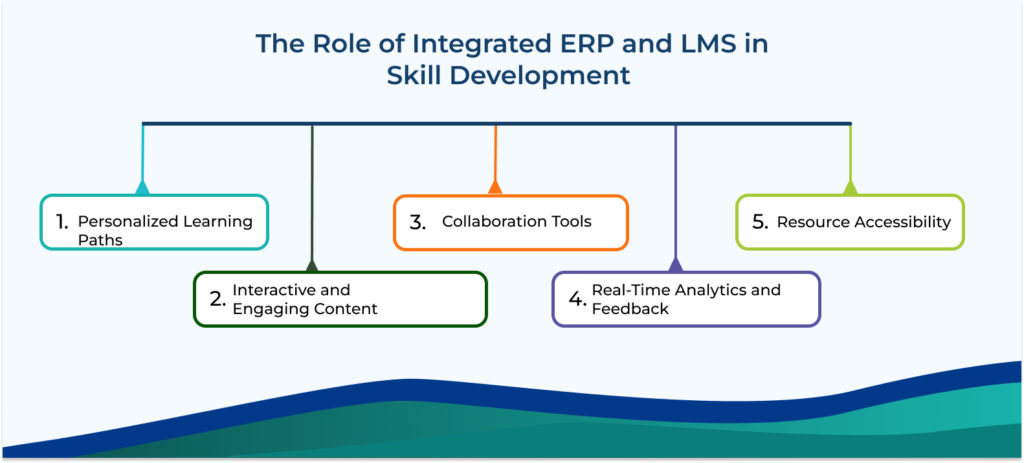
Personalized Learning Paths
LearnQoch provides personalized learning paths tailored to individual student needs. This ensures that students can progress at their own pace and focus on areas that require improvement. Personalized learning fosters a deeper understanding of subjects and enhances skill acquisition.
Interactive and Engaging Content
Digital platforms offer a variety of interactive and engaging content, including videos, simulations, and quizzes. This interactive approach makes learning more enjoyable and effective, helping students retain information and develop critical skills.
Collaboration Tools
Integrated ERP and LMS platforms facilitate collaboration among students. Features like discussion forums, group projects, and peer assessments encourage teamwork and communication, essential skills for the 21st century.
Real-Time Analytics and Feedback
These systems provide real-time analytics on student performance, enabling teachers to offer immediate feedback and support. This helps in identifying skill gaps and addressing them promptly, ensuring continuous improvement.
Resource Accessibility
With LearnQoch, students have access to a vast array of digital resources, including e-books, research papers, and online courses. This accessibility empowers students to explore new areas of interest and develop a diverse skill set.
Conclusion
The NEP 2020 is a forward-thinking policy that aims to equip students with the skills needed for success in the 21st century. By focusing on critical thinking, creativity, digital literacy, and collaboration, the policy lays the groundwork for a holistic and multidisciplinary education system. Integrated ERP and LMS solutions like LearnQoch are pivotal in achieving these goals, providing the tools and resources necessary for effective skill development.
As educational institutions across India adopt NEP 2020, leveraging advanced technologies will be essential in creating a dynamic and future-ready learning environment. For more information on how LearnQoch can support your institution’s journey toward fostering 21st-century skills, visit LearnQoch.
TThe LearnQoch AI powered Academic Platform
LearnQoch goes further by providing an integrated platform that covers all aspects of institutional growth:

Institutional Digital Ecosystem: Categories & Modules
A. LearnQoch AI powered Core Academic & Learning Solutions
Facilitates modern teaching and learning while tracking student progress, assignments, assessments, and course outcomes.
Focuses on measuring learning outcomes to ensure skills, competencies, and academic objectives are met effectively.
- LearnQoch AI powered Academic Calendar & Events
Maintains academic schedules, holidays, events, and exam timelines for seamless yearly planning.
- LearnQoch AI powered Class Module
Manages class creation, faculty allocation, and student grouping while supporting timetable integration.
B. LearnQoch AI powered Examination & Evaluation Management
LearnQoch AI Powered Exam Management Module
A unified system that digitizes the entire exam cycle—right from planning, subject allocation, ATKT processing, and scheduling to question paper creation, assessments, evaluation, and result generation. It ensures transparency, accuracy, and smooth coordination across all departments.
C. LearnQoch AI powered Campus Administration & Operations
Streamlines administrative activities, simplifies student data management, and ensures workflow automation across all departments.
- LearnQoch AI powered Task Management
Organizes, prioritizes, and tracks institutional tasks to improve productivity and accountability.
- LearnQoch AI powered Committee Module
Handles committee formation, roles, activities, and meeting records to maintain governance transparency.
- LearnQoch AI powered Document Management
Stores, organizes, and retrieves institutional documents with version control and compliance tracking.
- LearnQoch AI powered Certificate Management
Manages creation and issuance of academic and administrative certificates such as Bonafide, character, and leaving certificates.
D. LearnQoch AI powered Finance & Fees Management
- LearnQoch AI powered Finance Module – Receivable (Fees)
Tracks payments, manages fee categories, handles tuition/fines, and maintains fee-related records.
- LearnQoch AI powered Advanced Fees
Payments made before the due date, helping institutions and parents manage fee planning efficiently.
- LearnQoch AI powered Excess Fees
Extra amount paid unintentionally; recorded for adjustment in future payments or refunded when necessary.
E. LearnQoch AI powered Library & Resource Management
LearnQoch AI powered Library Module
Manages book registration, issue-return process, renewals, student access, and availability tracking for efficient library operations.
F. LearnQoch AI powered Placement & Career Development
- LearnQoch AI powered Placement Module
Manages job postings, student registration, interview updates, and final offer letters with complete transparency for TPOs and students.
- LearnQoch AI powered Skill Development Solutions
Equips students with future-ready skills to enhance employability and prepare for global career opportunities.
G. LearnQoch AI powered Accreditation & Compliance
LearnQoch AI powered NAAC, NBA & NIRF Compliance
Simplifies reporting, monitoring, and auditing with ready-to-use compliance tools that reduce institutional workload.
H. LearnQoch AI powered Digital Presence & Branding
LearnQoch AI powered Website & Digital Marketing Solutions
Helps institutions build a strong online presence, attract prospective students, and engage key stakeholders effectively.
Don’t Just Take Our Word for It—Try LearnQoch Yourself!
We invite you to experience the transformative impact of LearnQoch’s Digitize Platform with a 14-Day Free Trial.
During this period, our team will implement the software for your institution, allowing you to explore its features firsthand and see the difference it can make in academic management.
👉 Are you ready to lead your institution into the future of campus management?
📞 Contact us at +91 84519 01079
📧 Email: info@learnqoch.com /sales@learnqoch.com
Explore What LearnQoch Offers:
Visit www.learnqoch.com for Full Details
Read more:
How LearnQoch can help your school to enable NEP2020 Guidelines
Implement NEP2020 with LearnQoch
Top 10 Tech checklist for your School’s NEP compliance
1. How does NEP 2020 support skill-based learning?
NEP 2020 emphasizes competency-based education, critical thinking, creativity, and real-world application of knowledge, moving beyond rote learning.
2. What role does technology play in achieving NEP 2020 goals?
Technology enables personalized learning, continuous assessment, digital literacy, and inclusive access through ERP and LMS platforms.
3. How can institutions effectively implement NEP 2020 reforms?
Institutions can adopt integrated ERP and LMS solutions like LearnQoch to streamline operations, personalize learning, and track student progress efficiently.
Also Read,
NEP 2020 and encouraging 21st century skills with technology
LearnQoch ERP and LMS: Empowering Teacher Training under NEP 2020
Student Engagement in NEP 2020: Making Learning Multimodal with LearnQoch
LearnQoch LMS: Bridging the Learning Gap Aligned with NEP 2020
AI in Personalized Learning: How LearnQoch’s ERP and LMS Align with NEP 2020