


How LMS Can Save Institutes Money on Educational Resources


Education is the foundation of human development. It shapes minds, builds skills, and prepares students to face future challenges with confidence. Every day, students learn new concepts, clear their doubts, and gradually develop curiosity and interest in various subjects—ultimately setting themselves up for long-term success. At the heart of this process lie educational resources, which play a crucial role in delivering quality learning experiences and unlocking LMS cost savings.
However, traditional education systems heavily depend on physical resources such as printed textbooks, paper-based assignments, classroom infrastructure, and manual administrative processes. While these methods have served schools for decades, they also come with significant financial limitations. Rising costs of textbooks, printing, infrastructure maintenance, and staff workload continue to strain school budgets—challenges that can be reduced through LMS cost savings and optimized use of digital educational resources.
As the world evolves digitally, education must evolve too. Top Learning Management Systems (LMS) in Mumbai have emerged as powerful tools that not only enhance teaching and learning through rich digital content but also transform how schools allocate and utilize resources. When implemented effectively, an LearnQoch LMS can significantly reduce operational costs while improving academic outcomes
This blog explores how an LearnQoch LMScan help Institutes save money on educational resources, create long-term financial sustainability, and deliver a more effective and future-ready learning environment.
What Is a Learning Management System (LMS)?
A Top Learning Management System (LMS) in Mumbai is a software application designed to manage, deliver, and track educational content and learning activities. It provides a centralized digital platform where schools can:
- Upload and distribute course materials
- Conduct online classes and assessments
- Monitor student progress and performance
- Communicate with students, teachers, and parents
- Automate administrative and academic processes
By digitizing core academic and administrative functions, an LMS eliminates inefficiencies inherent in traditional systems. The result is not only improved learning experiences but also significant cost savings across multiple areas.
The Role of LearnQoch: An Integrated ERP and LMS Solution
For Insitute aiming to maximize both efficiency and savings, LearnQoch offers a powerful and comprehensive solution.
LearnQoch is an integrated ERP + LMS platform designed specifically for educational institutions. It bridges the gap between academic delivery and administrative management, ensuring seamless digital transformation.
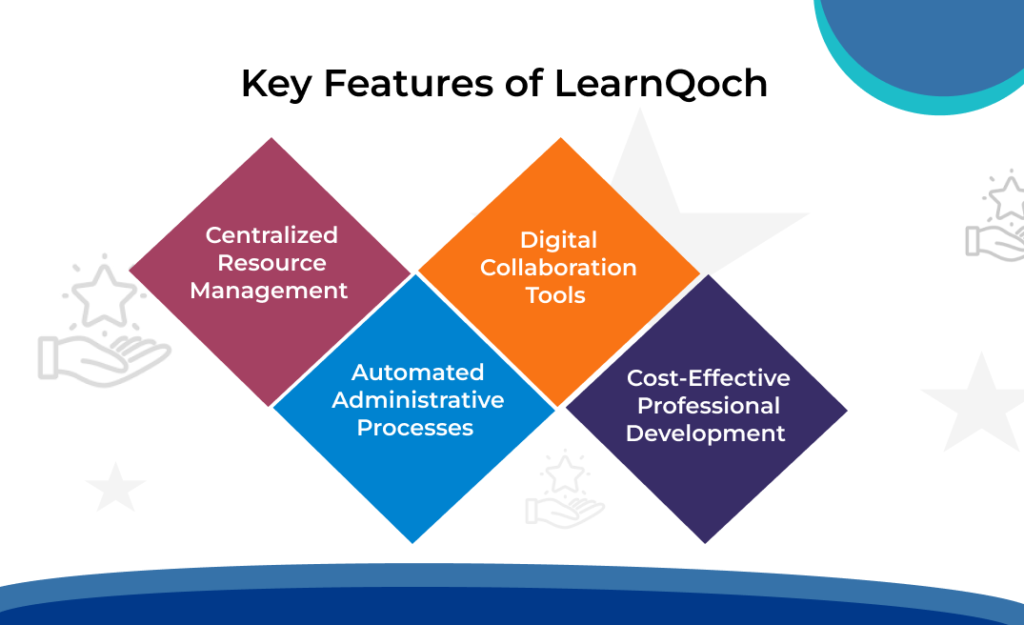
Key Features of LearnQoch
1. Centralized Resource Management
- Store textbooks, assignments, videos, and assessments in one platform
- Reduce physical storage and printing costs
2. Automated Administrative Processes
- Attendance management
- Grading and report generation
- Fee and academic record management
This significantly reduces staff workload and operational expenses.
3. Digital Collaboration Tools
- Teacher-student-parent communication
- Announcements and discussion boards
- Improved engagement at lower cost
4. Cost-Effective Professional Development
- Online training modules
- Webinars and recorded sessions
- No travel or accommodation expenses
Reduction in Paper and Printing Costs
One of the most immediate and visible benefits of an LMS is the drastic reduction in paper usage.
The Cost of Traditional Printing
Schools traditionally rely on printed materials such as:
- Textbooks
- Worksheets
- Notes and handouts
- Exam papers
- Notices and circulars
The recurring expenses of paper, ink, printers, photocopy machines, and maintenance add up quickly. Over time, these costs have become a substantial financial burden.
How LMS Helps
With an LMS:
- Teachers can upload notes, assignments, and presentations digitally
- Students can access materials anytime on laptops, tablets, or smartphones
- Exams and quizzes can be conducted online
- Notices and announcements are shared digitally
This digital shift significantly reduces printing and stationery expenses while also supporting eco-friendly, paperless education. Schools not only save money but also contribute to environmental sustainability.
Lower Costs for Textbooks and Learning Materials
Textbooks are among the highest recurring expenses for schools and parents alike. Traditional models require:
- Purchasing new textbooks each academic year
- Replacing damaged or outdated books
- Printing updated editions
Digital Textbooks and Open Educational Resources (OER)
An LMS enables schools to adopt:
- Digital textbooks
- Open Educational Resources (OERs)
- Interactive eBooks, videos, and simulations
Many OERs are available free of cost or at minimal licensing fees. Digital textbooks are often far cheaper than printed ones and can be updated without reprinting.
Financial Impact
- Reduced annual textbook procurement costs
- Equal access to materials for all students
- Up-to-date content without extra expenses
Over time, these savings can be substantial, especially for large institutions.
Efficient Resource Allocation Through Centralization
In traditional setups, educational resources are often scattered across departments, devices, or physical storage spaces. This leads to:
- Duplication of resources
- Underutilized software and tools
- Poor visibility into actual usage
Centralized LMS Advantage
An LMS acts as a single repository for all academic content:
- Lesson plans
- Assignments
- Multimedia resources
- Assessments
Administrators can track:
- Which resources are frequently used
- Which tools are underutilized
- Learning outcomes linked to specific content
This data-driven insight helps schools invest wisely, avoid unnecessary purchases, and maximize the return on existing resources.
Reduced Travel and Training Expenses for Teachers
Teacher training and professional development are essential for maintaining educational quality. However, traditional training models often involve:
- Travel costs
- Accommodation expenses
- Registration fees
- Time away from classrooms
LMS-Based Professional Development
With an LMS, schools can:
- Conduct online workshops and webinars
- Provide on-demand training modules
- Share recorded sessions and learning materials
Teachers can upgrade their skills without leaving campus or disrupting academic schedules.
Cost Benefits
- Elimination of travel and lodging expenses
- Reduced substitute teacher costs
- Continuous learning at lower cost
This makes professional development more affordable, flexible, and scalable.
Minimization of Classroom and Facility Costs
Physical infrastructure represents a significant long-term investment for schools. Expenses include:
- Classroom construction and maintenance
- Furniture and equipment
- Utilities such as electricity and water
Blended and Online Learning Models
An LMS supports:
- Blended learning (online + offline)
- Fully remote learning options
- Flexible scheduling
This allows schools to:
- Optimize classroom usage
- Reduce overcrowding
- Delay or avoid costly infrastructure expansion
In some cases, schools can even serve more students without expanding physical facilities—resulting in major cost savings.
Savings on Curriculum Development
Developing curriculum content from scratch is both time-consuming and expensive. It requires:
- Subject experts
- Content creators
- Regular updates to meet curriculum changes
LMS Curriculum Advantages
Many LMS platforms offer:
- Pre-built courses and modules
- Content templates
- Easy customization options
Schools can adapt existing resources to their specific needs rather than building everything from the ground up.
Long-Term Benefits
- Reduced curriculum development costs
- Faster content updates
- Consistent quality across subjects and grades
This ensures curriculum relevance while controlling expenses.
Enhanced Communication and Collaboration
Communication is critical in education, but traditional methods often rely on:
- Printed notices
- Parent-teacher meetings
- Phone calls and physical registers
These methods consume time, manpower, and money.
LMS Communication Tools
An LMS provides built-in tools such as:
- Messaging systems
- Announcements
- Discussion forums
- Parent portals
This reduces reliance on physical communication channels and improves engagement.
Cost and Time Savings
- Less printing and paper usage
- Reduced administrative workload
- Faster information sharing
Additionally, collaboration tools allow teachers to share best practices and resources internally, reducing dependency on external consultants.
Streamlined Assessment and Grading
Traditional assessments involve:
- Printing question papers
- Manual evaluation
- Physical record storage
This process is labor-intensive and costly.
LMS-Based Assessments
An LMS enables:
- Online quizzes and exams
- Automated grading
- Instant feedback
Advanced analytics help teachers identify learning gaps early.
Financial Impact
- Reduced paper and printing costs
- Lower administrative effort
- Better academic decision-making
Over time, this efficiency translates into measurable cost savings.
Long-Term Cost Efficiency and ROI
While implementing an LMS requires an initial investment, the long-term return on investment (ROI) is substantial.
Areas of Continuous Savings
- Paper and printing
- Textbooks
- Infrastructure
- Administrative staffing
- Training and development
The funds saved can be reinvested into:
- Technology upgrades
- Student support services
- Co-curricular and extracurricular programs
An LMS is not an expense—it is a strategic investment in sustainable education.
Conclusion
The adoption of a Learning Management System is no longer optional—it is a strategic necessity for modern schools across Mumbai institutes, Nagpur colleges, and Vidarbha schools. Beyond improving learning outcomes, an LMS plays a vital role in reducing costs associated with traditional educational resources.
From cutting down paper usage and textbook expenses to optimizing infrastructure and administrative operations, an LMS helps schools operate more efficiently and sustainably. Over time, these savings empower institutions to invest more in student success and innovation in Mumbai institutes, Nagpur colleges, and Vidarbha schools.
LearnQoch stands out as a holistic ERP and LMS solution that delivers both educational excellence and financial efficiency. For institutions committed to long-term growth, sustainability, and digital transformation, LearnQoch is an ideal partner..
The LearnQoch AI powered Academic Platform
LearnQoch goes further by providing an integrated platform that covers all aspects of institutional growth:

Institutional Digital Ecosystem: Categories & Modules
A. LearnQoch AI powered Core Academic & Learning Solutions
Facilitates modern teaching and learning while tracking student progress, assignments, assessments, and course outcomes.
Focuses on measuring learning outcomes to ensure skills, competencies, and academic objectives are met effectively.
- LearnQoch AI powered Academic Calendar & Events
Maintains academic schedules, holidays, events, and exam timelines for seamless yearly planning.
- LearnQoch AI powered Class Module
Manages class creation, faculty allocation, and student grouping while supporting timetable integration.
B. LearnQoch AI powered Examination & Evaluation Management
LearnQoch AI Powered Exam Management Module
A unified system that digitizes the entire exam cycle—right from planning, subject allocation, ATKT processing, and scheduling to question paper creation, assessments, evaluation, and result generation. It ensures transparency, accuracy, and smooth coordination across all departments.
C. LearnQoch AI powered Campus Administration & Operations
Streamlines administrative activities, simplifies student data management, and ensures workflow automation across all departments.
- LearnQoch AI powered Task Management
Organizes, prioritizes, and tracks institutional tasks to improve productivity and accountability.
- LearnQoch AI powered Committee Module
Handles committee formation, roles, activities, and meeting records to maintain governance transparency.
- LearnQoch AI powered Document Management
Stores, organizes, and retrieves institutional documents with version control and compliance tracking.
- LearnQoch AI powered Certificate Management
Manages creation and issuance of academic and administrative certificates such as Bonafide, character, and leaving certificates.
D. LearnQoch AI powered Finance & Fees Management
- LearnQoch AI powered Finance Module – Receivable (Fees)
Tracks payments, manages fee categories, handles tuition/fines, and maintains fee-related records.
- LearnQoch AI powered Advanced Fees
Payments made before the due date, helping institutions and parents manage fee planning efficiently.
- LearnQoch AI powered Excess Fees
Extra amount paid unintentionally; recorded for adjustment in future payments or refunded when necessary.
E. LearnQoch AI powered Library & Resource Management
LearnQoch AI powered Library Module
Manages book registration, issue-return process, renewals, student access, and availability tracking for efficient library operations.
F. LearnQoch AI powered Placement & Career Development
- LearnQoch AI powered Placement Module
Manages job postings, student registration, interview updates, and final offer letters with complete transparency for TPOs and students.
- LearnQoch AI powered Skill Development Solutions
Equips students with future-ready skills to enhance employability and prepare for global career opportunities.
G. LearnQoch AI powered Accreditation & Compliance
LearnQoch AI powered NAAC, NBA & NIRF Compliance
Simplifies reporting, monitoring, and auditing with ready-to-use compliance tools that reduce institutional workload.
H. LearnQoch AI powered Digital Presence & Branding
LearnQoch AI powered Website & Digital Marketing Solutions
Helps institutions build a strong online presence, attract prospective students, and engage key stakeholders effectively.
Don’t Just Take Our Word for It—Try LearnQoch Yourself!
We invite you to experience the transformative impact of LearnQoch’s Digitize Platform with a 14-Day Free Trial.
During this period, our team will implement the software for your institution, allowing you to explore its features firsthand and see the difference it can make in academic management.
👉 Are you ready to lead your institution into the future of campus management?
📞 Contact us at +91 84519 01079
📧 Email: info@learnqoch.com /sales@learnqoch.com
Explore What LearnQoch Offers:
Visit www.learnqoch.com for Full Details