

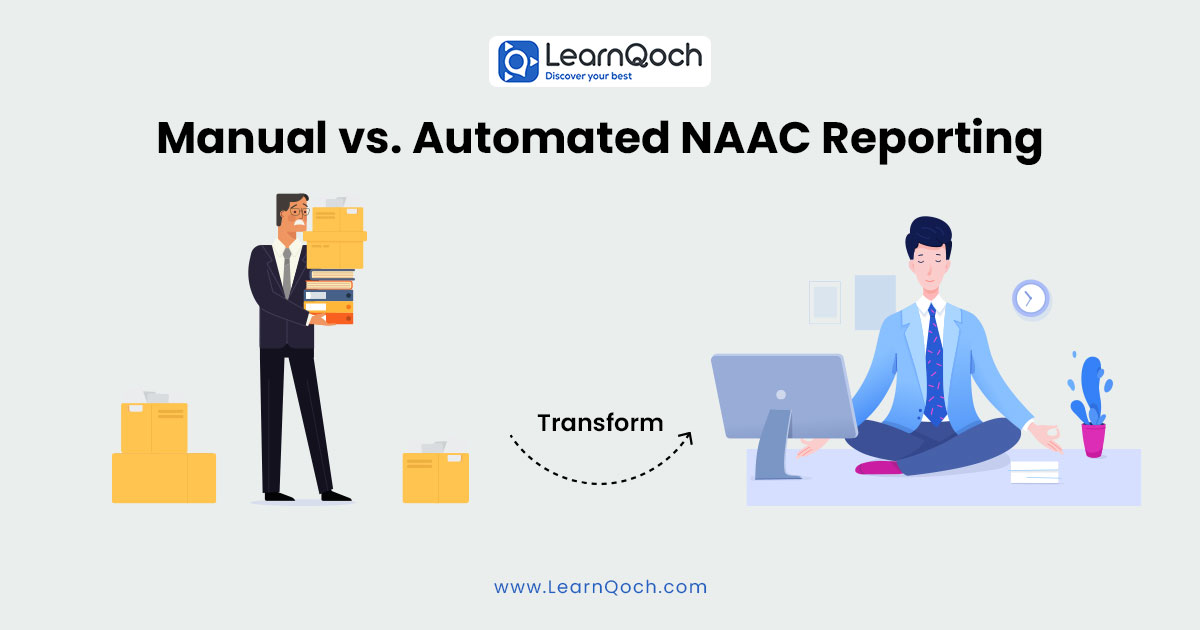
Manual vs. Automated NAAC Reporting: The Smart Choice for Educational Institutions


The NAAC accreditation process plays a pivotal role in enhancing the quality of higher education in India. Moreover, it ensures that institutions maintain academic standards, foster continuous improvement, and align with national educational goals. However, for many colleges and universities, filing NAAC, AQAR and SSR reports remains a tedious, time-consuming, and often error-prone task—challenges that can be efficiently addressed with automated NAAC AI solutions like LearnQoch, which streamline reporting and ensure accuracy..
With the introduction of the proposed Binary System and the increasing digitization of the accreditation process, institutions face a critical choice: continue relying on manual processes or embrace automation for efficiency and accuracy. Importantly, this shift aligns closely with the National Education Policy (NEP) 2020, which emphasizes data-driven governance, digital infrastructure, and outcome-based accountability in higher education.
By leveraging automated reporting solutions, institutions can streamline data collection, reduce manual effort, and ensure timely submission of accurate reports. Additionally, automation supports real-time tracking of academic and administrative metrics, making the accreditation process more transparent and manageable.
In this blog, we will explore why Automated NAAC Reporting with LearnQoch is the smarter choice, how it simplifies compliance, improves institutional efficiency, and helps colleges and universities stay NEP 2020–ready while achieving quality enhancement objectives.
The Manual Reporting Dilemma
For years, institutions have relied on manual methods to file NAAC reports. While familiar, these methods come with several challenges:
| Challenges | Impact |
| Data scattered across departments | Difficulty consolidating historical and current data |
| Repetitive tasks | Wasted time and effort |
| High chances of errors | Rework and delayed submissions |
| Poor real-time visibility | Missed opportunities to meet submission standards |
| Inability to adapt to new systems | Increased stress as processes evolves (e.g., Binary System) |
Despite these challenges, many institutions stick to manual processes, unaware of the ease and efficiency of automation offers.
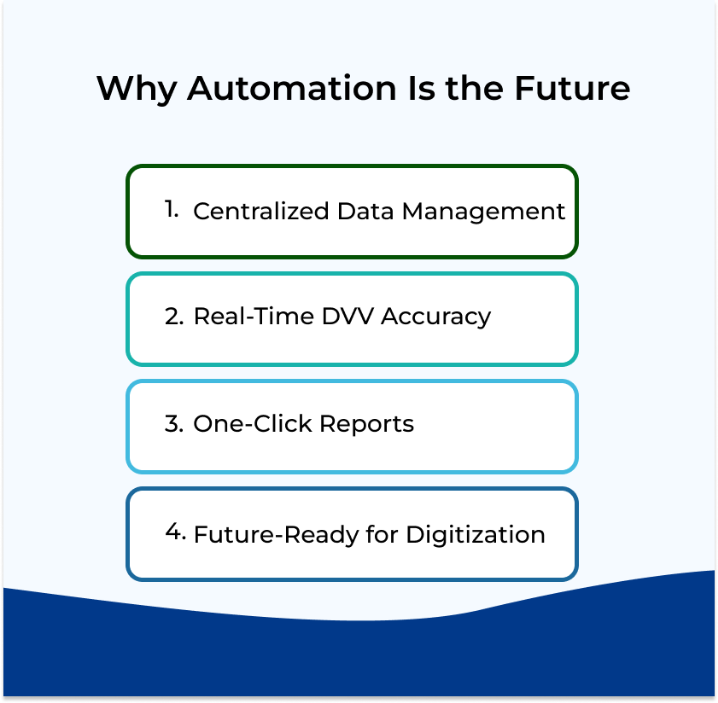
Why Automation Is the Future
Manual reporting for NAAC accreditation has long been a source of stress for institutions—prone to errors, time-consuming, and often overwhelming for staff. Automation addresses these pain points by ensuring accuracy, saving time, and simplifying processes. LearnQoch NAAC Accreditation Software exemplifies how technology can transform accreditation from a tedious task into a streamlined, reliable workflow.
1. Centralized Data Management
No more searching through scattered files or juggling multiple spreadsheets. LearnQoch centralizes both historical and current data in one secure platform, making it easy to update, access, and track information. This ensures that institutions can manage data efficiently, even as NAAC introduces new criteria, without missing deadlines or duplicating efforts.
2. Real-Time DVV Accuracy
Validating and verifying data (DVV) is critical for NAAC compliance, yet errors in this process can lead to revisions or even report rejection. LearnQoch’s Real-Time DVV Validation automatically checks data against NAAC standards, eliminating mistakes and boosting confidence. Institutions can submit reports knowing that every figure is accurate and audit ready.
3.One-Click Reports
Generating AQAR or SSR reports manually is often tedious and prone to formatting or data errors. LearnQoch automates the process—compiling, merging, and formatting reports according to NAAC guidelines with just one click. This drastically reduces preparation time and allows staff to focus on quality improvement rather than paperwork.
4. Future-Ready for Digitization
NAAC is increasingly moving towards digital accreditation and introducing additional criteria. LearnQoch for Mumbai institutions is designed with these changes in mind, ensuring your institution remains compliant, agile, and ahead of the curve. With automation, colleges and universities can adapt seamlessly to new requirements while maintaining accurate records and consistent reporting standards, simplifying the accreditation journey.
Manual vs. Automated Reporting: A Quick Comparison
| Feature | Manual Process | Automated with LearnQoch |
| Time Investment | Months | In no time |
| Accuracy | Prone to human errors | 99.9% accuracy with real-time validation |
| Adaptability to Changes | Difficult and stressful | Smooth and Hassle-Free |
| Cost | Hidden costs in terms of time and rework | Value for money with clear ROI |
| Ease of Use | Complex and cumbersome | Intuitive and user-friendly |
The New Binary System: Are You Prepared?
With NAAC proposing the new Binary System and introducing additional criteria, relying on manual reporting will only increase complexity and workload for institutions. The shift toward digitization demands a structured, scalable, and technology-driven approach—something that manual methods simply cannot support. The advantages of LearnQoch vs manual reporting are clear: it centralizes data, automates documentation, ensures accuracy, and significantly reduces faculty effort, making accreditation simpler, faster, and more reliable.
LearnQoch is 100% compatible with the proposed Binary System and is designed to seamlessly adapt to future NAAC updates and evolving accreditation requirements. Whether institutions are filing current AQAR and SSR reports or preparing for upcoming transitions, LearnQoch provides a future-ready framework that ensures compliance, accuracy, and efficiency—keeping institutions confident, organized, and always one step ahead.
Real Results from Institutions Like Yours
- 90% reduction in time spent on report preparation
- Many colleges have switched to automated reporting
- Consistent compliance with NAAC guidelines, reducing rework by 80%
- Institutions that have adopted automated NAAC reporting are already experiencing measurable and impactful outcomes. By moving away from manual processes, colleges and universities have achieved up to a 90% reduction in time spent on AQAR and SSR report preparation, allowing faculty and administrative teams to redirect their efforts toward academic quality and strategic initiatives.
- As a result, many institutions have successfully transitioned to automated reporting systems, reducing dependency on spreadsheets, emails, and fragmented documentation. This shift has not only simplified internal workflows but also improved coordination across departments during accreditation cycles.
- Most importantly, automation ensures consistent compliance with NAAC guidelines, significantly reducing errors, inconsistencies, and last-minute corrections. Institutions report an 80% reduction in rework, leading to smoother DVV processes, fewer clarifications, and greater confidence during assessments. Together, these results demonstrate how automation turns accreditation from a stressful obligation into a structured, efficient, and results-driven process.
Conclusion
While traditional manual processes may seem familiar, they are time-consuming, error-prone, and cumbersome. In contrast, LearnQoch Maharashtra NAAC Accreditation Software offers efficiency, accuracy, and adaptability, allowing institutions to focus on quality enhancement rather than paperwork. With digitization and new standards like the Binary System, streamlined reporting is essential. Automation simplifies AQAR and SSR preparation, ensures compliance, and provides real-time insights into performance. Moreover, it aligns with NEP 2020’s vision of data-driven, transparent, and technology-enabled governance. By adopting such solutions, institutions save time, strengthen quality assurance, and enhance credibility. Now is the time to embrace automation with LearnQoch—transforming accreditation into a tool for meaningful institutional growth.
The LearnQoch AI powered Academic Platform
LearnQoch goes further by providing an integrated platform that covers all aspects of institutional growth:

Institutional Digital Ecosystem: Categories & Modules
A. LearnQoch AI powered Core Academic & Learning Solutions
Facilitates modern teaching and learning while tracking student progress, assignments, assessments, and course outcomes.
Focuses on measuring learning outcomes to ensure skills, competencies, and academic objectives are met effectively.
- LearnQoch AI powered Academic Calendar & Events
Maintains academic schedules, holidays, events, and exam timelines for seamless yearly planning.
- LearnQoch AI powered Class Module
Manages class creation, faculty allocation, and student grouping while supporting timetable integration.
B. LearnQoch AI powered Examination & Evaluation Management
LearnQoch AI Powered Exam Management Module
A unified system that digitizes the entire exam cycle—right from planning, subject allocation, ATKT processing, and scheduling to question paper creation, assessments, evaluation, and result generation. It ensures transparency, accuracy, and smooth coordination across all departments.
C. LearnQoch AI powered Campus Administration & Operations
Streamlines administrative activities, simplifies student data management, and ensures workflow automation across all departments.
- LearnQoch AI powered Task Management
Organizes, prioritizes, and tracks institutional tasks to improve productivity and accountability.
- LearnQoch AI powered Committee Module
Handles committee formation, roles, activities, and meeting records to maintain governance transparency.
- LearnQoch AI powered Document Management
Stores, organizes, and retrieves institutional documents with version control and compliance tracking.
- LearnQoch AI powered Certificate Management
Manages creation and issuance of academic and administrative certificates such as Bonafide, character, and leaving certificates.
D. LearnQoch AI powered Finance & Fees Management
- LearnQoch AI powered Finance Module – Receivable (Fees)
Tracks payments, manages fee categories, handles tuition/fines, and maintains fee-related records.
- LearnQoch AI powered Advanced Fees
Payments made before the due date, helping institutions and parents manage fee planning efficiently.
- LearnQoch AI powered Excess Fees
Extra amount paid unintentionally; recorded for adjustment in future payments or refunded when necessary.
E. LearnQoch AI powered Library & Resource Management
LearnQoch AI powered Library Module
Manages book registration, issue-return process, renewals, student access, and availability tracking for efficient library operations.
F. LearnQoch AI powered Placement & Career Development
- LearnQoch AI powered Placement Module
Manages job postings, student registration, interview updates, and final offer letters with complete transparency for TPOs and students.
- LearnQoch AI powered Skill Development Solutions
Equips students with future-ready skills to enhance employability and prepare for global career opportunities.
G. LearnQoch AI powered Accreditation & Compliance
LearnQoch AI powered NAAC, NBA & NIRF Compliance
Simplifies reporting, monitoring, and auditing with ready-to-use compliance tools that reduce institutional workload.
H. LearnQoch AI powered Digital Presence & Branding
LearnQoch AI powered Website & Digital Marketing Solutions
Helps institutions build a strong online presence, attract prospective students, and engage key stakeholders effectively.
Don’t Just Take Our Word for It—Try LearnQoch Yourself!
We invite you to experience the transformative impact of LearnQoch’s AI powered Digitize Platform with a 14-Day Free Trial.
During this period, our team will implement the software for your institution, allowing you to explore its features firsthand and see the difference it can make in academic management.
👉 Are you ready to lead your institution into the future of campus management?
📞 Contact us at +91 84519 01079
📧 Email: info@learnqoch.com / sales@learnqoch.com
Explore What LearnQoch Offers:
Visit www.learnqoch.com for Full Details
Also Read,
One Login, Infinite Possibilities: NBA, and NIRF Accreditation
A Proven Approach to Ensure NAAC Compliance and Elevate Education Outcomes
NAAC’s New IT Circular: Simplify Compliance with LearnQoch’s Integrated Software
NAAC Accreditation Update: Blockchain Credential Verification Made Simple with LearnQoch ERP