


Impact of Technology on Higher Education NAAC Accreditation: Transforming Challenges into Opportunities


Accreditation is the cornerstone of quality assurance in higher education, ensuring institutions meet defined academic, administrative, and governance standards. As regulatory frameworks evolve, especially with NAAC’s digitization initiatives, institutions must adopt systems that support continuous monitoring rather than one-time reporting. In alignment with NEP 2020, technology-driven accreditation promotes transparency, accountability, and evidence-based decision-making.
The growing NAAC technology impact is evident in how digital platforms now enable institutions to track progress in real time, reduce administrative burden, and improve collaboration across departments. They also facilitate comprehensive documentation, automated validation, and seamless reporting, ensuring accuracy and compliance. Solutions like LearnQoch NAAC Accreditation Software help institutions transform accreditation from a compliance task into a strategic quality enhancement process, empowering leadership to make informed decisions and foster a culture of continuous academic excellence.
What this blog Cover
This blog highlights the growing challenges of manual NAAC reporting and the increasing need for automation in accreditation processes. It explains how evolving frameworks such as NAAC’s New Binary System and the vision of NEP 2020 demand structured, digital, and outcome-focused approaches. The blog explores key institutional pain points—data fragmentation, time-consuming documentation, and lack of real-time insights—and demonstrates how LearnQoch addresses these through centralized data management, real-time DVV validation, and automated AQAR and SSR reporting. Overall, it emphasizes how adopting LearnQoch enables institutions to ensure compliance, improve quality assurance, and focus on long-term academic and institutional growth.
The Traditional Challenges
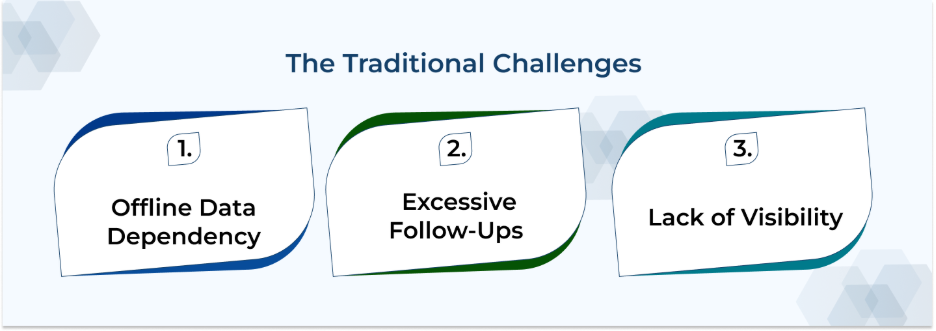
Higher educational institutions often face significant operational and strategic hurdles during the NAAC accreditation process. The heavy dependence on manual workflows, disconnected data sources, and person-driven documentation makes accreditation stressful and time-intensive. Instead of focusing on academic quality, innovation, and student outcomes, institutions are forced to divert valuable time and resources toward administrative coordination. As accreditation cycles repeat, the same challenges resurface—often with greater complexity—highlighting the urgent need for a more structured and sustainable approach. By embracing AI higher ed solutions, institutions can automate processes, centralize data, and transform accreditation into a streamlined, efficient, and continuously improving system.
1. Offline Data Dependency
In many institutions, accreditation-related data is stored in personal computers, registers, or department-specific files. This creates a serious risk when faculty members or staff leave the institution, taking crucial documents and historical context with them. As a result, continuity breaks, data gets lost or duplicated, and institutions struggle to reconstruct past records during NAAC submissions.
2. Excessive Follow-Ups
Accreditation coordinators spend a significant amount of time following up with multiple departments for data collection, corrections, and updates. Since there is no real-time visibility into data status, this back-and-forth leads to delays, miscommunication, and last-minute pressure, affecting both accuracy and morale.
3. Lack of Visibility
Without a centralized system, institutions lack a clear, real-time view of accreditation progress. Identifying gaps, tracking criteria-wise readiness, or measuring improvements becomes difficult. Decision-makers are often forced to rely on assumptions rather than data-driven insights.
Enter Technology: Transforming Accreditation
Traditional accreditation processes are often complex, time-consuming, and prone to errors due to scattered data, manual record-keeping, and delayed reporting. Digital accreditation platforms are changing this landscape by centralizing all accreditation-related information in a single, accessible system. This centralization enables real-time tracking of progress, automated report generation, and seamless documentation management, ensuring that nothing is missed, and institutional continuity is maintained even during staff transitions.
By leveraging technology-driven systems, institutions can significantly reduce administrative burdens and focus on what truly matters: enhancing academic standards, improving teaching and learning outcomes, and fostering continuous quality improvement. In addressing Mumbai challenges, such platforms empower educational institutions to adopt a more strategic and data-informed approach, driving student success and overall institutional excellence.
How LearnQoch NAAC Accreditation Software Makes a Difference
Let’s See some features showing how LearnQoch is Beneficial
| Feature | How It Helps |
| Centralized Management System | Consolidates historical and current data in one secure platform, eliminating dependency on offline files and individual ownership. |
| Real-Time DVV | Simplifies data validation and verification, reducing follow-ups, and ensuring accurate submissions. |
| One-Click Reports | Generates AQAR and SSR reports instantly, fully aligned with NAAC formats and criteria. |
| Criteria-Wise Tracking | Enables continuous monitoring of each NAAC criterion, helping institutions identify gaps early. |
| User Role Management | Assigns clear responsibilities to departments and faculty, improving accountability and coordination. |
| Future-Ready Architecture | Easily adapts to new NAAC updates, additional criteria, and evolving digital requirements under the Binary System. |
Why Technology Is Key in the Binary System Era
With NAAC’s new Binary System fully digitizing the accreditation process, institutions must shift from fragmented, manual practices to structured, technology-driven systems. The Binary System demands real-time data availability, accuracy, and continuous monitoring—something manual methods simply cannot sustain. To stay compliant and competitive, institutions need a robust digital framework that integrates data, processes, and reporting seamlessly. This is exactly where LearnQoch Vidarbha NAAC Accreditation Software adds value. Built to support the Binary System, LearnQoch ensures institutions are not just compliant today, but fully prepared for future accreditation reforms.
Real Benefits: Beyond Automation
Adopting technology for accreditation goes far beyond saving time. It transforms accreditation into a strategic quality improvement process.
- Improved Decision-Making
Real-time dashboards and centralized data give institutional leaders clear visibility into performance metrics, gaps, and progress, enabling faster and more informed decisions. This transparency allows leadership to identify trends, anticipate challenges, and implement targeted strategies for continuous institutional improvement.
- Resource Optimization
Automation reduces repetitive manual work, allowing faculty and administrative teams to focus on academic growth, faculty development, research initiatives, and student success. By freeing up time and effort, institutions can invest more in innovation, capacity-building programs, and enhancing the overall student experience.
- Enhanced Collaboration
With all departments working on a single platform, data sharing becomes seamless, reducing miscommunication and ensuring alignment across criteria and stakeholders. This fosters a culture of accountability and collective responsibility, where every department contributes meaningfully to accreditation goals.
- Continuous Readiness
Institutions remain audit-ready throughout the year instead of rushing during submission cycles, ensuring consistency and confidence during NAAC evaluations. Continuous monitoring also helps in early identification of areas needing improvement, making quality assurance a proactive, rather than reactive, process.
- Improved Accuracy and Compliance
Standardized data entry and automated validation significantly reduce errors and rework, ensuring strict adherence to NAAC guidelines. This reliability not only builds institutional credibility but also strengthens trust with accreditation bodies, students, and other stakeholders.
The LearnQoch AI powered Academic Platform
LearnQoch goes further by providing an integrated platform that covers all aspects of institutional growth:

Institutional Digital Ecosystem: Categories & Modules
A. LearnQoch AI powered Core Academic & Learning Solutions
Facilitates modern teaching and learning while tracking student progress, assignments, assessments, and course outcomes.
Focuses on measuring learning outcomes to ensure skills, competencies, and academic objectives are met effectively.
- LearnQoch AI powered Academic Calendar & Events
Maintains academic schedules, holidays, events, and exam timelines for seamless yearly planning.
- LearnQoch AI powered Class Module
Manages class creation, faculty allocation, and student grouping while supporting timetable integration.
B. LearnQoch AI powered Examination & Evaluation Management
LearnQoch AI Powered Exam Management Module
A unified system that digitizes the entire exam cycle—right from planning, subject allocation, ATKT processing, and scheduling to question paper creation, assessments, evaluation, and result generation. It ensures transparency, accuracy, and smooth coordination across all departments.
C. LearnQoch AI powered Campus Administration & Operations
Streamlines administrative activities, simplifies student data management, and ensures workflow automation across all departments.
- LearnQoch AI powered Task Management
Organizes, prioritizes, and tracks institutional tasks to improve productivity and accountability.
- LearnQoch AI powered Committee Module
Handles committee formation, roles, activities, and meeting records to maintain governance transparency.
- LearnQoch AI powered Document Management
Stores, organizes, and retrieves institutional documents with version control and compliance tracking.
- LearnQoch AI powered Certificate Management
Manages creation and issuance of academic and administrative certificates such as Bonafide, character, and leaving certificates.
D. LearnQoch AI powered Finance & Fees Management
- LearnQoch AI powered Finance Module – Receivable (Fees)
Tracks payments, manages fee categories, handles tuition/fines, and maintains fee-related records.
- LearnQoch AI powered Advanced Fees
Payments made before the due date, helping institutions and parents manage fee planning efficiently.
- LearnQoch AI powered Excess Fees
Extra amount paid unintentionally; recorded for adjustment in future payments or refunded when necessary.
E. LearnQoch AI powered Library & Resource Management
LearnQoch AI powered Library Module
Manages book registration, issue-return process, renewals, student access, and availability tracking for efficient library operations.
F. LearnQoch AI powered Placement & Career Development
- LearnQoch AI powered Placement Module
Manages job postings, student registration, interview updates, and final offer letters with complete transparency for TPOs and students.
- LearnQoch AI powered Skill Development Solutions
Equips students with future-ready skills to enhance employability and prepare for global career opportunities.
G. LearnQoch AI powered Accreditation & Compliance
LearnQoch AI powered NAAC, NBA & NIRF Compliance
Simplifies reporting, monitoring, and auditing with ready-to-use compliance tools that reduce institutional workload.
H. LearnQoch AI powered Digital Presence & Branding
LearnQoch AI powered Website & Digital Marketing Solutions
Helps institutions build a strong online presence, attract prospective students, and engage key stakeholders effectively.
Don’t Just Take Our Word for It—Try LearnQoch Yourself!
We invite you to experience the transformative impact of LearnQoch’s AI powered Digitize Platform with a 14-Day Free Trial.
During this period, our team will implement the software for your institution, allowing you to explore its features firsthand and see the difference it can make in academic management.
👉 Are you ready to lead your institution into the future of campus management?
📞 Contact us at +91 84519 01079
📧 Email: info@learnqoch.com / sales@learnqoch.com
Explore What LearnQoch Offers:
Visit www.learnqoch.com for Full Details
Also Read,
One Login, Infinite Possibilities: NBA, and NIRF Accreditation
A Proven Approach to Ensure NAAC Compliance and Elevate Education Outcomes
NAAC’s New IT Circular: Simplify Compliance with LearnQoch’s Integrated Software
NAAC Accreditation Update: Blockchain Credential Verification Made Simple with LearnQoch ERP