
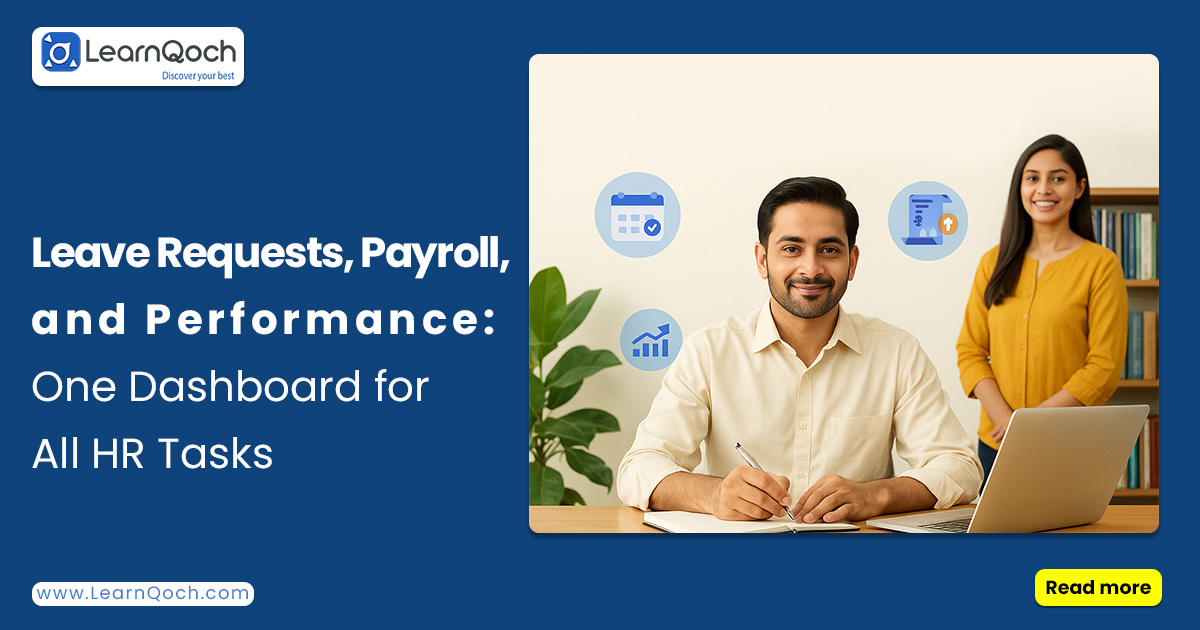
Leave Requests, Payroll, and Performance: One for All HR Tasks


In every educational institution—be it a school, college, university, or vocational institute—smooth operations rely on one critical element: people. Teachers, administrative staff, lab assistants, and support personnel form the backbone of the learning ecosystem. However, managing their HR needs—from leave requests to payroll processing and performance evaluations—can quickly become overwhelming without the right tools. This is where a well-structured HR ERP system plays a vital role, helping institutions manage staff records efficiently, automate HR processes, and ensure smooth administrative operations.
This is where a centralized Human Resource Management (HRM) module within an ERP system transforms the way educational institutions operate. With a robust HR ERP, institutions can streamline HR workflows, automate routine processes, maintain accurate staff records, and significantly improve overall staff satisfaction and operational efficiency.
Understanding HR Challenges in Educational Institutes
Managing human resources in educational institutions is inherently complex. Schools and colleges often employ anywhere from 20 to 200+ staff, each with unique roles, schedules, and responsibilities. Traditional HR methods—manual paperwork, Excel spreadsheets, and informal processes—pose several challenges:
- Endless paperwork for leave applications that must be manually approved and filed.
- Payroll miscommunications, resulting in delays or errors in salary disbursement.
- Unstructured performance appraisals, leading to inconsistent staff evaluations.
- Delayed reporting, which affects compliance and internal audits.
While corporate organizations have rapidly embraced HR technology, many educational institutions remain reliant on outdated methods. This often leads to inefficiencies, frustrated employees, and wasted administrative hours.
Given these challenges, adopting a centralized HR dashboard is not just a convenience—it is a necessity for operational excellence, especially for streamlining leave requests and enabling accurate payroll automation.
Why a Centralized HR Dashboard Matters
A centralized HR dashboard is more than a digital convenience; it is a strategic solution that enhances transparency, accountability, and efficiency. Unlike manual methods, an ERP-enabled HR module provides a unified platform where all staff-related processes can be managed seamlessly.
| HR Function | Traditional Method | ERP-Enabled Solution | Key Benefit |
| Leave Requests | Paper forms, Excel sheets | Digital requests, auto-approval workflows | Faster, trackable, no bottlenecks |
| Payroll Management | Manual calculations, cheque payments | Auto salary slips, direct bank transfers | Accuracy, transparency |
| Performance Appraisal | Informal, inconsistent reviews | KPI-based tracking, regular feedback loops | Motivated and accountable staff |
| Staff Attendance | Manual registers | Biometric or app-based attendance | Real-time tracking and data flow |
| Compliance Reporting | Delayed, error-prone | Instant reports with historical data | Audit readiness, decision-making |
Source: LearnQoch Product Feedback Survey, 2023
This transformation streamlines HR workflows while significantly reducing errors, delays, and manual intervention.
Key Benefits for Educational Institutions
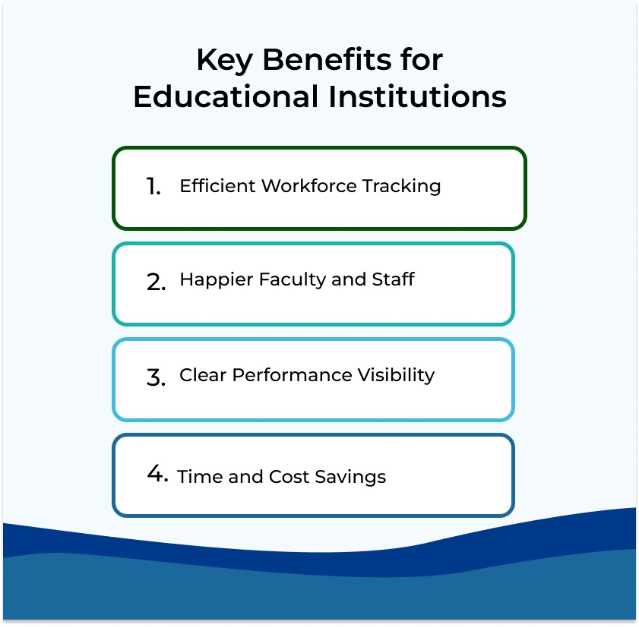
1. Efficient Workforce Tracking
A centralized dashboard allows administrators to track attendance, leave balances, working hours, and overall staff engagement in one place. There’s no longer a need to reconcile multiple spreadsheets or manually calculate leave encashments. With all data digitally available, decision-making becomes faster and more accurate through effective performance management and well-maintained employee records.
Beyond operational efficiency, an integrated HR system also enhances employee satisfaction.
2. Happier Faculty and Staff
Transparency in leave approvals, salary disbursements, and recognition creates a positive work environment. When staff members see that their requests are processed efficiently and their contributions are acknowledged, trust in the institution grows. This, in turn, improves retention rates and makes the institution more attractive to top talent within school administration through effective staff management.
But HR dashboards don’t just improve satisfaction—they also provide clear insights into staff performance.
3. Clear Performance Visibility
With ERP-enabled HR modules, performance appraisals are structured, consistent, and data-driven. Department heads can evaluate both teaching and non-teaching staff based on:
- Key Performance Indicators (KPIs)
- Student feedback
- Overall contribution to institutional objectives
Such transparency ensures that high-performing employees are recognized, underperformers are identified early, and professional development is targeted effectively.
Transition: Another significant advantage is time and cost savings.
4. Time and Cost Savings
Automating HR processes drastically reduces manual hours, errors, and paperwork. Salary slips are generated automatically, leave requests are tracked digitally, and attendance is recorded in real-time. This not only saves administrative time but also reduces costs associated with paper usage, manual reconciliation, and audit preparation. Additionally, digital processes are eco-friendly and sustainable, aligning with modern institutional goals.
Why HR Efficiency Matters in Education
Smooth HR operations allow faculty to focus on their core responsibility: teaching. When administrative staff aren’t burdened by leave approvals, payroll errors, or performance tracking, they can dedicate more time to supporting educational outcomes across institutions using Mumbai ERP, Nagpur ERP, and Vidarbha ERP solutions like LearnQoch ERP.
Moreover, institutions with robust HR systems become more appealing to new hires. In today’s competitive education market, just as students expect modern classrooms and learning tools, teachers expect efficient, transparent, and modern workplaces. A strong internal HR system signals professionalism, care for staff, and long-term stability.
The benefits of centralized HR systems are further reinforced by real-world data.
Real-World Data Snapshot
Based on 12 LearnQoch partner institutions (Jan–Dec 2023), the impact of ERP-enabled HR management is evident:
| Metric | Before ERP | After ERP Implementation |
| Time to Process Monthly Payroll | 3–5 days | 1 day |
| Manual Errors in Salary Computation | 5–7% | <1% |
| Leave Requests Pending Weekly | 25+ | <5 |
| Employee Satisfaction (Internal Survey) | 63% | 91% |
This data highlights how automation, transparency, and integration can transform HR operations, improving accuracy, efficiency, and staff morale.
How Modern HR Software Supports During-Workday Activities
Modern HR software goes beyond payroll and leave management. Key features include:
- Digital Leave Management: Employees can apply for leave, view balances, and track approvals in real-time.
- Automated Payroll: Salaries are calculated accurately, deductions are applied correctly, and slips are sent instantly.
- Performance Appraisals: KPI-based evaluation and continuous feedback keep staff motivated.
- Attendance Monitoring: Biometric or app-based systems provide real-time data, reducing errors and discrepancies.
- Compliance and Reporting: Generate audit-ready reports instantly, improving decision-making and regulatory adherence.
These features together ensure that HR processes are seamless, transparent, and employee-friendly.
Transition: Let’s explore each module in detail.
Digital Leave Management
Manual leave requests are prone to delays, lost forms, and miscommunication. Digital leave management allows staff to submit requests via the dashboard, automatically routing them for approval. Notifications alert managers to pending requests, while staff can track the status in real-time. This reduces bottlenecks and ensures fairness across departments.
Automated Payroll Management
Payroll processing is often the most time-consuming HR task. Errors in calculations or delays in salary distribution can significantly affect staff morale. With an automated payroll system, salaries are computed accurately, direct bank transfers are made on schedule, and employees can access digital payslips immediately. Transparency is improved, and human error is minimized.
Performance Appraisal and Staff Development
ERP systems enable structured, KPI-driven performance reviews. Managers can provide continuous feedback, track progress, and align staff goals with institutional objectives. This data-driven approach motivates employees, identifies training needs, and encourages accountability across all levels.
Attendance Tracking
Paper registers are prone to mistakes and manipulation. Modern HR systems use biometric or app-based tracking to capture real-time attendance, reducing errors and providing accurate data for payroll, leave balances, and performance evaluation.
Compliance Reporting
Institutions often struggle with delayed reporting, especially during audits. HR dashboards generate instant, historical, and real-time reports for leave, payroll, and performance metrics. This ensures audit readiness, supports data-driven decision-making, and improves institutional governance.
Conclusion
In summary, a centralized HR dashboard is no longer optional—it is essential for educational institutions striving for operational excellence. From leave requests and payroll to performance appraisals and attendance tracking, ERP-enabled HR solutions streamline processes, reduce errors, save time, and enhance transparency.
Institutions adopting such technology see tangible benefits: happier faculty, motivated staff, accurate payroll, and efficient administrative operations. Moreover, a strong HR system helps retain talent, boosts institutional credibility, and allows educators to focus on what matters most: delivering quality education.
By investing in a centralized HRM solution, educational institutions can transform HR challenges into streamlined, automated workflows, ensuring operational efficiency, staff satisfaction, and long-term institutional success.
LearnQoch HRM: Making Campus Work-Life Better
Exams are only one part of academic management. LearnQoch goes further by providing an integrated platform that covers all aspects of institutional growth:
- ERP (Enterprise Resource Planning): Streamlines administration, simplifies student data management, and ensures smooth workflow across all departments.
- LMS (Learning Management System): Facilitates modern teaching and learning experiences while tracking student progress and course outcomes.
- NAAC, NBA & NIRF Compliance: Accreditation-ready tools simplify reporting, monitoring, and auditing processes, reducing administrative burden.
- Website & Digital Marketing Solutions: Helps institutions establish a strong online presence to attract prospective students and stakeholders.
- Skill Development Solutions: Equips students with future-ready skills, enhancing employability and global career opportunities.
- OBE (Outcome-Based Education):
OBE focuses on measuring student learning outcomes to ensure that educational objectives are met. It emphasizes skills, knowledge, and competencies, allowing institutions to track and improve academic performance effectively. - Task Management:
Task management involves organizing, prioritizing, and tracking tasks to boost productivity and efficiency. It helps individuals and teams stay on schedule, collaborate effectively, and achieve goals systematically. - Timetable Management:
Timetable management organizes classes, exams, and activities to avoid clashes and optimize resources. Digital tools make scheduling easier, accurate, and efficient. - Committee Management:
Committee management coordinates roles, meetings, and tasks among members. It ensures smooth collaboration, accountability, and timely decision-making.
This creates a unified ecosystem where academics, administration, and digital presence work together seamlessly.
LearnQoch’s Vision & Mission
Vision: To make every student employable by empowering students, educators, and parents.
Mission: To make learning and teaching interesting and engaging, LearnQoch improves the learning and teaching outcomes.
Conclusion: Simplify to Scale
HR isn’t just about records — it’s about people. And people thrive when systems support them.
If your institution is still handling leave approvals over WhatsApp, or calculating payroll in Excel sheets, now is the time to embrace a unified HR dashboard.
With ERP-powered HRM from LearnQoch, you gain:
- Efficient processes
- Engaged faculty
- Data to drive better decisions
Because when your people succeed, your institution excels.
The LearnQoch AI powered Academic Platform
LearnQoch goes further by providing an integrated platform that covers all aspects of institutional growth:

Institutional Digital Ecosystem: Categories & Modules
A. LearnQoch AI powered Core Academic & Learning Solutions
Facilitates modern teaching and learning while tracking student progress, assignments, assessments, and course outcomes.
Focuses on measuring learning outcomes to ensure skills, competencies, and academic objectives are met effectively.
- LearnQoch AI powered Academic Calendar & Events
Maintains academic schedules, holidays, events, and exam timelines for seamless yearly planning.
- LearnQoch AI powered Class Module
Manages class creation, faculty allocation, and student grouping while supporting timetable integration.
B. LearnQoch AI powered Examination & Evaluation Management
LearnQoch AI Powered Exam Management Module
A unified system that digitizes the entire exam cycle—right from planning, subject allocation, ATKT processing, and scheduling to question paper creation, assessments, evaluation, and result generation. It ensures transparency, accuracy, and smooth coordination across all departments.
C. LearnQoch AI powered Campus Administration & Operations
Streamlines administrative activities, simplifies student data management, and ensures workflow automation across all departments.
- LearnQoch AI powered Task Management
Organizes, prioritizes, and tracks institutional tasks to improve productivity and accountability.
- LearnQoch AI powered Committee Module
Handles committee formation, roles, activities, and meeting records to maintain governance transparency.
- LearnQoch AI powered Document Management
Stores, organizes, and retrieves institutional documents with version control and compliance tracking.
- LearnQoch AI powered Certificate Management
Manages creation and issuance of academic and administrative certificates such as Bonafide, character, and leaving certificates.
D. LearnQoch AI powered Finance & Fees Management
- LearnQoch AI powered Finance Module – Receivable (Fees)
Tracks payments, manages fee categories, handles tuition/fines, and maintains fee-related records.
- LearnQoch AI powered Advanced Fees
Payments made before the due date, helping institutions and parents manage fee planning efficiently.
- LearnQoch AI powered Excess Fees
Extra amount paid unintentionally; recorded for adjustment in future payments or refunded when necessary.
E. LearnQoch AI powered Library & Resource Management
LearnQoch AI powered Library Module
Manages book registration, issue-return process, renewals, student access, and availability tracking for efficient library operations.
F. LearnQoch AI powered Placement & Career Development
- LearnQoch AI powered Placement Module
Manages job postings, student registration, interview updates, and final offer letters with complete transparency for TPOs and students.
- LearnQoch AI powered Skill Development Solutions
Equips students with future-ready skills to enhance employability and prepare for global career opportunities.
G. LearnQoch AI powered Accreditation & Compliance
LearnQoch AI powered NAAC, NBA & NIRF Compliance
Simplifies reporting, monitoring, and auditing with ready-to-use compliance tools that reduce institutional workload.
H. LearnQoch AI powered Digital Presence & Branding
LearnQoch AI powered Website & Digital Marketing Solutions
Helps institutions build a strong online presence, attract prospective students, and engage key stakeholders effectively.
Don’t Just Take Our Word for It—Try LearnQoch Yourself!
We invite you to experience the transformative impact of LearnQoch’s Digitize Platform with a 14-Day Free Trial.
During this period, our team will implement the software for your institution, allowing you to explore its features firsthand and see the difference it can make in academic management.
👉 Are you ready to lead your institution into the future of campus management?
📞 Contact us at +91 84519 01079
📧 Email: info@learnqoch.com /sales@learnqoch.com
Explore What LearnQoch Offers:
Visit www.learnqoch.com for Full Details