



Research, Innovations and Extension under NAAC Accreditation


NAAC Criterion 3: Research, Innovations, and Extension (Aligned with NEP 2020)
NAAC research criteria is the third criterion defined by NAAC accreditation and plays a vital role in assessing the academic strength and societal impact of an institution. This criterion focuses on quality research output, innovative practices, consultancy services, and meaningful community engagement that contribute to institutional excellence.
In line with NEP 2020, institutions are encouraged to promote a strong research culture, interdisciplinary studies, and innovation-driven learning that enhances critical thinking and problem-solving skills among students. NEP 2020 also emphasizes research-based education, encouraging faculty and students to actively participate in projects that address real-world and societal challenges.
Criterion 3 also highlights the importance of extension activities and outreach programs, where institutions extend their expertise to society through community development initiatives, consultancy, collaborations, and extracurricular engagements. Such activities not only strengthen institutional credibility but also foster social responsibility, experiential learning, and holistic student development, which are key pillars of NEP 2020.
By aligning research, innovation, and extension initiatives with NEP 2020, institutions can demonstrate academic excellence, societal relevance, and a commitment to sustainable and inclusive growth, thereby strengthening their NAAC accreditation outcomes.
This criterion holds a weightage of:
- 150 (for both Affiliated and autonomous institutions)
- 250 (for universities).
Here are the 7 key indicators defined by NAAC Accreditation criteria under research, innovation, and extension criteria.
Promotion of Research and Facilities
The institution should not only run research projects on various topics and provide various facilities but also promote it among other institutions.
Resource Mobilization for Research
Each institution receives grants that help support its research projects under innovations AI. The SSR should clearly present the total amount of grants received (INR in Lakhs) from both government and non-government agencies for research projects during the last five years. It should also include the percentage of departments involved in research projects funded by government and non-government agencies, along with the number of departments actively undertaking such projects.
Additionally, institutions must report the total number of departments offering academic programs, as well as the number of seminars, conferences, and workshops conducted during the last five years. These indicators collectively reflect the institution’s research culture, innovation capacity, and academic engagement, forming a key part of NAAC quality assessment.
Innovation Ecosystem
The institution should keep innovating new teaching methods for the better understanding and knowledge development of the students.
Research Publications and Awards
State the number of papers published per teacher in the Journals notified on UGC website during the last five years, number of research papers in the Journals notified on UGC website during the last five years, number of books and chapters in edited volumes, books published and papers published in national or international conference proceedings per teacher during last five years, the total number of books and chapters in edited volumes, books published and papers in national or international conference proceedings year-wise during last five years.
Consultancy
Under this indicator mention all the extended consultancy services provided by the institution and the total number of services provided during the last five years.
Extension Activities
Institutions should carry out extension activities in the neighborhood community, sensitizing students to social issues, for their holistic development, and impact thereof during the last five years. Under this indicator state the activities carried, total number of awards and all the awards and recognitions received for extension activities from government or government recognised bodies year-wise during the last five years, number of extension and outreach programs conducted by the institution through NSS/NCC, Government and Government recognised bodies during the last five years,, average percentage of students participating in extension activities, total number of Students participating in extension activities conducted in collaboration with industry, community and Non- Government Organizations through NSS, NCC, Red Cross etc., year-wise during last five years
Collaboration
The institution should collaborate for faculty exchange, student exchange, internship, field trips, on-the-job training, research, and related academic activities during the last five years under LearnQoch Vidarbha. The SSR must clearly document all such collaborations along with the year-wise number of linkages across different programs over the last five years.
Additionally, institutions are required to report the number of functional MoUs signed with national and international institutions, universities, industries, and corporate houses during the same period. These collaborations and partnerships reflect the institution’s academic connectivity, industry engagement, and commitment to experiential learning and research enhancement..
How LearnQoch Can Help with NAAC Accreditation?
As mentioned in our blog The complete guide on NAAC Accreditation, the process of NAAC accreditation might seem unmanageable and error-occurring, and that is why LearnQoch is here to help you with the process.
Our NBA & NAAC accreditation software is a Cloud-based integrated ERP & LMS software designed for educational institutions to automate the lengthy process of accreditation. You can generate Self Study reports on a click of a button It helps the higher educational institutions to streamline their work processes by managing institutional data and get ready for NAAC Accreditation.
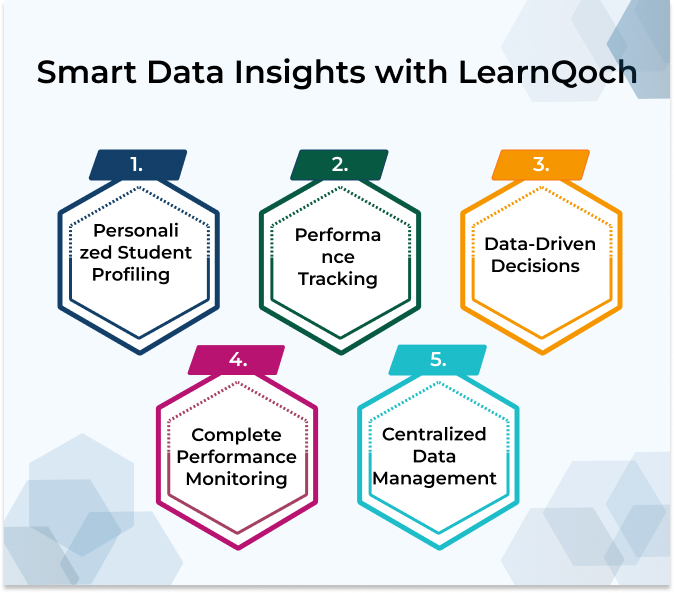
- Get personalised data of each individual whether they are slow or average students.
- Get daily, weekly, monthly or yearly data to understand the student’s strength and weakness to do required research to improve their performance
- LearnQoch integrated EdTech platform helps you to take informed decisions with reference to data
- Principals, Admin, and HOD can monitor, measure and analyze every student and teacher’s performance, which can be the basis of desired R&D programs.
- Finally, & most importantly, manage all 5 yrs of data centrally to avoid dependency on individual teachers.
Enhance accreditation-related data and strengthen quality assurance standards of your institution by choosing LearnQoch Software for publications, enabling efficient documentation, streamlined academic reporting, and improved compliance with NAAC requirements.
Conclusion
NAAC Criterion 3 highlights the importance of building a strong culture of research, innovation, and community engagement within higher education institutions. By encouraging interdisciplinary research, innovative practices, consultancy, and extension activities, institutions enhance both academic quality and societal impact.
Aligning these initiatives with NEP 2020 Mumbai extension 3.1 ensures that students gain experiential, research-oriented learning while addressing real-world challenges. A robust focus on research and extension not only strengthens NAAC accreditation outcomes but also reflects the institution’s commitment to social responsibility, innovation, and sustainable development.
The LearnQoch AI powered Academic Platform
LearnQoch goes further by providing an integrated platform that covers all aspects of institutional growth:

Institutional Digital Ecosystem: Categories & Modules
A. LearnQoch AI powered Core Academic & Learning Solutions
Facilitates modern teaching and learning while tracking student progress, assignments, assessments, and course outcomes.
Focuses on measuring learning outcomes to ensure skills, competencies, and academic objectives are met effectively.
- LearnQoch AI powered Academic Calendar & Events
Maintains academic schedules, holidays, events, and exam timelines for seamless yearly planning.
- LearnQoch AI powered Class Module
Manages class creation, faculty allocation, and student grouping while supporting timetable integration.
B. LearnQoch AI powered Examination & Evaluation Management
LearnQoch AI Powered Exam Management Module
A unified system that digitizes the entire exam cycle—right from planning, subject allocation, ATKT processing, and scheduling to question paper creation, assessments, evaluation, and result generation. It ensures transparency, accuracy, and smooth coordination across all departments.
C. LearnQoch AI powered Campus Administration & Operations
Streamlines administrative activities, simplifies student data management, and ensures workflow automation across all departments.
- LearnQoch AI powered Task Management
Organizes, prioritizes, and tracks institutional tasks to improve productivity and accountability.
- LearnQoch AI powered Committee Module
Handles committee formation, roles, activities, and meeting records to maintain governance transparency.
- LearnQoch AI powered Document Management
Stores, organizes, and retrieves institutional documents with version control and compliance tracking.
- LearnQoch AI powered Certificate Management
Manages creation and issuance of academic and administrative certificates such as Bonafide, character, and leaving certificates.
D. LearnQoch AI powered Finance & Fees Management
- LearnQoch AI powered Finance Module – Receivable (Fees)
Tracks payments, manages fee categories, handles tuition/fines, and maintains fee-related records.
- LearnQoch AI powered Advanced Fees
Payments made before the due date, helping institutions and parents manage fee planning efficiently.
- LearnQoch AI powered Excess Fees
Extra amount paid unintentionally; recorded for adjustment in future payments or refunded when necessary.
E. LearnQoch AI powered Library & Resource Management
LearnQoch AI powered Library Module
Manages book registration, issue-return process, renewals, student access, and availability tracking for efficient library operations.
F. LearnQoch AI powered Placement & Career Development
- LearnQoch AI powered Placement Module
Manages job postings, student registration, interview updates, and final offer letters with complete transparency for TPOs and students.
- LearnQoch AI powered Skill Development Solutions
Equips students with future-ready skills to enhance employability and prepare for global career opportunities.
G. LearnQoch AI powered Accreditation & Compliance
LearnQoch AI powered NAAC, NBA & NIRF Compliance
Simplifies reporting, monitoring, and auditing with ready-to-use compliance tools that reduce institutional workload.
H. LearnQoch AI powered Digital Presence & Branding
LearnQoch AI powered Website & Digital Marketing Solutions
Helps institutions build a strong online presence, attract prospective students, and engage key stakeholders effectively.
Don’t Just Take Our Word for It—Try LearnQoch Yourself!
We invite you to experience the transformative impact of LearnQoch’s AI powered Digitize Platform with a 14-Day Free Trial.
During this period, our team will implement the software for your institution, allowing you to explore its features firsthand and see the difference it can make in academic management.
👉 Are you ready to lead your institution into the future of campus management?
📞 Contact us at +91 84519 01079
📧 Email: info@learnqoch.com / sales@learnqoch.com
Explore What LearnQoch Offers:
Visit www.learnqoch.com for Full Details
Also Read,
NAAC Research AI: Innovations Mumbai Extension
One Login, Infinite Possibilities: NBA, and NIRF Accreditation
New NAAC Accreditation System: How Colleges Can Adapt with LearnQoch
IMPORTANT: Big Changes Ahead! NAAC Accreditation Changes Explained Action Plan for HEIs in 2025
FAQs
1. What is NAAC Criterion 3 about?
NAAC Criterion 3 focuses on research activities, innovative practices, consultancy services, and extension initiatives that enhance academic quality and societal impact.
2. Why is Criterion 3 important for NAAC accreditation?
This criterion evaluates an institution’s research culture, innovation ecosystem, and community engagement, which significantly influence NAAC scores and institutional credibility.
3. How does NEP 2020 support research and innovation?
NEP 2020 promotes research-based learning, interdisciplinary studies, innovation hubs, and real-world problem solving, encouraging institutions to integrate these aspects into academics.
4. What types of extension activities are considered under Criterion 3?
Extension activities include community outreach programs, social responsibility initiatives, consultancy, collaborations, and extracurricular activities that address societal and environmental issues.
5. How can institutions improve their performance under Criterion 3?
Institutions can strengthen Criterion 3 by encouraging faculty and student research, supporting innovation projects, documenting consultancy work, and actively engaging with society.