


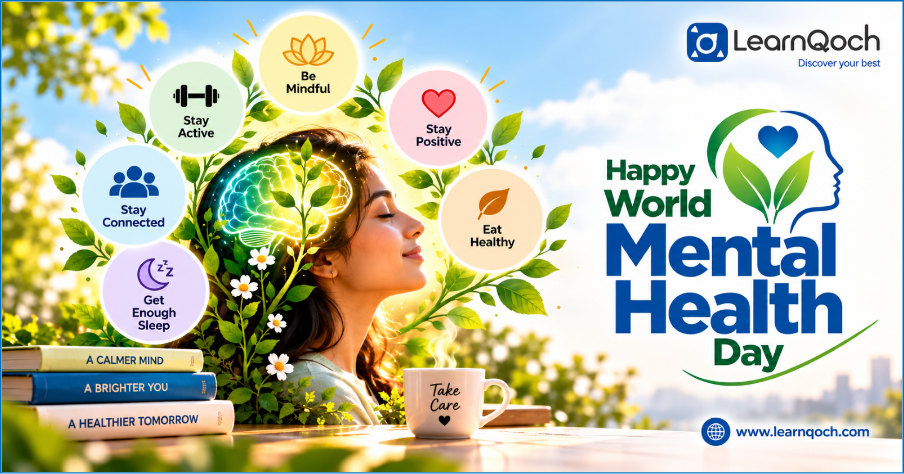
World Mental Health Day: Mental Well-Being Matters in Every Learning Journey


Behind every person is a human being with emotions, expectations, worries, relationships and everyday challenges.
That is why mental well-being deserves attention in our everyday lives—not only in schools, workplaces or healthcare settings.
World Mental Health Day is observed every year on 10 October. Its purpose is to raise awareness about mental health and encourage action to make mental health support more accessible to people around the world.
For 2026, the World Health Organization’s theme is “Lived experiences heard: real voices, real change.” The focus is on listening to people with lived experience and involving them in decisions about mental-health policies, services and support.
At LearnQoch, we work in education technology, but we believe technology should always remain people-focused. Digital systems can simplify processes and reduce routine work, but they cannot replace empathy, listening and human connection.
Because mental health is not someone else’s issue.
What Exactly Is Mental Health?
Mental health is not simply the absence of a mental illness.
According to WHO, mental health is a state of mental well-being that helps a person cope with the normal stresses of life, realise their abilities, learn and work well, and contribute to their community.
In simple words, mental health is about how we think, feel, cope, connect with others and manage everyday life.
And just like physical health, mental well-being can change over time.
Why Do We Celebrate World Mental Health Day?
World Mental Health Day is observed every year on 10 October. It began on 10 October 1992 as an initiative of the World Federation for Mental Health (WFMH), with Richard “Dick” Hunter, then Deputy Secretary General of WFMH, playing a key role in starting the programme.
At that time, mental health needed greater public attention, education and open discussion. The aim was simple: help people understand mental health, reduce misunderstanding and encourage society to take it as seriously as physical health.
The first World Mental Health Day did not have a specific theme. WFMH focused on spreading the message internationally. In 1992, it even organised a two-hour global telecast, with participation from countries including Australia, Chile, England and Zambia.
But awareness is not only about knowing that mental health matters. It is also about understanding when someone may need support.
Mental health professionals generally look at a person’s overall situation—how they are feeling, behaving and coping with everyday life. They may talk about sleep, stress, relationships, work or studies, changes in behaviour and how long these difficulties have been continuing. Standard questionnaires may also be used as screening tools, but they do not by themselves provide a diagnosis.
For example, someone who normally enjoys meeting friends and working may gradually become withdrawn, lose interest in things they enjoy, have difficulty sleeping and struggle with everyday responsibilities. These changes do not automatically mean that the person has a mental illness, but they may be a reason to talk to a qualified professional.
That is why awareness matters.
Sometimes, it begins with something as simple as noticing a change, asking “Are you okay?”, listening without judgement and helping someone find the right support.
Why Does Mental Well-Being Matter at Every Stage of Life?
Mental well-being matters throughout our entire life—not only when we become students or adults.
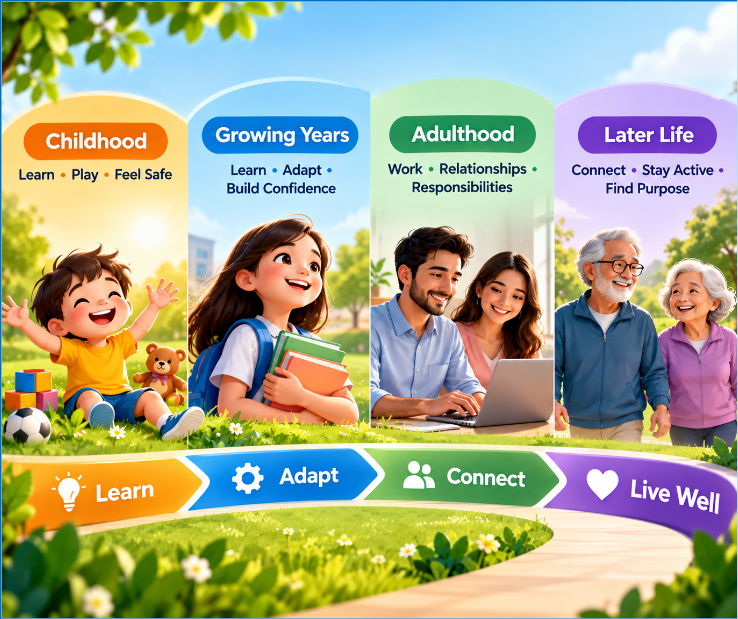
Think about a baby learning to sit, stand, walk and eventually run. At the same time, the child is learning from the people and world around them. Talking, singing, playing and responding to a baby help create meaningful interaction and support early development.
As children grow, they learn to communicate, make friends, understand emotions and deal with new situations. Feeling safe, supported and cared for can help children develop confidence and learn to adapt.
The teenage years bring new experiences, relationships, academic pressure and questions about identity.
As adults, life brings different responsibilities—work, relationships, finances and family. In later life, connection, purpose and social interaction continue to matter.
Our needs may change as we grow, but mental well-being remains important throughout the journey.
A healthy mind helps us learn, adapt, cope with change and move forward in life.
What Can We Do to Maintain Better Mental Well-Being?
There is no single solution that works for everyone. But some simple habits can help:
- Talk to someone you trust when you are struggling.
- Make time for sleep, physical activity and regular breaks.
- Stay connected with friends, family or your community.
- Avoid carrying stress alone for too long.
- If you feel you need professional help, reach out to a qualified mental-health professional.
WHO also provides practical resources for managing stress and maintaining mental well-being.
And an important point: seeking professional help is a normal and responsible step when someone needs it.
Where Does Technology Fit In?
At LearnQoch, we work in education technology, so we see technology as a supporting tool, not a replacement for human care.

Every day, people already spend a lot of energy managing different responsibilities at the same time. Work, family, communication, information, deadlines and countless small tasks can leave people feeling tired and under pressure. Having to use multiple disconnected tools and repeatedly manage the same information can add to that burden.
This is where we believe technology can make a small but meaningful contribution.
At LearnQoch, our approach is to bring connected academic activities onto one integrated platform. Instead of managing multiple systems for different activities, institutions can manage relevant academic processes through one connected solution.
Less switching between tools. Less repetitive work. Less effort spent managing information. More time and energy for what really matters.
Technology cannot remove every pressure from our lives, and it cannot replace human understanding or care. But if technology can help people manage fewer tools, reduce repetitive work and work through one connected platform, that is already a useful contribution.
For us, technology is not about doing more work. It is about making everyday work simpler, so people can spend their energy where it matters most.
Can We Participate in World Mental Health Day?
Yes. Participation does not have to mean organising a large event.
Schools, colleges and organisations can use the day to:
- Create awareness about mental health.
- Encourage open and respectful conversations.
- Share reliable mental-health resources.
- Organise talks or awareness sessions with qualified professionals.
- Help students and staff understand where they can seek support.
- Listen to people’s experiences rather than making assumptions about them.
For 2026, WHO is particularly encouraging meaningful participation from people with lived experience—not simply listening to their stories, but involving them in shaping mental-health services and decisions.
FAQs
Why is mental well-being important for everyone?
Mental well-being matters to all of us. Students may feel pressure about studies, working people may struggle with deadlines and responsibilities, and homemakers may manage many things at home without enough time for themselves. Taking care of our mental well-being helps us handle everyday challenges in a healthier way.
What can I do when I feel stressed or overwhelmed?
Start with small things. Take a short break, talk to someone you trust, get enough sleep, stay active, spend some time doing something you enjoy, and avoid trying to handle everything at once. If stress continues or feels difficult to manage, seeking professional support is also important.
How can we support the mental well-being of people around us?
Sometimes, simply listening can help. Give people space to talk without judging them. A student, colleague, parent, spouse, or friend may not always need advice; sometimes they just need someone who understands and supports them.
How can educational institutions reduce unnecessary stress for teachers and students?
Too many administrative tasks, repetitive paperwork, scattered information, and manual processes can add unnecessary pressure. Technology can simplify these activities and give teachers and staff more time to focus on teaching, students, and academic outcomes.
How can LearnQoch help make the education journey easier?
At LearnQoch, we believe technology should make education simpler, not more complicated. By bringing academic, examination, assessment, attendance, LMS, OBE, and accreditation activities into connected digital workflows, LearnQoch helps institutions reduce repetitive work, save time and effort, and make everyday academic management more manageable.