


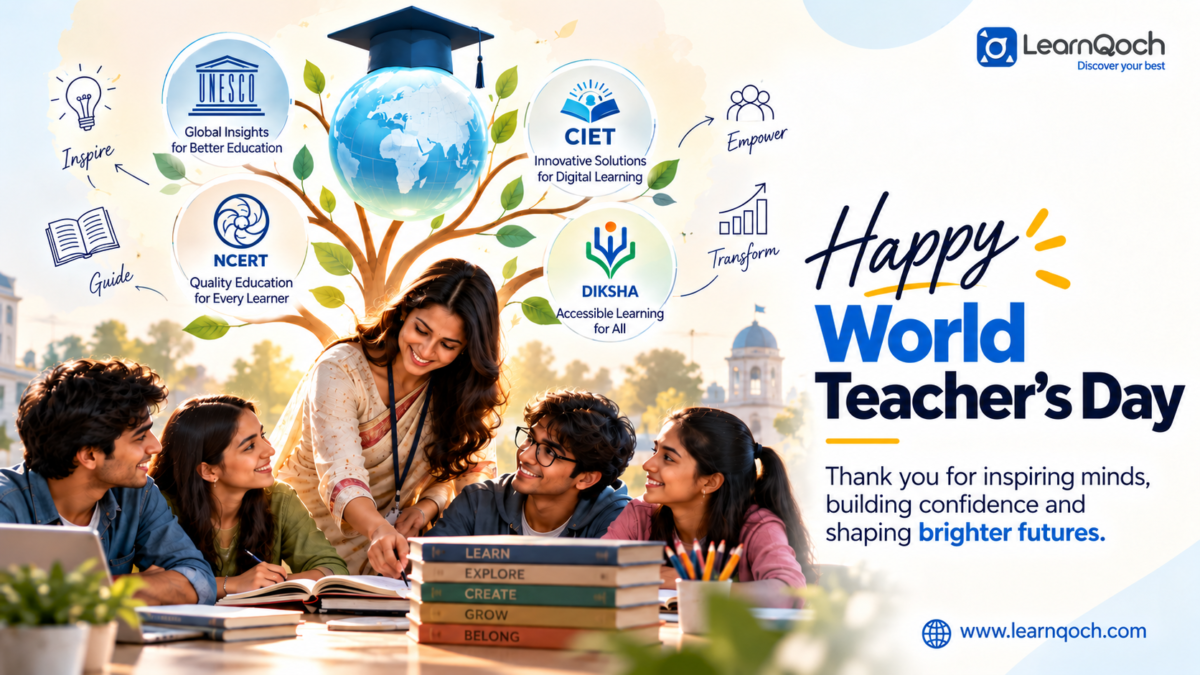
Beyond Teaching: Celebrating the Real Impact of Teacher’s.


A teacher’s role does not end when the class is over. Sometimes, the most important work happens outside the lesson plan—a conversation with a struggling student, encouragement after a disappointing result, or simply noticing when a student needs support.
This is also why World Teachers’ Day, recognised by UNESCO(United Nations Educational, Scientific and Cultural Organization), goes beyond celebrating teachers. It highlights the importance of supporting teachers with the skills, resources and opportunities they need in a changing education environment.
At LearnQoch, as an education technology service provider, we see how digitalisation can support this journey. When attendance, examinations, assessments and academic information are managed digitally, teachers can spend less time on repetitive administrative work and more time understanding their students.
Technology can organise information and make it easier to access. But the teacher brings the human understanding that makes education meaningful.
On World Teachers’ Day, we celebrate both—the teacher who makes the difference and technology that helps them do more.
Why Do We Celebrate Teachers’ Day?
Teachers play a role that goes far beyond delivering lessons. They help students develop knowledge, confidence, discipline and the ability to think independently.
Teachers’ Day gives us an opportunity to pause from our everyday academic routines and recognise that contribution. It is a day to thank the teachers who have supported students, encouraged them during difficult moments and helped shape their academic and personal journeys.
In India, Teachers’ Day is celebrated on 5 September, marking the birth anniversary of Dr. Sarvepalli Radhakrishnan, an Indian philosopher, educator and former President of India. The day has been observed in India since 1962.
What Is World Teacher’s Day Really About?
World Teachers’ Day is observed every year on 5 October. UNESCO has been marking the day since 1994 to recognise teachers around the world and, more importantly, to discuss what teachers need to do their work well.
It is not just a day for saying “Thank you, Teacher.” The bigger purpose is to improve the status, working conditions, professional development and support available to teachers.
The foundation goes back to the 1966 ILO/UNESCO Recommendation concerning the Status of Teachers, which provides international guidance on teachers’ rights and responsibilities, preparation, recruitment, working conditions and professional development.
What Difference Can It Make in Different Countries?
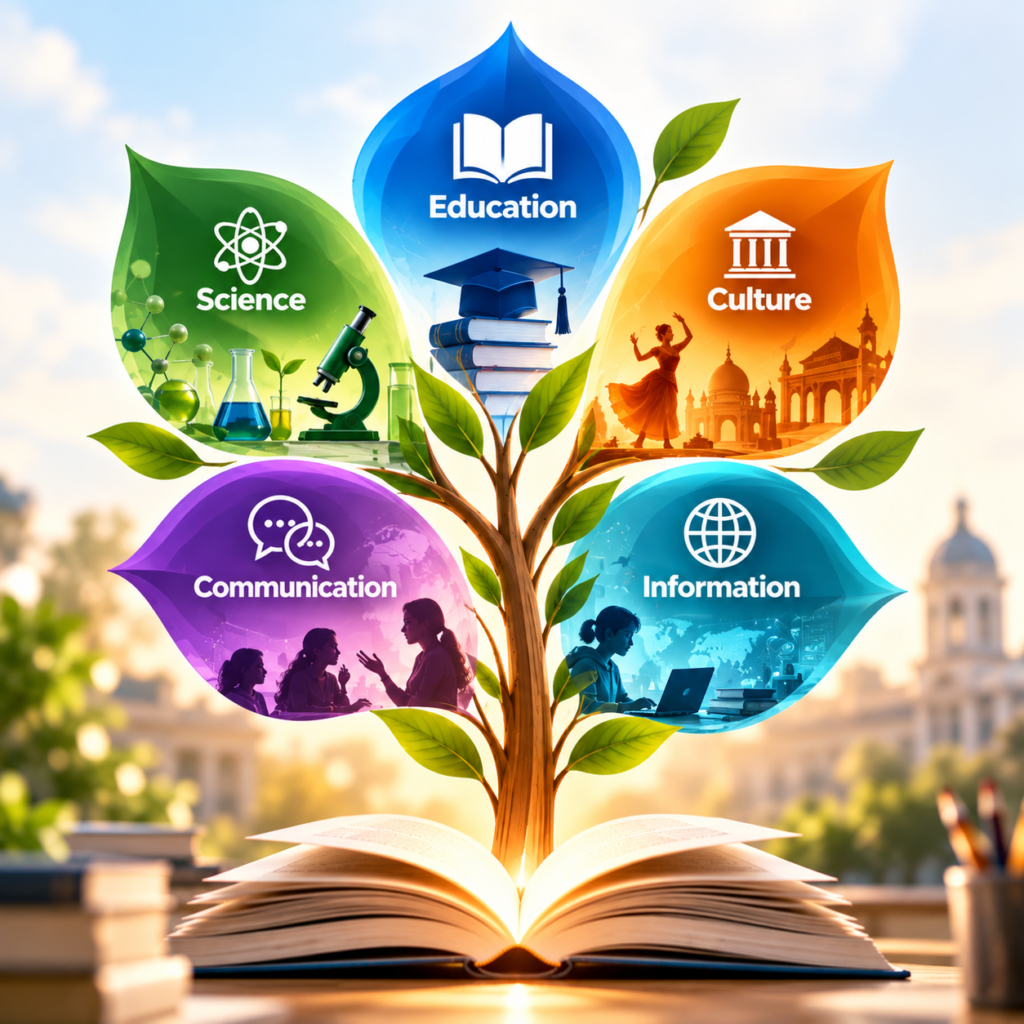
UNESCO(that works in areas such as education, science, culture, communication and information.) does not simply create one scheme and give it to every country. It works with governments, education institutions and partners to develop policies, training and programmes according to local needs.
For example:
India: UNESCO(United Nations Educational, Scientific and Cultural Organization) and NCERT (National Council of Educational Research and Training)launched a teacher-training programme in 2026 on protecting children from online violence. The programme was free, available nationally and offered certification through DIKSHA(Digital Infrastructure for Knowledge Sharing).
China: UNESCO is working with Shanghai Normal University on “Teachers as Lifelong Learners,” focusing on continuous professional development and tools that can help teachers keep developing throughout their careers.
United States: UNESCO’s teacher framework also applies to teachers in the US, but UNESCO does not operate a single national teacher-training scheme there comparable to the India programme above. Its work is primarily through international standards, research, knowledge-sharing and cooperation with education systems.
How Does UNESCO Actually Work?
Think of UNESCO as a global education organisation that brings countries, experts and education institutions together.
It studies what is happening in education, develops international guidance, supports countries with policy and training, shares knowledge and brings educators and policymakers together.
It does not directly manage every teacher or school.
For example, UNESCO’s current work on teachers includes addressing teacher shortages, improving professional development and helping countries strengthen teacher policies.
What Does This Mean for an Ordinary Teacher?
A teacher in India, China, America or anywhere else does not need to become a UNESCO member to benefit.
Teachers can:
- Participate in relevant UNESCO-supported training and learning programmes when available.
- Use UNESCO’s free teaching resources and reports.
- Take part in World Teachers’ Day events and discussions.
- Join professional or educational organisations that work with UNESCO.
- Share their experiences and ideas through relevant UNESCO consultations and initiatives.
For example, UNESCO’s AI EmpowerED programme is currently providing digital and AI-skills training to teachers and university lecturers in countries including India, with both online and in-person learning.
And this is perhaps the most important point: World Teachers’ Day is not only about celebrating teachers. It is also about listening to teachers and improving the conditions in which they teach.
For 2026, this becomes even more relevant because World Teachers’ Day marks 60 years of the 1966 Recommendation, with UNESCO focusing on protecting and advancing the status of the teaching profession in a rapidly changing world
Conclusion
On World Teachers’ Day, we celebrate the people who do much more than complete a syllabus. Teachers notice, encourage, guide and believe in students—often in ways that students remember for years.
Technology will continue to change education, but the human connection between a teacher and a student will always remain at its heart.
At LearnQoch, we believe technology should support that connection by reducing routine work and giving teachers more time to focus on what matters most—their students.
Happy World Teachers’ Day to every teacher making a difference, one student at a time.