

Implement Equity & Inclusion with NEP 2020


Diversity, Equity, and Inclusion (DEI) are essential considerations in the implementation of any education policy. Equity and inclusion are central to the vision of the National Education Policy 2020, which seeks to ensure consistent teaching and learning outcomes in a diverse nation like India. In this context, inclusive education recognizes diversity as differences, equity as equal access to opportunities, and inclusion as fostering a sense of value and empowerment among students, teachers, and parents.
In India, with its diversity in languages, food, social, and financial backgrounds, it is crucial to implement education policy measures that ensure access and equality. To illustrate, consider three students of different heights asked to observe an object outside the classroom window. The shortest student may not be able to see without support. Applying the principles of Indian education reform and equity and inclusion ensures that all students have the opportunity to see and learn, fostering a fair and inclusive learning environment.
National Education Policy NEP 2020 overview
Let’s understand the National Education Policy NEP 2020 in detail. Following are the key principles of NEP 2020
- Respect for Diversity & Local Context – In all curriculum, pedagogy and policy
- Equity & Inclusion – As the cornerstone of all educational decisions
- Community Participation – Encouragement and facilitation for philanthropic, private and community participation.
- Use of Technology – In teaching and learning, removing language barriers, for Divyang students, and in educational planning and management.
- Emphasize Conceptual Understanding – Rather than rote learning and learning-for-exams
- Unique Capabilities – Recognizing, identifying them in each student.
- Critical thinking and Creativity – To encourage logical decision-making and innovation
- Continuous Review – Based on sustained research and regular assessment by educational experts.
Each of the above principles needs to be implemented across all schools, both Government and Private. The “WHAT” part of the policy is clear; now it is the responsibility of esteemed schools to define the “HOW” for successful execution of National Education Policy 2020. By doing so, schools can enhance student support, expand learning opportunities, and ensure education equity for all learners.
In this blog, we’ll cover what to be done to ensure implementation of equity and inclusion with NEP 2020.
Focus on Socio-Economically Disadvantaged Groups (SEDGs)
SEDGs can be broadly classified using multiple dimensions, including the following:
Gender-related factors, with particular focus on female and transgender individuals
Socio-cultural backgrounds, such as Scheduled Castes, Scheduled Tribes, OBCs, and minority communities
Geographical contexts, covering learners from rural areas, small towns, and aspirational districts
Physical and learning disabilities, which may affect educational access and progress
Economic and social circumstances, including migrant families, low-income households, children in vulnerable conditions, victims or children of trafficking survivors, orphans, and child beggars.
According to U-DISE 2016–17 data, about 19.6% of students belong to Scheduled Castes (SC) at the primary school level; however, this proportion declines to 17.3% at the higher secondary level.
More strikingly, enrolment drop-offs are even more pronounced for Scheduled Tribe (ST) students, decreasing from 10.6% to 6.8%. Similarly, the participation of Muslim students falls sharply from 15% to 7.9%, while enrolment of children with disabilities drops from 1.1% to just 0.25%. Furthermore, within each of these Socially and Economically Disadvantaged Groups (SEDGs), the decline is even steeper for female students, highlighting persistent gender-based disparities across educational stages.The decline in SEDGs’ enrolment in higher education is even steeper.
We have 1Bn+ global population with special abilities who need special attention from education system and society to live a normal life. Along with SEDG, we need to build a strong ecosystem across all government and private schools to make their lives comfortable.
Ensuring Equity
NEP 2020 has outlined following resources & guidelines to provide equity
- Targeted scholarships
- Conditional cash transfers to incentivize parents to send their children to school
- Providing bicycles for transport
- Build eco-system of early childhood care and education
- Hiring of counsellors and teachers that work with and connect students, parents, schools, and teachers to improve attendance and learning outcomes.
- More focus on Special Education Zones (SEZ) contain significantly larger proportions of SEDGs
- Build additional schools like Jawahar Navodaya Vidyalaya’s and Kendriya Vidyalaya’s around the country, especially in aspirational districts, Special Education Zones and disadvantaged areas, to increase high -quality educational opportunities in every area of India.
- Focus on attainment of learning outcome of children belonging to SC/ST/OBC.
Gender
The exclusion and inequity that SEDGs face is only amplified for the women.
Safety and Rights
Careful attention to safety and rights of all children particularly girls to retain them in school.
KGBVs
Strengthening and extension of KGBVs (Kasturba Gandhi Balika Vidyalaya’s) up to grade 12
Gender Sensitivity
‘Gender Sensitivity’ to be an integral part of curriculum
Policies targeted for Girls
Thrust on designing policies and schemes targeted towards female students in the SEDGs
Bridging Gender Gap
Focus on bridging the Gender Gap and provide equal opportunities to all.
Gender Inclusion Fund
Gender-Inclusion Fund for female and transgender students
Supporting Children with Special Needs (CWSN)
Enabling Mechanisms
Enabling mechanisms for CWSN or Divyang to receive quality education
Regular Schooling
Children with special needs will be integrated in the regular schooling process from elementary to higher education levels
Assistive Devices and Orientation to Parents
Technology enabled assistive devices/tool for CWSN and orientation of the tools/devices for parents/caregivers
Modules
NIOS will develop high-quality modules to teach Indian Sign Language
Alternative Schools
Alternative forms of schools will be encouraged to preserve the alternative pedagogical styles
Certificate Courses
Certificate courses for pre-service and in-service teachers to become special educators
The NEP 2020 school curriculum will include, from an early stage, learning material that emphasizes core human values. In particular, it focuses on fostering respect for all individuals, along with empathy, tolerance, and awareness of human rights. Additionally, the curriculum promotes gender equality and non-violence, helping students develop ethical and socially responsible perspectives. At the same time, concepts such as global citizenship and the role of culture in sustainable development are integrated to build broader social awareness. Moreover, learners are encouraged to adopt sustainable lifestyles while understanding the importance of environmental responsibility. Ultimately, through a strong emphasis on inclusion and equity, NEP 2020 aims to nurture compassionate, informed, and responsible citizens who can contribute positively to both society and the global community.Children shall learn the basic philosophy of ancient Indian civilization and the inherent acceptance of diversity.
Build system to understand teaching & learning strength and gaps
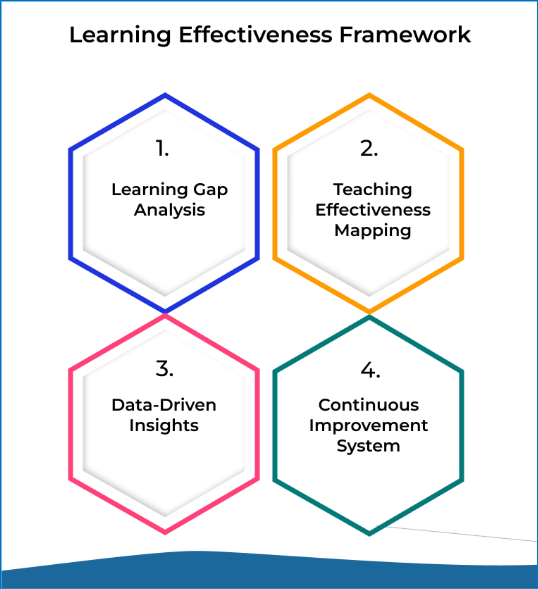
With 28% of India’s population under 14 years of age, it is crucial to implement scientific systems to understand daily teaching and learning strengths and gaps. Since learning occurs every day, monitoring, measurement, and analysis should also happen regularly. Platforms like LearnQoch help create inclusive classrooms and effectively manage diversity in education, ensuring that every student receives targeted support for optimal learning outcomes.
Manually we can’t track the progress of how we are implementing equity and inclusion on the ground? If we provide them with periodic feedback in structured format, then it’ll surely help them to better their teaching and learning plans.
In conclusion, if we integrate implementation of NEP 2020 with technology then adoption will increase significantly to get the desire outcome.
Implement NEP 2020 in your educational institute with LearnQoch.
The LearnQoch AI powered Academic Platform
LearnQoch goes further by providing an integrated platform that covers all aspects of institutional growth:

Institutional Digital Ecosystem: Categories & Modules
A. LearnQoch AI powered Core Academic & Learning Solutions
Facilitates modern teaching and learning while tracking student progress, assignments, assessments, and course outcomes.
Focuses on measuring learning outcomes to ensure skills, competencies, and academic objectives are met effectively.
- LearnQoch AI powered Academic Calendar & Events
Maintains academic schedules, holidays, events, and exam timelines for seamless yearly planning.
- LearnQoch AI powered Class Module
Manages class creation, faculty allocation, and student grouping while supporting timetable integration.
B. LearnQoch AI powered Examination & Evaluation Management
LearnQoch AI Powered Exam Management Module
A unified system that digitizes the entire exam cycle—right from planning, subject allocation, ATKT processing, and scheduling to question paper creation, assessments, evaluation, and result generation. It ensures transparency, accuracy, and smooth coordination across all departments.
C. LearnQoch AI powered Campus Administration & Operations
Streamlines administrative activities, simplifies student data management, and ensures workflow automation across all departments.
- LearnQoch AI powered Task Management
Organizes, prioritizes, and tracks institutional tasks to improve productivity and accountability.
- LearnQoch AI powered Committee Module
Handles committee formation, roles, activities, and meeting records to maintain governance transparency.
- LearnQoch AI powered Document Management
Stores, organizes, and retrieves institutional documents with version control and compliance tracking.
- LearnQoch AI powered Certificate Management
Manages creation and issuance of academic and administrative certificates such as Bonafide, character, and leaving certificates.
D. LearnQoch AI powered Finance & Fees Management
- LearnQoch AI powered Finance Module – Receivable (Fees)
Tracks payments, manages fee categories, handles tuition/fines, and maintains fee-related records.
- LearnQoch AI powered Advanced Fees
Payments made before the due date, helping institutions and parents manage fee planning efficiently.
- LearnQoch AI powered Excess Fees
Extra amount paid unintentionally; recorded for adjustment in future payments or refunded when necessary.
E. LearnQoch AI powered Library & Resource Management
LearnQoch AI powered Library Module
Manages book registration, issue-return process, renewals, student access, and availability tracking for efficient library operations.
F. LearnQoch AI powered Placement & Career Development
- LearnQoch AI powered Placement Module
Manages job postings, student registration, interview updates, and final offer letters with complete transparency for TPOs and students.
- LearnQoch AI powered Skill Development Solutions
Equips students with future-ready skills to enhance employability and prepare for global career opportunities.
G. LearnQoch AI powered Accreditation & Compliance
LearnQoch AI powered NAAC, NBA & NIRF Compliance
Simplifies reporting, monitoring, and auditing with ready-to-use compliance tools that reduce institutional workload.
H. LearnQoch AI powered Digital Presence & Branding
LearnQoch AI powered Website & Digital Marketing Solutions
Helps institutions build a strong online presence, attract prospective students, and engage key stakeholders effectively.
Don’t Just Take Our Word for It—Try LearnQoch Yourself!
We invite you to experience the transformative impact of LearnQoch’s Digitize Platform with a 14-Day Free Trial.
During this period, our team will implement the software for your institution, allowing you to explore its features firsthand and see the difference it can make in academic management.
👉 Are you ready to lead your institution into the future of campus management?
📞 Contact us at +91 84519 01079
📧 Email: info@learnqoch.com /sales@learnqoch.com
Explore What LearnQoch Offers:
Visit www.learnqoch.com for Full Details
Also Read,
- Transforming Education: How AI is Transforming the Way Students, Educators, and Principals Work
- The Role of AI in Education: Personalizing Learning for Every Student
- Leadership in Indian Schools: From Administration to Educational Transformation
- How EdTech Solutions Can Help Indian Higher Education Compete Globally
- The Hidden Barriers to India’s Nobel Prize Success in Science