


From Fragmented Tools to Unified Systems: The Future of Education Management


In today’s fast-paced world, digital transformation has become the cornerstone of progress across every sector — and education is no exception. Educational institutions, from schools to universities, are gradually moving beyond chalkboards, manual paperwork, and disconnected administrative systems. However, even as they adopt technology, a major obstacle persists — the use of fragmented tools.
Many institutions still depend on separate applications for critical tasks such as attendance tracking, fee collection, examination management, learning management, and parent-teacher communication. This scattered approach not only complicates day-to-day operations but also prevents institutions from achieving true digital efficiency, highlighting the need for unified education systems and AI‑powered education management.
The need of the hour is clear — a unified education management system that integrates every academic and administrative function into a single, seamless platform. Let’s explore how fragmented tools create roadblocks and why the shift toward integrated ERP LMS solutions is the future of education management.
The Problem with Fragmented Tools in Education
To truly understand the importance of unified systems, let’s imagine a typical day at a modern educational institution.
- The administration uses one software for fee collection but another for attendance tracking.
- Teachers manage lesson plans, grading, and student progress on multiple applications.
- Parents juggle between several portals and messaging apps just to stay updated on their child’s academic performance.
At first glance, this setup might seem manageable. However, as institutions grow and the number of students, teachers, and departments increase, this fragmented digital ecosystem begins to show cracks.
Key Challenges of Fragmented Tools
- Inefficiency and Duplication of Work:
Staff members waste valuable time entering the same data across different systems, leading to errors and inconsistencies. - Data Silos and Poor Integration:
When tools don’t communicate with each other, essential information remains trapped in separate databases. This prevents administrators from gaining a holistic view of institutional performance. - Higher Operational Costs:
Maintaining multiple systems requires separate licenses, updates, and training sessions — resulting in unnecessary financial strain. - User Frustration:
Teachers, students, and parents often struggle to navigate multiple interfaces, passwords, and login portals, causing digital fatigue and dissatisfaction. - Lack of Real-Time Insights:
Fragmented systems delay information flow. For instance, fee updates may not reflect instantly in academic dashboards, leading to confusion and inefficiencies.
Thus, while technology adoption is rising, the fragmented approach limits the potential of digital transformation in education.
Transitioning Toward a Unified Future
To overcome these challenges, educational institutions need to embrace unified, integrated systems that connect all stakeholders — administrators, faculty, students, and parents — on one platform.
Such a transition represents more than a technological upgrade; it’s a strategic shift toward efficiency, transparency, and improved learning outcomes using AI‑powered software like LearnQoch.
Unified Systems: A Game Changer for the Education Industry
A unified education management system consolidates all core academic and administrative functions into one digital ecosystem. Instead of switching between different tools for exams, attendance, and communication, institutions can manage everything under a single roof.
Benefits of Unified Systems
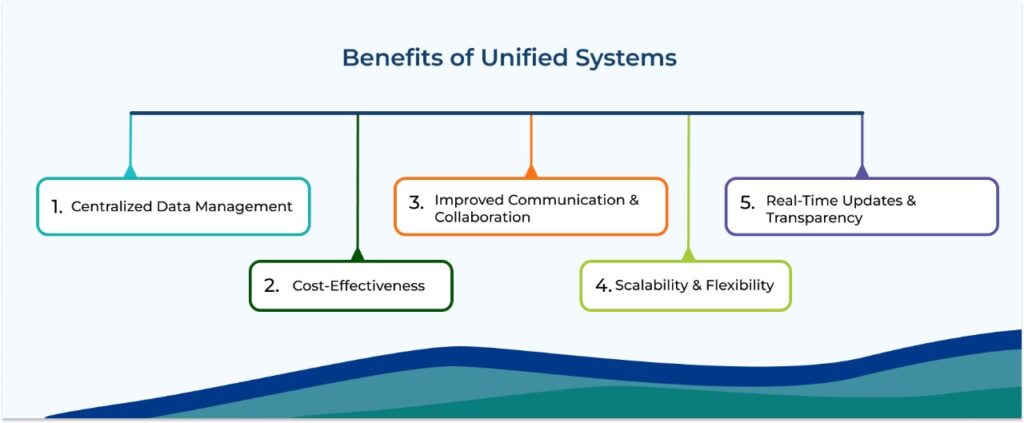
1. Centralized Data Management
Unified platforms bring all institutional data — from student attendance and grades to finances and feedback — into one secure database. This not only ensures data accuracy but also simplifies report generation and decision-making. Administrators can analyze trends, monitor progress, and take timely actions based on real-time insights.
2. Cost-Effectiveness
By eliminating the need for multiple software tools, institutions save significantly on licensing, infrastructure, and maintenance costs. Moreover, the centralized setup reduces IT workload and simplifies updates, making operations smoother and more affordable.
3. Improved Communication and Collaboration
When everyone — from the management to teachers, parents, and students — uses the same platform, communication becomes seamless. Notifications, updates, and messages can be shared in real-time, enhancing collaboration and fostering a stronger sense of community.
4. Real-Time Updates and Transparency
Parents can instantly check attendance, assignments, and results, while teachers can track student performance through integrated dashboards. This real-time accessibility enhances accountability and builds trust among all stakeholders.
5. Scalability and Flexibility
A unified system grows along with the institution. Whether it’s adding new departments, integrating digital classrooms, or expanding campuses, the platform can scale effortlessly without disrupting existing operations.
The Role of LearnQoch in Transforming Education Management
At LearnQoch, we understand that every educational institution is unique, with specific goals and challenges. That’s why we’ve built a comprehensive, integrated technology platform that simplifies operations and enhances outcomes across all levels of education.
Our unified education management system seamlessly integrates ERP and LMS functionalities, combining academic and administrative tasks into one powerful solution for college workflow, Mumbai colleges, Nagpur colleges, and other Indian institutes.
LearnQoch’s Key Features and Benefits
| Feature | Benefit |
| ERP + LMS Integration | Manage academic and administrative tasks on a single platform for smoother workflows. |
| Real-Time Data Analytics | Access actionable insights to make informed, data-driven decisions. |
| Customizable Modules | Configure features based on your institution’s specific structure and requirements. |
| Multi-Device Accessibility | Access the system anytime, anywhere, from mobile, tablet, or desktop. |
| Enhanced Security | Advanced encryption ensures data protection and compliance with institutional policies. |
| Automated Workflows | Minimize manual intervention through smart automation, improving speed and accuracy. |
How LearnQoch Creates Impact
Transitioning from fragmented tools to a unified LearnQoch ecosystem delivers tangible improvements in both academic and administrative performance.
- For Administrators: Enjoy end-to-end visibility of operations — from fee collection to performance tracking — all in one dashboard.
- For Teachers: Automate attendance, grade entries, and course planning, allowing more focus on teaching and mentoring.
- For Students: Gain a clear overview of schedules, grades, and learning materials through an easy-to-use portal.
- For Parents: Stay informed through real-time updates, progress reports, and seamless communication channels.
By integrating these experiences, LearnQoch helps institutions build stronger connections and foster collaboration among all stakeholders.
Why the Future is Unified
As educational landscapes evolve, efficiency, transparency, and adaptability are becoming non-negotiable. Unified systems not only streamline workflows but also empower institutions to align with global education standards through an AI‑powered LMS.
Here’s What a Unified Future Promises:
- Better Learning Outcomes:
When teachers spend less time on administrative tasks, they can focus more on personalized instruction and student engagement. - Enhanced Institutional Productivity:
Automation reduces repetitive work, enabling faster decision-making and effective resource utilization. - Improved Stakeholder Engagement:
Real-time communication bridges gaps between management, educators, students, and parents. - Compliance and Accreditation Readiness:
Unified systems make it easier to maintain documentation and generate reports required for NAAC, NBA, or other accreditations. - Future-Ready Technology:
As education trends shift toward hybrid and AI-powered models, integrated systems provide a strong foundation for adopting new technologies.
The LearnQoch Advantage
LearnQoch stands out as a trusted technology partner for schools, colleges, and universities across India. Our solutions are designed to support both academic excellence and administrative efficiency.
We believe that education should be inspiring, data-driven, and seamlessly connected. With LearnQoch, institutions don’t just adopt software — they embrace a digital ecosystem built for long-term success.
Conclusion: Move Beyond Fragmented Tools
The future of education management lies in integration, innovation, and intelligence. As institutions continue to adapt to digital learning environments, fragmented systems will only hold them back.
By choosing a unified education management system like LearnQoch, institutions can streamline their workflows, enhance collaboration, and drive meaningful learning outcomes.
Now is the time to transform operations, reduce complexities, and empower every stakeholder — from trustees and administrators to teachers, students, and parents.
At LearnQoch, our mission is clear:
To make learning and teaching more engaging, efficient, and outcome-driven through unified technology.
Say goodbye to fragmented tools. Say hello to a smarter, connected, and future-ready campus with LearnQoch.
The LearnQoch AI powered Academic Platform
LearnQoch goes further by providing an integrated platform that covers all aspects of institutional growth:

Institutional Digital Ecosystem: Categories & Modules
A. LearnQoch AI powered Core Academic & Learning Solutions
Facilitates modern teaching and learning while tracking student progress, assignments, assessments, and course outcomes.
Focuses on measuring learning outcomes to ensure skills, competencies, and academic objectives are met effectively.
- LearnQoch AI powered Academic Calendar & Events
Maintains academic schedules, holidays, events, and exam timelines for seamless yearly planning.
- LearnQoch AI powered Class Module
Manages class creation, faculty allocation, and student grouping while supporting timetable integration.
B. LearnQoch AI powered Examination & Evaluation Management
LearnQoch AI Powered Exam Management Module
A unified system that digitizes the entire exam cycle—right from planning, subject allocation, ATKT processing, and scheduling to question paper creation, assessments, evaluation, and result generation. It ensures transparency, accuracy, and smooth coordination across all departments.
C. LearnQoch AI powered Campus Administration & Operations
Streamlines administrative activities, simplifies student data management, and ensures workflow automation across all departments.
- LearnQoch AI powered Task Management
Organizes, prioritizes, and tracks institutional tasks to improve productivity and accountability.
- LearnQoch AI powered Committee Module
Handles committee formation, roles, activities, and meeting records to maintain governance transparency.
- LearnQoch AI powered Document Management
Stores, organizes, and retrieves institutional documents with version control and compliance tracking.
- LearnQoch AI powered Certificate Management
Manages creation and issuance of academic and administrative certificates such as Bonafide, character, and leaving certificates.
D. LearnQoch AI powered Finance & Fees Management
- LearnQoch AI powered Finance Module – Receivable (Fees)
Tracks payments, manages fee categories, handles tuition/fines, and maintains fee-related records.
- LearnQoch AI powered Advanced Fees
Payments made before the due date, helping institutions and parents manage fee planning efficiently.
- LearnQoch AI powered Excess Fees
Extra amount paid unintentionally; recorded for adjustment in future payments or refunded when necessary.
E. LearnQoch AI powered Library & Resource Management
LearnQoch AI powered Library Module
Manages book registration, issue-return process, renewals, student access, and availability tracking for efficient library operations.
F. LearnQoch AI powered Placement & Career Development
- LearnQoch AI powered Placement Module
Manages job postings, student registration, interview updates, and final offer letters with complete transparency for TPOs and students.
- LearnQoch AI powered Skill Development Solutions
Equips students with future-ready skills to enhance employability and prepare for global career opportunities.
G. LearnQoch AI powered Accreditation & Compliance
LearnQoch AI powered NAAC, NBA & NIRF Compliance
Simplifies reporting, monitoring, and auditing with ready-to-use compliance tools that reduce institutional workload.
H. LearnQoch AI powered Digital Presence & Branding
LearnQoch AI powered Website & Digital Marketing Solutions
Helps institutions build a strong online presence, attract prospective students, and engage key stakeholders effectively.
Don’t Just Take Our Word for It—Try LearnQoch Yourself!
We invite you to experience the transformative impact of LearnQoch’s Digitize Platform with a 14-Day Free Trial.
During this period, our team will implement the software for your institution, allowing you to explore its features firsthand and see the difference it can make in academic management.
👉 Are you ready to lead your institution into the future of campus management?
📞 Contact us at +91 84519 01079
📧 Email: info@learnqoch.com /sales@learnqoch.com
Explore What LearnQoch Offers:
Visit www.learnqoch.com for Full Details
Also Read,
Integrating LMS with ERP: A One‑LMS + ERP: AI‑Powered All-in-One Solution for Education InstitutesStop Solution for Educational Institutes
From Fragmented Tools to Unified Systems: The Future of Education Management
Why Every Educational Institute Needs an Integrated EdTech Solution?