



During-Exam Activities in Exam Management: Steps to Insure Transparency & Control


Examinations are the culmination of months of preparation, practice, and planning. While pre-exam activities help set the foundation, during-exam management is equally important for ensuring that the examination is conducted in a fair, organized, and transparent manner.
During this stage, institutions need to manage student attendance, invigilation, examination records, and unexpected situations efficiently. A well-structured process helps minimize disruptions, maintain academic integrity, and provide students with a consistent examination experience.
Moreover, effective during-exam management gives faculty and examination staff the information they need to respond to student queries or operational issues promptly. As a result, institutions can maintain discipline, transparency, and accountability throughout the examination.
With digital tools such as LearnQoch, institutions can streamline relevant examination activities, reduce manual effort, and maintain organized records, helping create a more reliable and stress-free examination process.
What This Blog Covers?
In this blog, we explore the key during-exam activities that help institutions conduct examinations smoothly and transparently, including:
- Student verification and attendance
- Question paper and answer sheet distribution
- Invigilation and exam monitoring
- Exam hall and time management
- Handling student queries and unexpected issues
- Answer sheet collection and examination records
- How LearnQoch supports a more organized and efficient exam conduct process
Breaking Down Key Activities (During-Exam)
During-exam activities involve students, invigilators, faculty, and examination staff, with each playing an important role in maintaining a smooth and fair examination process.
From student verification and attendance to invigilation and record management, proper coordination helps reduce delays, confusion, and errors. Moreover, clear communication and defined responsibilities support transparency, accountability, and academic integrity.
Together, these practices help institutions conduct examinations in a more organized, reliable, and stress-free manner.
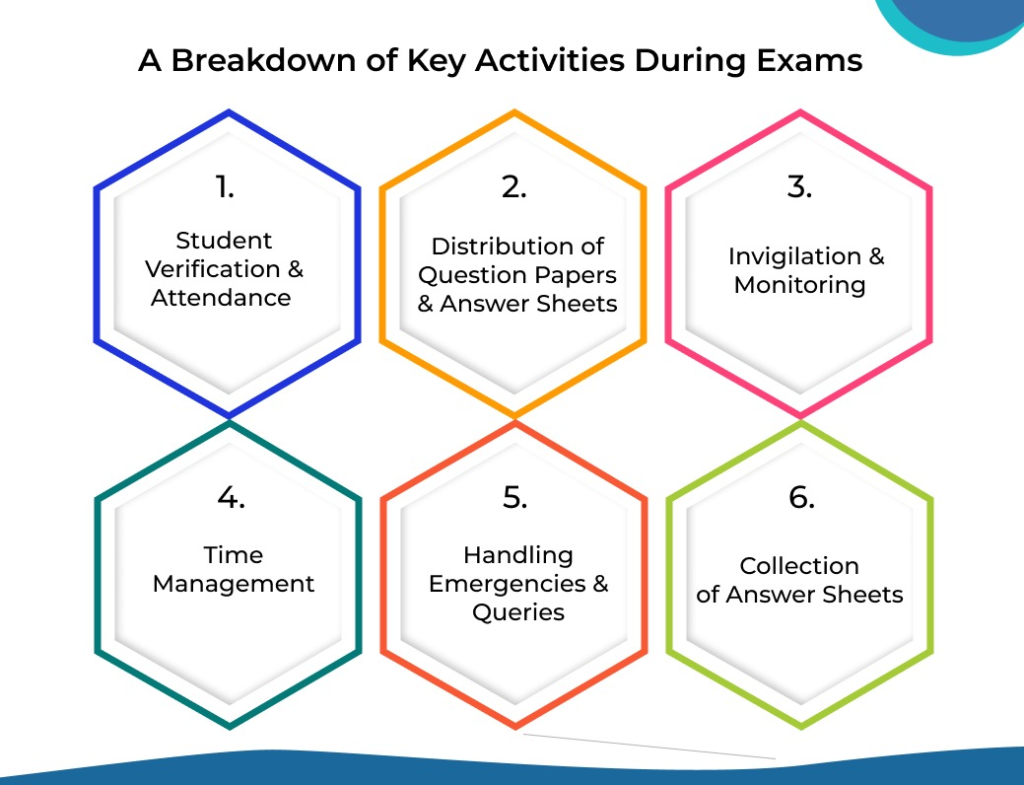
1. Student Verification and Attendance
Before the examination begins, institutions need to verify student eligibility and record attendance accurately. With LearnQoch, examination and student information can be managed digitally, making it easier for authorized staff to access relevant records.
Example: Before Riya Patil enters the examination hall, the examination staff can verify her examination details and record her attendance through the system.
Transition: Once student verification is completed, the examination can proceed with the distribution of the required materials.
2. Distribution of Question Papers and Answer Sheets
Question papers and answer sheets need to be distributed systematically to avoid confusion and delays. A well-organized examination workflow helps staff coordinate these activities according to the scheduled examination.
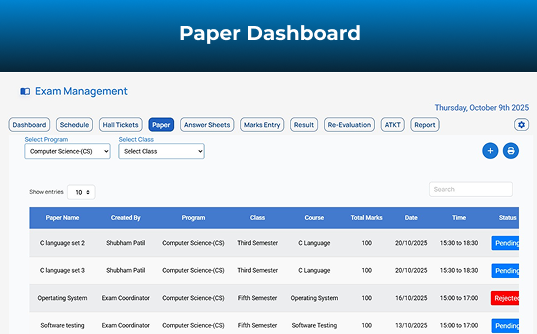
Example: For Prof. Rahul Sharma’s scheduled examination, the examination team can refer to the configured exam details in LearnQoch to ensure the correct examination is conducted for the respective course and student group.
Transition: After the examination begins, invigilators play an important role in maintaining discipline and supporting students with examination-related procedures.
3. Invigilation and Monitoring
Invigilators are responsible for maintaining a proper examination environment and ensuring that students follow the established examination guidelines. At the same time, they may need to respond to procedural queries or report examination-related issues.
Example: Prof. Rahul Sharma can focus on supervising students during the examination while the relevant examination information remains available through the digital system for authorized staff.
Transition: Along with proper supervision, following the scheduled examination timings helps ensure consistency and fairness.
4. Time Management
Starting and completing examinations according to the approved timetable is important for maintaining a consistent experience for students. A structured examination schedule helps faculty and examination staff coordinate different examination sessions effectively.
Example: If Riya Patil is scheduled for an examination at a specific time, the examination team can follow the configured schedule in LearnQoch to coordinate the session and avoid unnecessary confusion.
Transition: Even with proper planning, students or staff may encounter issues during an examination, making an organized response important.
5. Handling Examination Queries and Issues
During an examination, students may have questions about procedures, while examination staff may need to address attendance or other operational issues. Clear processes help ensure that such situations are handled consistently without unnecessary disruption.
Example: If Riya Patil has a query about the examination process, the invigilator can address it according to the institution’s established guidelines while maintaining the continuity of the examination.
Transition: Once the examination is completed, the final step is to ensure that examination records and completed materials are handled properly.
6. Collection and Examination Records
After the examination, answer sheets and other examination records need to be collected and managed systematically. Accurate records are important for the subsequent evaluation, marks entry, and result-processing stages.
Example: After Riya Patil completes her examination, the examination staff can complete the required collection and record-keeping procedures before the evaluation process begins.
During-Exam Activities: Why They Deserve Your Focus?
The examination day is a critical stage of the academic process. Without proper planning and coordination, even small issues such as delayed starts, unclear instructions, attendance gaps, or communication problems can disrupt the examination. Therefore, effective during-exam activities are essential for maintaining a smooth and organized exam environment.
For educational institutions, these activities are not only about conducting exams on time. They also help maintain fairness, transparency, academic integrity, and student confidence throughout the examination process.
Key benefits include:
- Ensuring a fair and transparent examination environment through consistent procedures.
- Reducing disruptions and maintaining academic integrity through proper supervision and monitoring.
- Improving student confidence with clear instructions and well-organized examination processes.
- Using resources efficiently by coordinating invigilators, examination rooms, and other requirements.
By giving proper attention to during-exam activities, institutions can conduct examinations more efficiently while creating a reliable and well-managed experience for students, faculty, and examination staff.
How LearnQoch Supports an Organized and Efficient Exam Conduct Process?
- Digital Student Verification: Access student and examination details to support a smoother verification process.
- Attendance Management: Record and monitor student attendance digitally during examinations.
- Exam Schedule Access: Keep examination schedules organized and accessible to authorized staff.
- Better Coordination: Help faculty and examination staff coordinate exam-related activities through structured workflows.
- Organized Examination Records: Maintain relevant examination information digitally for easier tracking and reference.
- Reduced Manual Work: Minimize repetitive administrative tasks and reduce the chances of manual errors.
- Smoother Exam Conduct: Support a more organized, transparent, and efficient examination process for students and staff.
LearnQoch is not limited to examination management. It provides an integrated solution for managing academics and administration, while also supporting institutions with accreditation-related processes.
Conclusion
A well-managed examination does not happen by chance. It depends on organized processes, accurate information, and effective coordination throughout the exam. When these activities are handled manually, institutions may face unnecessary workload, communication gaps, and the risk of errors.
Our Exam Management Software helps address these challenges by digitizing relevant examination activities and maintaining structured records. This makes it easier for faculty and examination staff to manage processes efficiently while supporting fairness, transparency, and academic integrity.
With LearnQoch, institutions can reduce administrative effort and provide students with a more organized, reliable, and stress-free examination experience.
An Integrated software for Administration, Academics & Accreditation
LearnQoch brings essential institutional processes together through an integrated platform, helping educational institutions manage administration, academics, and accreditation more efficiently.
1. Administration
Software supports day-to-day institutional operations with solutions designed to simplify administration and improve workflow management.
- ERP (Enterprise Resource Planning): Manage student information, administration, finance, attendance, examinations, and other institutional operations through a connected system.
- Task Management: Organize, assign, prioritize, and track institutional tasks to improve collaboration and ensure timely completion.
- Attendance Management: Record and monitor student attendance while providing access to attendance-related reports and information.
2. Academics
We provide academic solutions that support teaching, learning, assessment, and student development.
- LMS (Learning Management System): Support digital teaching and learning while managing courses, assessments, student progress, and learning outcomes.
- OBE (Outcome-Based Education): Manage CO-PO-PSO mapping, attainment, assessment, and outcome analysis to support outcome-based academic processes.
- Timetable Management: Create and manage class and examination timetables while helping institutions coordinate courses, faculty, rooms, and schedules.
3. Accreditation
Our software help institutions organize accreditation-related activities and maintain structured academic records for quality assurance and reporting.
- NAAC Software: Support NAAC-related data management, documentation, reporting, and accreditation workflows.
- NBA Software: Manage NBA-related documentation, OBE data, attainment information, and supporting records.
- NIRF Software: Organize relevant institutional data and reporting requirements for NIRF-related processes.
Don’t Just Take Our Word for It—Try LearnQoch Yourself!
We invite you to experience the transformative impact of LearnQoch’s Digitize Platform with a 14-Days Free Trial.
During this period, our team will implement the software for your institution, allowing you to explore its features firsthand and see the difference it can make in academic management.
👉 Are you ready to lead your institution into the future of campus management?
📞 Contact us at +91 84519 01079
📧 Email:sales@learnqoch.com
Explore What LearnQoch Offers:
Visit www.learnqoch.com for Full Details