


Exam Fraud: How Institute Can Tackle Cheating with Technology?


Exam integrity is becoming a growing concern for schools, colleges and universities. Exam fraud and cheating can happen in many forms—from copying and unauthorized materials in offline exams to using mobile phones, multiple devices, or unfair assistance during online assessments. These practices can affect fair evaluation and reduce trust in examination results.
Therefore, institutions need reliable ways to prevent, detect, and manage exam malpractice without making the examination process unnecessarily difficult for students and faculty.
With the right technology, institutions can strengthen exam security, monitor online assessments, detect suspicious activities, and maintain transparent evaluation records. This article explores common types of exam fraud and how modern examination management software and AI-powered proctoring solutions can help institutions improve examination integrity.
From Previous Blog
Our Exam Software help institutes conduct secure, fair, and transparent examinations by leveraging intelligent technology. It prevents exam fraud through features like secure authentication, AI-based monitoring, question randomization, and controlled access to exam content. Automated evaluation and centralized exam records reduce manual effort while improving accuracy and efficiency. The system ensures audit-ready data, clear reporting, and real-time insights for administrators. Aligned with NEP 2020, LearnQoch supports competency-based, credible assessments that strengthen academic integrity and institutional trust.
This Blog Cover…
This blog, “Exam Fraud: How institutes Can Tackle Cheating with Technology?”, explores the growing challenge of exam fraud in schools, colleges and universities and its impact on academic integrity and examination credibility. It covers common forms of cheating in online and offline exams and explains how technology can help prevent, detect, and deter unfair practices. The article highlights online exam software, AI-powered proctoring, secure authentication, digital monitoring, and automated reporting as effective ways to strengthen exam security. It also explains how these technologies can support fair, transparent, and competency-based assessment practices.
The Growing Challenge of Exam Fraud
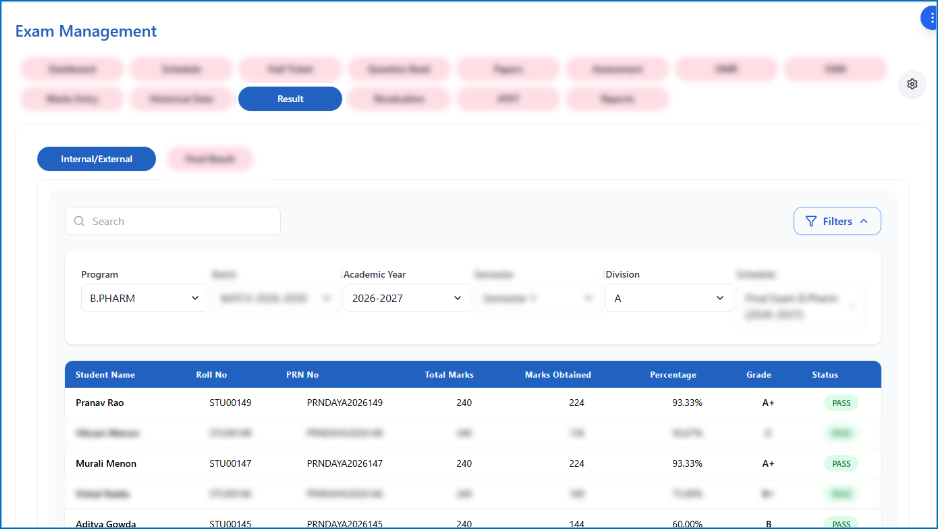
Exam fraud has become a serious concern for schools, colleges and universities. Whether it’s leaking question papers, proxy test-takers, or using mobile devices to cheat, these practices compromise fairness and erode trust. According to reports, exam malpractice impacts not only individual students but also institutional credibility and the overall quality of education.
Why Exam Security Matters?
Exams are more than just tests—they reflect student learning outcomes, teacher efforts, and institutional reputation. When exams are compromised:
- Genuine students lose confidence.
- Institutions face credibility issues.
- Parents and stakeholders question transparency.
This is why NEP 2020 emphasizes digitization and secure exam management systems to prevent malpractice and build trust in assessments.
Understanding Exam Fraud
Exam fraud refers to any deliberate attempt to manipulate or bypass the assessment process to gain unfair advantage. It can take multiple forms:
- Traditional Cheating
- Copying from peers during written exams
- Using hidden notes or mobile devices
- Impersonation of candidates
- Online Exam Fraud
- Unauthorized access to answer keys or exam content
- Sharing answers in chat groups or social media platforms
- Using software tools or AI-driven answer generators
- Administrative Manipulation
- Tampering with exam results
- Favouritism or errors in scoring
- Leakage of question papers
The causes of exam fraud are varied but often include high academic pressure, lack of effective supervision, accessibility to digital tools, and insufficient awareness about ethical conduct.
Consequences of Exam Fraud
Exam fraud has serious consequences at multiple levels:
- For Students:
Cheating may provide temporary academic benefits but can harm learning outcomes. Students may develop dependency on shortcuts, undermining their knowledge and critical thinking skills.
- For Institutions:
Fraud damages the credibility of the institution, impacting rankings, reputation, and trust among parents and stakeholders.
- For Society:
When exam fraud becomes widespread, the education system produces graduates whose qualifications do not reflect actual competence, affecting employability and skill standards.
Given these consequences, institutions must proactively address exam fraud, combining policy measures with modern technological tools.
How LearnQoch Helps Prevent Exam Fraud?
At LearnQoch, we provide an integrated ERP and LMS platform designed to simplify and secure exam management:
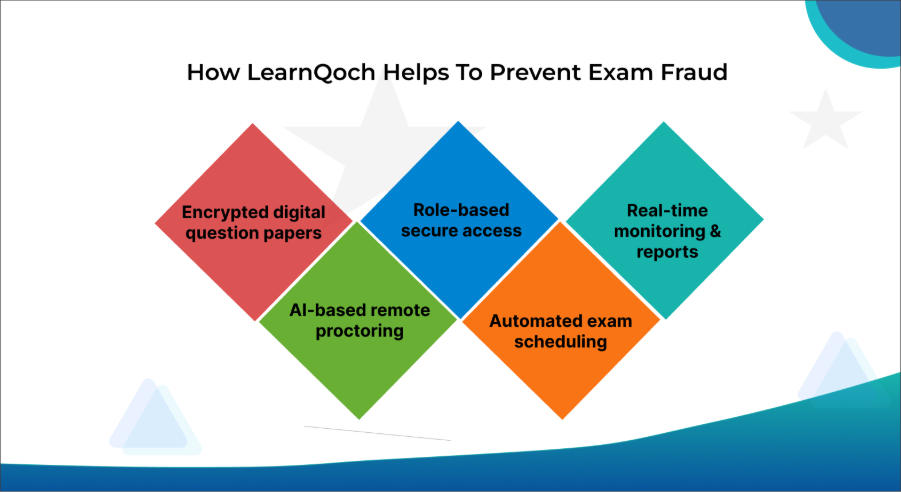
- Secure Question Paper Management
LearnQoch digitizes question banks and secures them with controlled access and encryption. This prevents unauthorized access, reduces the risk of paper leaks, and ensures question papers are released only at the scheduled time.
- AI-Powered Remote Proctoring
AI-based proctoring monitors students through camera, audio, and screen activity during online exams. It detects suspicious behaviours such as multiple faces, unusual movements, or external assistance, enabling fair and monitored assessments.
- Role-Based Access Control
LearnQoch restricts sensitive exam data—such as question papers, evaluation rights, and results—based on user roles. This ensures that only authorized personnel can access critical information, reducing internal misuse or manipulation.
- Seamless Exam Scheduling
The system enables structured and automated exam scheduling, reducing confusion among students and staff. Clear timelines and digital coordination minimize last-minute errors and opportunities for malpractice.
- Real-Time Monitoring & Reports
Administrators can track exams in real time and access detailed reports on student activity, attendance, and anomalies. This allows institutions to identify unfair practices early and take immediate corrective action.
Wit us schools, colleges and universities can ensure exams are conducted fairly, transparently, and without fraud.
Best Practices for institutions Using Technology
While technology is powerful, schools, colleges and universities must combine it with policy and training for effective results:
- Establish Clear Exam Policies
- Define rules for online and offline exams
- Communicate consequences of cheating to students and parents
- Train Students and Staff
- Conduct workshops on ethical exam behaviour
- Train invigilators on using digital proctoring tools
- Regular System Audits
- Periodically check exam software, question databases, and access logs
- Update systems to prevent hacking or leaks
- Feedback and Reporting Mechanisms
- Provide anonymous channels for reporting suspected cheating
- Review flagged incidents objectively
Advantages of Technology-Driven Exam Management
Adopting technology brings multiple benefits:
- Accuracy and Fairness: Ensures objective evaluation and reduces human bias.
- Transparency: Digital records are traceable and tamper-proof.
- Efficiency: Automated grading saves time and reduces administrative workload.
- Security: Encryption and controlled access protect exam content.
- Deterrence: Knowing that exams are monitored reduces the likelihood of cheating.
Conclusion:
A Smarter Approach to Exam Security
LearnQoch helps institutions address common examination challenges through a connected Exam Management and Online Assessment platform. From secure question paper creation and controlled access to online exams, AI-powered proctoring, real-time monitoring, evaluation, and detailed reports, institutions can manage the examination process more systematically.
Its proctoring capabilities can help identify indicators such as multiple faces, mobile or other electronic devices, unusual noise, and other suspicious activity during online assessments. At the same time, centralized examination records, role-based access, and digital reporting can help reduce manual errors and improve transparency.
By bringing these processes together, we help institutions strengthen exam security, reduce malpractice risks, simplify examination management, and maintain reliable assessment records.
Beyond Examination: One Connected Platform
LearnQoch goes further by providing an integrated platform that covers all aspects of institutional growth:

Examination management is only one piece of the bigger picture. We help institutions manage connected academic, administrative, and student processes in one place.
- ERP & Academic Management – Manage academics, administration, attendance, student records, faculty activities, and workflows through an integrated ERP, connected with modules such as LMS, Timetable, and Assessment.
- OBE & Assessment Management – Connect CO setting, CO-PO/PSO mapping, assessments, attainment, question banks, evaluation, and performance data so academic teams can manage learning outcomes more effectively.
- NAAC, NBA & NIRF Accreditation – Use institutional data from ERP, Attendance, Assessment, OBE, Examination, and other modules to simplify accreditation documentation, reporting, and DVV-related requirements instead of collecting data from multiple systems.
Timetable, LMS & Other Academic Solutions – Manage timetables, course delivery, learning activities, assignments, and student progress while keeping these activities connected with the broader academic ecosystem.
Don’t Just Take Our Word for It—Try LearnQoch Yourself!
We invite you to experience the transformative impact of LearnQoch’s Digitize Platform with a 14-Days Free Trial.
During this period, our team will implement the software for your institution, allowing you to explore its features firsthand and see the difference it can make in academic management.
👉 Are you ready to lead your institution into the future of campus management?
📞 Contact us at +91 84519 01079
📧 Email: sales@learnqoch.com
Explore What LearnQoch Offers:
Visit www.learnqoch.com for Full Details