


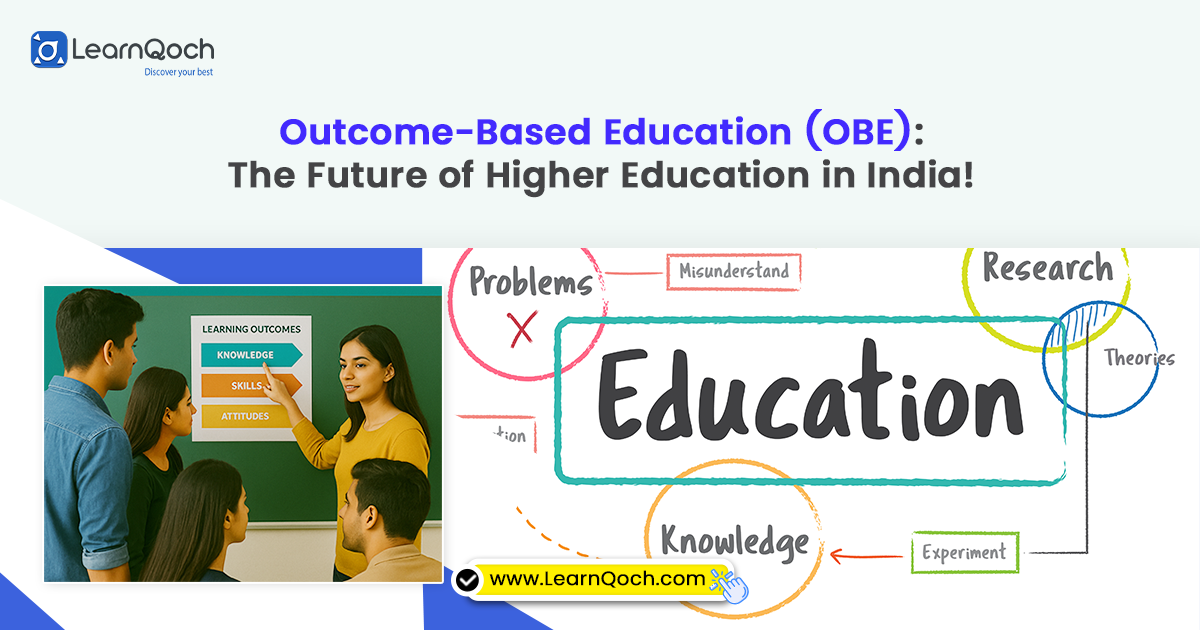
Outcome-Based Education (OBE): The Future of Higher Education in India


Why Outcome-Based Education Matters in Higher Education
Higher education in India is changing. Today, institutions are increasingly looking beyond the number of courses or teaching hours and asking a more important question: What are students actually learning and able to apply?
This is where Outcome-Based Education (OBE) becomes important. OBE connects teaching, assessment and learning with clearly defined outcomes, helping institutions understand student achievement and identify areas for improvement.
At LearnQoch, we believe OBE should be more than an accreditation requirement. It should help institutions understand student learning, improve academic practices and prepare graduates for real-world challenges.
With connected academic data and AI-powered capabilities, institutions can make OBE processes easier to manage, analyse attainment and support continuous improvement—while strengthening their readiness for accreditation and the changing needs of higher education.
Understanding OBE and Its Core Principles
What is Outcome-Based Education?
At its core, OBE is a student-centered learning framework. It prioritizes measurable outcomes over teaching input, ensuring that every course and program is designed to achieve specific competencies. In other words, OBE shifts the focus from “What did we teach?” to “What did students actually learn?”
OBE ensures that every academic activity—from lectures to assignments, laboratory work, and assessments—is aligned with predefined learning outcomes, making the learning process measurable, meaningful, and applicable to professional environments for Mumbai colleges and Nagpur colleges.
Key Features of OBE
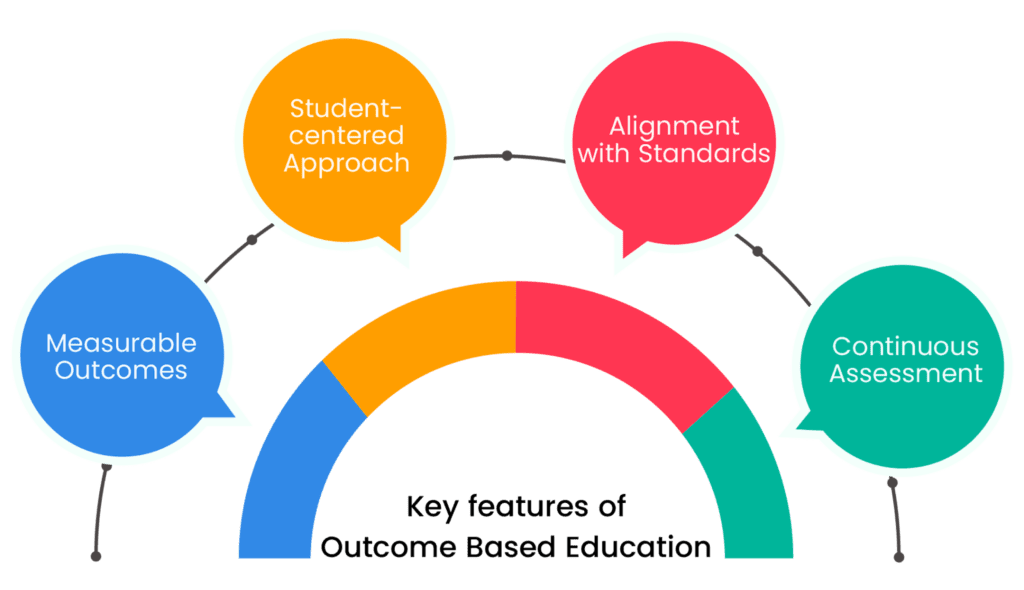
- Measurable Outcomes: Clearly defined knowledge, skills, and competencies that students should demonstrate upon completing a course or program.
- Student-Centered Approach: Focuses on the learner’s growth and development rather than solely on content delivery.
- Continuous Assessment: Regular evaluation and monitoring ensure that students meet their learning objectives throughout the course.
- Alignment with Standards: Learning outcomes are designed according to national and international benchmarks, such as the Washington Accord for engineering programs, ensuring that education remains globally competitive.
OBE Learning Outcomes Include:
- Knowledge Application in Real-World Scenarios: Students are taught not only theory but also practical application, preparing them for professional challenges immediately after graduation.
- Critical Thinking and Problem-Solving Skills: Encourages analytical reasoning and equips students with the ability to find practical solutions to complex problems.
- Professional and Ethical Responsibility: Promotes accountability, ethical behavior, and professional integrity.
- Communication, Teamwork, and Leadership Qualities: Fosters essential soft skills that enhance employability and career advancement potential.
Unlike traditional education systems, which often focus on teaching hours or syllabus coverage, OBE ensures that students graduate with measurable and applicable skills, ready to meet the demands of the modern workforce.
Why Your Institution Must Adopt OBE?
Implementing OBE is more than fulfilling regulatory compliance—it is a strategic move to enhance institutional performance, elevate teaching quality, and prepare students for competitive employment opportunities.
Here’s why adopting OBE is crucial for your institution:
1. Higher Accreditation Scores
Accreditation bodies such as NAAC and NBA place strong emphasis on outcome-based frameworks during their evaluations. Institutions that implement OBE systematically and consistently are likely to achieve higher scores during accreditation assessments. This reflects a commitment to academic quality and excellence, enhancing institutional credibility and reputation.
2. Improved Teaching Quality
OBE encourages faculty to design courses with clear, measurable outcomes, which improves lesson planning and teaching effectiveness. Faculty members can align teaching strategies with intended learning outcomes, creating a more engaging and impactful learning experience for students. This approach also allows teachers to identify gaps in learning and refine instructional methods continuously.
3. Enhanced Student Employability
OBE equips students with practical and measurable skills, making them highly employable. Employers increasingly seek candidates who can demonstrate real-world competencies rather than relying solely on academic degrees. By graduating students who are ready to contribute from day one, institutions enhance their students’ career prospects and professional success.
4. Global Recognition
OBE aligns with international education standards, helping institutions gain recognition on a global scale. Graduates are prepared for international employment opportunities, and programs comply with frameworks such as the Washington Accord for engineering programs. This alignment strengthens the global credibility of your institution and facilitates student mobility worldwide.
5. Compliance with NEP 2020
The National Education Policy 2020 emphasizes competency-based, outcome-driven learning. Institutions that adopt OBE ensure that their programs are fully compliant with NEP 2020 directives, creating a student-centric, forward-looking academic ecosystem that meets both national and international quality standards.
With OBE, your institution can confidently state: “Our graduates are not just qualified—they are industry-ready.”
Outcome:
With LearnQoch, institutions gain a single, unified platform that supports academic, administrative, and digital transformation, all aligned with OBE principles. It allows institutions to manage outcomes, accreditation, exams, digital presence, and skill development efficiently, ensuring transparency and measurable impact.
How to Implement OBE at Your Institute
Implementing OBE may seem complex, but with LearnQoch, the process is structured, measurable, and scalable. Here’s a step-by-step roadmap:
Step 1: Define Course Outcomes (COs)
Clearly articulate what students are expected to achieve in each course. Each outcome should be measurable, achievable, and relevant, forming the foundation of all teaching and assessment activities.
Step 2: Map COs to Program Outcomes (POs) and Program Specific Outcomes (PSOs)
Ensure that each course contributes to broader program objectives. Mapping COs to POs and PSOs allows faculty and administrators to track student progress and program effectiveness systematically.
Step 3: Use Digital Tools for Tracking
Leverage an integrated ERP + LMS platform to automate OBE mapping, track attainment, and generate detailed reports for NAAC and NBA compliance. Automation reduces manual workload, ensures data accuracy, and saves valuable administrative time.
Step 4: Continuous Assessment and Feedback
Regular evaluation and analysis of outcome data help identify gaps in learning. Faculty can then adjust teaching methods accordingly. Continuous assessment and feedback loops ensure all students meet their intended learning outcomes, enhancing both teaching quality and student success.
The Benefits of Outcome-Based Education
Implementing OBE brings measurable benefits to institutions, faculty, and students alike:
- Alignment with NEP 2020: Ensures programs are competency-based and outcome-driven.
- Improved Accreditation Scores: Streamlined reporting and measurable outcomes help achieve higher NAAC and NBA ratings.
- Enhanced Student Employability: Graduates acquire practical skills, critical thinking abilities, and professional ethics.
- Boosted Institutional Reputation: Demonstrates a commitment to quality education and student success.
- Simplified Academic Management: Digital tools automate course mapping, outcome tracking, and reporting, reducing administrative burden.
By integrating OBE with LearnQoch, institutions can manage academics, accreditation, digital presence, exams, and skill development from a single platform, ensuring seamless efficiency and measurable results.
Conclusion
Outcome-Based Education (OBE) is not merely a trend – it represents the future of higher education in India. Institutions that adopt OBE can:
- Achieve higher accreditation scores
- Improve teaching quality
- Enhance student employability
- Gain global recognition
- Comply seamlessly with NEP 2020
With LearnQoch, institutions can implement OBE efficiently while digitally transforming academic and administrative processes. From ERP and LMS to accreditation support, digital marketing, and skill development, LearnQoch provides a complete solution for modern education management.
Take the first step today to produce graduates who are truly industry-ready and position your institution as a leader in Outcome-Based Education and academic excellence.
The LearnQoch AI powered Academic Platform
LearnQoch goes further by providing an integrated platform that covers all aspects of institutional growth:

A. LearnQoch AI powered Core Academic & Learning Solutions
Facilitates modern teaching and learning while tracking student progress, assignments, assessments, and course outcomes.
Focuses on measuring learning outcomes to ensure skills, competencies, and academic objectives are met effectively.
B. LearnQoch AI powered Examination & Evaluation Management
LearnQoch AI Powered Exam Management Module
A unified system that digitizes the entire exam cycle—right from planning, subject allocation, ATKT processing, and scheduling to question paper creation, assessments, evaluation, and result generation. It ensures transparency, accuracy, and smooth coordination across all departments.
C. LearnQoch AI powered Finance & Fees Management
- LearnQoch AI powered Finance Module – Receivable (Fees)
Tracks payments, manages fee categories, handles tuition/fines, and maintains fee-related records.
- LearnQoch AI powered Advanced Fees
Payments made before the due date, helping institutions and parents manage fee planning efficiently.
- LearnQoch AI powered Excess Fees
Extra amount paid unintentionally; recorded for adjustment in future payments or refunded when necessary.
D. LearnQoch AI powered Library & Resource Management
LearnQoch AI powered Library Module
Manages book registration, issue-return process, renewals, student access, and availability tracking for efficient library operations.
F. LearnQoch AI powered Placement & Career Development
- LearnQoch AI powered Placement Module
Manages job postings, student registration, interview updates, and final offer letters with complete transparency for TPOs and students.
- LearnQoch AI powered Skill Development Solutions
Equips students with future-ready skills to enhance employability and prepare for global career opportunities.
E. LearnQoch AI powered Accreditation & Compliance
LearnQoch AI powered NAAC, NBA & NIRF Compliance
Simplifies reporting, monitoring, and auditing with ready-to-use compliance tools that reduce institutional workload.
F. LearnQoch AI powered Digital Presence & Branding
LearnQoch AI powered Website & Digital Marketing Solutions
Helps institutions build a strong online presence, attract prospective students, and engage key stakeholders effectively.
Don’t Just Take Our Word for It—Try LearnQoch Yourself!
We invite you to experience LearnQoch’s Digitize Platform with a 14-Days Free Trial.
During the trial, our team will help implement the platform for your institution, giving you the opportunity to explore its features, understand its benefits, and experience how it can simplify your day-to-day academic processes.difference it can make in academic management.
👉 Are you ready to lead your institution into the future of campus management?
📞 Contact us at +91 84519 01079
📧 Email: sales@learnqoch.com
Explore What LearnQoch Offers:
Visit www.learnqoch.com for Full Details